
Low-ingredient shampoo sounds like the simplest hair decision you can make: fewer ingredients, fewer problems. And honestly, I understand why it’s having a moment. When your scalp is irritated, your hair feels coated, or you’re just tired of a long label, cutting down variables can feel like taking a deep breath.
But here’s the part that rarely gets discussed: when you remove “supporting” ingredients, the remaining ones have to work harder. That can be a beautiful thing in a well-built formula-or it can turn one ingredient into your entire make-or-break point for comfort, shine, and manageability.
In this post, I’m going to unpack what “low ingredient” really means in shampoo, why it sometimes helps, why it sometimes backfires, and how to think about it in a way that actually matches your hair and scalp in the real world (including your water quality, which is a bigger deal than most people realize).
What “Low-Ingredient Shampoo” Actually Means (Because It’s Not One Thing)
“Low ingredient” isn’t a regulated category, and it’s not automatically a synonym for gentle. In practice, most low-ingredient shampoos fit into a few different design styles-and each one has its own trade-offs.
1) A minimal cleanser system
Some formulas keep things short by using a smaller set of cleansing agents. This can make it easier to troubleshoot sensitivities, but it also removes the “team effort” many shampoos rely on for a softer wash experience.
NOT SURE WHICH PRODUCT IS RIGHT FOR YOU?
TAKE THE QUIZTakes 30 seconds · 134,000+ customers matched
Here’s the technical nuance: mildness often comes from blending cleansers. When a formula relies on one primary cleanser to do everything (foam, rinse, oil removal, sensory feel), you can lose some of the built-in balancing that makes shampoo feel comfortable on both the scalp and the lengths.
2) Minimal conditioning and slip
Another common way to shorten an ingredient list is to reduce conditioning agents. That can be great for people whose hair gets weighed down easily, but it can also raise friction-especially when hair is wet, which is when it’s most vulnerable.
When there’s less slip, you’re more likely to notice:
- More tangling in the shower
- Roughness or “drag” when rinsing
- Frizz that seems to appear out of nowhere
- More breakage during detangling (especially on porous or textured hair)
3) Fewer fragrance variables
For many people, the goal behind “low ingredient” isn’t cleansing at all-it’s comfort. If you’re sensitive to scent or trying to reduce potential triggers, an unscented option can be the cleanest version of “less.”
If that’s you, Viori Native Essence is a straightforward choice because it’s unscented (no added fragrance), which often matters more than shaving a few ingredients off a label.
The Invisible Ingredient: Why pH Can Make or Break “Minimalist” Shampoo
If I could pull one concept out of the salon and put it into every bathroom, it would be this: pH matters. A lot.
When hair products drift too alkaline, the cuticle can lift, and that tends to show up as roughness, tangles, dullness, and frizz. Over time, it can also make hair feel drier and more fragile-especially if you already have damage or high porosity.
The reason this is so important in low-ingredient shampoo discussions is simple: short formulas don’t automatically mean well-buffered formulas. Fewer ingredients can mean fewer tools to keep pH stable and hair-friendly.
Viori emphasizes that their bars are pH balanced, which is one of the quiet, technical reasons a bar can cleanse effectively without leaving hair feeling stripped when it’s used correctly.
The Rarely Discussed Problem: Low-Ingredient Shampoos and Hard Water
This is the angle I wish more people understood, because it explains so many “my shampoo stopped working” stories.
Hard water (water high in calcium and magnesium) can change how shampoo lathers, how it rinses, and how hair feels after it dries. In many formulas, chelating or mineral-management ingredients help prevent that dull, coated feeling. In low-ingredient formulas, those “helpers” are often removed to keep the list short.
So what looks like “product buildup” can actually be a mix of:
- Mineral deposits from water
- Natural oils (sebum)
- Normal styling product residue
- Cleansers that don’t play nicely with your specific water conditions
If your hair feels amazing at a hotel and dull at home-or vice versa-your shampoo may not be the problem. Your water might be.
Why Shampoo Bars Change the Conversation
Shampoo bars aren’t just liquid shampoo in a different shape. The format changes both the formulation needs and the way you apply the product.
Bars can simplify preservation
Because bars are designed to dry out between uses, they’re often more naturally self-preserving than water-based liquids. That can support a more streamlined approach without leaning heavily on the kinds of systems liquids require.
Bars introduce friction (and friction is a big deal)
The trade-off is mechanical: rubbing a bar directly on hair can increase friction. Friction can lift the cuticle through abrasion, encourage tangles, and-if you’re color-treated-potentially speed up fading because the cuticle is being disturbed.
If you want the benefits of a bar while protecting your hair, especially if it’s colored or easily tangled, use this technique:
- Wet your hair thoroughly.
- Create lather in your hands (or glide the bar between wet palms first).
- Apply the lather with your fingertips, focusing on the scalp.
- Let the suds cleanse the lengths as you rinse, instead of scrubbing the ends.
Viori specifically recommends building lather in your palm and applying with your hands rather than rubbing the bar directly on your head-especially for preserving color.
“Gentle” Isn’t a Vibe-It’s Surfactant Chemistry
Most of what you experience as “gentle” or “harsh” comes down to cleansing agents and how they’re balanced.
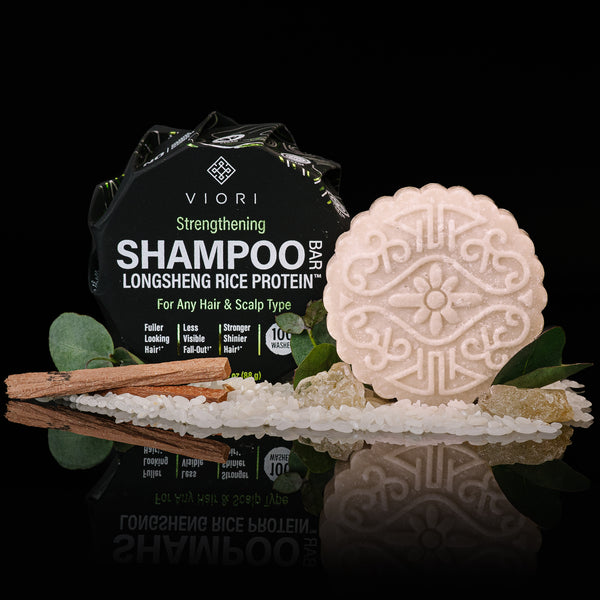
Viori uses Sodium Cocoyl Isethionate (SCI) as the cleanser in their bars. It’s widely known in formulation for producing a creamy, satisfying foam while staying on the milder side compared to more aggressive cleansers. That matters if you want clean hair without that tight, squeaky aftermath.
Protein: The Minimalist Wild Card People Don’t Expect
A lot of people move toward low-ingredient routines because they’re trying to avoid overload. But “minimal” doesn’t automatically mean protein-free-and protein can be either a hero or a headache depending on your hair.
Ingredients like hydrolyzed rice protein can help hair feel stronger, shinier, and more voluminous. But if your hair is very low porosity or prone to stiffness, too much protein too often can make it feel rigid.
Viori notes they use a low concentration of rice protein, designed to be safe for frequent use. That approach tends to work well for people who want support without tipping into that “straw-like” feel.
WHAT CUSTOMERS ARE SAYING
Real reviews for Hidden Waterfall Barra de Champú
The “Single Point of Failure” Trap
Here’s the most counterintuitive truth about low-ingredient shampoo: fewer ingredients can mean fewer ways for a formula to catch you when something isn’t ideal.
When a formula is extremely minimal, one ingredient doing slightly the wrong thing for your hair type can stand out fast-whether that shows up as tangling, dullness, dryness, or scalp discomfort. That doesn’t mean low-ingredient products are bad. It just means they’re not automatically universal.
Picking the Right Viori Bar: Think Scalp First, Then Hair
If you want a practical way to choose, start with your scalp’s behavior (oil production and sensitivity) and then adjust for your lengths (porosity, damage, color).
- Scent sensitivity or reactive scalp: Viori Native Essence (unscented) is often the most direct fit.
- Oily scalp or greasy roots: Viori Citrus Yao is commonly recommended because citrus elements can help break down oil effectively.
- Normal-to-dry scalp or frizz-prone hair: Viori Terrace Garden or Viori Hidden Waterfall are often favored for a more moisturizing feel.
And if you’re color-treated, technique matters as much as the bar itself: build lather in your hands and apply with your fingertips to reduce friction.
How Long Should You Give a Low-Ingredient Switch?
Some people feel results quickly-sometimes after one wash. But in many cases, hair and scalp need time to settle into a new cleansing rhythm.
Viori recommends giving their bars 2-3 months before giving up, since outcomes vary based on what you’re trying to improve (shine, irritation, dryness, volume, or overall strength). If you experience irritation, though, that’s a different story-stop and reassess.
The Takeaway: “Less” Works Best When It’s Intentional
Low-ingredient shampoo isn’t a promise. It’s a formulation strategy. When it’s designed thoughtfully-and matched to your scalp type, porosity, and even your water-it can be one of the best moves you make for hair health.
If you want to sanity-check your routine, ask yourself three questions:
- What was removed to make the ingredient list shorter? (Slip agents? Mineral helpers? Buffers? Fragrance?)
- What are the remaining ingredients now responsible for doing? (Cleansing, comfort, shine, softness, manageability)
- What’s my real-world context? (Hard water, color, damage level, styling products, wash frequency)
Get those answers right, and “low ingredient” stops being a trend-and starts being a solution.


