
If you’ve been eyeing a mane bar shampoo, you’ve probably seen the usual talking points: it’s compact, easy to travel with, and often comes with less packaging. All true. But the real reason some people fall in love with shampoo bars (and others swear them off after two washes) has very little to do with the shape of the product.
What matters is the behind-the-scenes stuff: pH, cleansing chemistry, how a bar changes the amount of friction you put on your hair, and how long hair behaves when it’s washed repeatedly. Once you understand those pieces, the “mystery” of why your friend gets glossy, swingy hair while you get tangly ends starts to make a lot more sense.
The part most articles skip: not all shampoo bars are the same thing
“Shampoo bar” gets used like it’s a single category, but it isn’t. In practice, bars usually fall into two very different families, and they behave differently on the hair fiber.
Soap-based bars vs. syndet bars
- Soap-based bars are made by saponifying oils (a true soap reaction). They often run more alkaline than hair loves, which can raise the cuticle and leave strands feeling rougher-especially if you already deal with frizz or tangling.
- Syndet bars are surfactant-based cleansing bars formulated more like modern shampoos. The advantage is control: they can be made milder and more reliably pH balanced, which tends to play nicer with the cuticle.
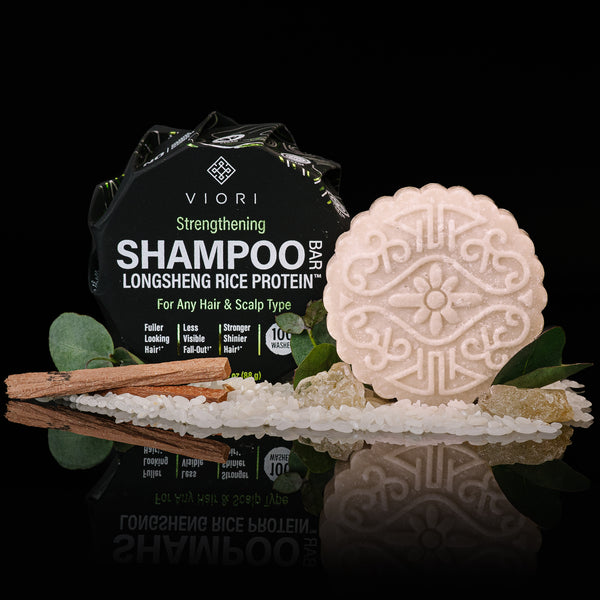
Viori’s shampoo bars are in the syndet camp. They use Sodium Cocoyl Isethionate (SCI) as the cleanser (it’s coconut-derived and known for being gentle), and the bars are pH balanced-a detail that quietly affects shine, frizz, and overall manageability over time.
NOT SURE WHICH PRODUCT IS RIGHT FOR YOU?
TAKE THE QUIZTakes 30 seconds · 134,000+ customers matched
The “waxy hair” complaint is often misdiagnosed
When someone says a shampoo bar left their hair feeling waxy or coated, it’s easy to blame oils, butters, or “too much moisturizing.” In my experience, that explanation is often incomplete.
What’s frequently happening instead is a combination of water chemistry and pH behavior. With the wrong match, minerals in hard water can cling to the hair surface and make it feel dull or coated. People describe it as waxy, heavy, or strangely dry at the same time.
If you’ve ever thought, “My hair is clean but it doesn’t feel clean,” that’s usually the clue.
Here’s the bar-specific variable nobody respects enough: friction
Liquid shampoo spreads easily. A bar introduces mechanical action, and that means you can accidentally rough up the cuticle just by the way you apply it. Hair cuticles behave like shingles on a roof-lift them too much, and you’ll feel it as tangles, frizz, and a lack of shine.
One of the best technique tweaks (especially for color-treated hair) is also one of the simplest: build lather in your hands and apply it with your palms instead of scrubbing the bar directly over the lengths.
Viori even calls this out in their guidance for color-treated hair: for better preservation, lather in your palm and work through with your hands rather than rubbing the bar directly on the head.
Why “mane” length hair needs a different wash strategy
Once hair is long enough to feel like a mane, the ends live a totally different life than the scalp. They’re older, typically more porous, and they’ve seen more heat, sun, brushing, and friction from clothing.
That’s why the best mane routines tend to follow one rule: clean the scalp on purpose, protect the lengths on purpose. When you treat the ends like the scalp-scrubbing and cleansing them the same way-you usually pay for it later with dryness, tangles, and breakage.
The real science of conditioning: it’s partly about electrical charge
Healthy-looking hair isn’t just about “adding moisture.” It’s also about lowering friction and helping the cuticle lie flatter. Damaged areas of hair often carry more negative charge at the surface, and many conditioning ingredients are designed to be positively charged so they’re attracted to those stressed spots.
Viori’s conditioner bars use Behentrimonium Methosulfate (BTMS), a conditioning agent valued for slip and softness. The name trips people up because it contains the word “sulfate,” but BTMS is not the same thing as harsh cleansing sulfates like SLS/SLES. In a conditioner, it functions as a cationic conditioning ingredient that supports detangling and a smoother feel.
Viori’s FAQs also explain why conditioner matters after washing: shampoo removes some of the protective sebum, and conditioner helps replace that protective layer temporarily until it naturally returns.
Rice water: powerful idea, easy to overdo
Rice water has a lot of folklore and a lot of modern hype-and there’s good reason it’s stayed in the conversation. But here’s the nuance that gets lost: concentration and frequency matter, and too much of a good thing can throw off scalp comfort and hair feel.
Viori notes they use a lower concentration of Longsheng rice water because high concentrations used too often can disrupt hair and scalp pH. They aim for similar benefits using a broader, nutrient-rich formula in a pH-balanced amount that can be used regularly if desired.
They also incorporate rice-related ingredients commonly associated with performance benefits-like hydrolyzed rice protein, inositol (Vitamin B8), and panthenol (Vitamin B5)-while keeping protein levels on the lower side for everyday compatibility.
Yes, scent can subtly change how a bar behaves
Most people choose a scent purely for preference, which is fair. But there’s an interesting point in Viori’s FAQs that doesn’t get talked about enough: even when the base formula is consistent, scent systems can nudge performance.
- Citrus Yao includes citric acid, which can help break down oil more effectively-often a better match for normal-to-oily scalps.
- Terrace Garden, Hidden Waterfall, and Native Essence are often chosen by people who lean normal-to-dry, want more comfort, or prefer a gentler feel.
- Native Essence is the unscented option, commonly recommended for fragrance sensitivities.
If you’ve ever wondered why two people use “the same bar” (in theory) and get different results, this is one of those quiet reasons.
“Why does my hair feel dry if the cleanser is mild?” The bar paradox
This is the moment many people quit. A bar can be mild and pH balanced and still leave hair feeling off if the routine is slightly mismatched. In the salon, the causes are usually very practical.
WHAT CUSTOMERS ARE SAYING
Real reviews for Hidden Waterfall Barra de Champú
- Using too much product (easy to do with a bar)
- Water that’s too hot, which can swell the cuticle and increase roughness
- Cleansing the lengths repeatedly instead of focusing on the scalp
- Hard water leaving mineral film that mimics dryness or dullness
- Transition time while hair adjusts to a different routine
Viori also notes something I agree with wholeheartedly: results can be immediate for some, but for others it’s smarter to give a new routine 2-3 months before you decide. Hair and scalp patterns don’t always shift in a week.
A salon-style mane bar shampoo routine (simple, but it works)
If you want your scalp clean without sacrificing the softness of your lengths, follow this method. It’s the same logic I use when coaching clients through any cleansing transition.
- Saturate thoroughly (at least 60-90 seconds). This reduces friction and helps the cleanser distribute evenly.
- Build lather in your hands, then apply to the scalp in sections. Think “scalp wash,” not “hair wash.”
- Massage the scalp and let the suds rinse through the mid-lengths and ends. Most ends don’t need direct scrubbing.
- Condition mid-lengths to ends. With a conditioner bar, you’re looking for slip and coverage, not foam. Let it sit for 2-5 minutes if your hair is long.
- Rinse a bit cooler than usual to encourage a smoother cuticle feel and better shine.
Choosing a Viori bar based on scalp type
If you want the simplest way to choose, start with your scalp rather than your hair texture. Viori’s recommendations can be summed up like this:
- Normal-to-oily scalp: Citrus Yao
- Normal scalp: any option can work; many people like Hidden Waterfall as a balanced choice
- Normal-to-dry scalp: Terrace Garden, Hidden Waterfall, or Native Essence
- Sensitive scalp / fragrance sensitivities: Native Essence (unscented)
And if you’re oily at the roots but dry on the ends, Viori suggests a smart split approach: use Citrus Yao shampoo on the scalp, and a more moisturizing conditioner option on the ends.
Final thoughts: the “best” bar is the one you use correctly
A great mane bar shampoo routine is less about chasing a miracle product and more about lining up the details: pH-balanced cleansing, the right amount of product, low-friction technique, and conditioning where your hair actually needs it.
If you want a customized recommendation, start with the basics: how quickly your roots get oily after washing, whether your hair is color-treated, and whether your strands feel more low-porosity (product sits on top) or high-porosity (it soaks in fast but dries out quickly). With those details, it becomes much easier to choose the right Viori bar pair-and get the kind of hair day you were hoping for.


