
For two decades as a stylist, I’ve heard it all. Clients come in excited about their latest at-home beauty hack, and one idea keeps bubbling up: making shampoo bars from a melt and pour soap base. It seems so simple and satisfying-melt, mix your favorite scent, pour, and you’ve got a custom, “natural” shampoo bar. But here’s the professional truth no one wants to hear: that bar isn’t a shampoo. It’s a recipe for frizz, breakage, and a seriously unhappy scalp.
NOT SURE WHICH PRODUCT IS RIGHT FOR YOU?
TAKE THE QUIZTakes 30 seconds · 134,000+ customers matched
The core of the problem is a basic misunderstanding of chemistry. What you’re creating is soap, and soap is fundamentally incompatible with healthy hair. Let’s break down why, and explore what you should really be looking for in a solid shampoo.
The pH Trap: Why Soap Sabotages Your Strands
Your hair and scalp thrive in a slightly acidic environment, with a perfect pH between 4.5 and 5.5. This acidity keeps the hair’s outer cuticle layer smooth and closed, locking in moisture and creating shine.
A melt and pour soap base, by its very nature, is highly alkaline, with a pH often between 9 and 10. Applying it to your hair is like forcing those cuticles wide open and leaving them that way. The damage is immediate and cumulative:
- The Frizz Factor: Raised cuticles create friction, leading to rough, unruly texture.
- Dullness & Dryness: An open cuticle can’t reflect light properly, stealing your shine. It also lets precious moisture escape.
- Scalp Stripping: It disrupts your scalp’s protective acid mantle, which can trigger irritation, dryness, and imbalance.
- The Hard Water Horror: In many areas, soap reacts with minerals in water to form a sticky “soap scum” film. This leaves hair feeling coated, limp, and never truly clean.
A real shampoo bar is engineered to be pH-balanced for hair. This isn’t a bonus feature; it’s the absolute, non-negotiable foundation. A DIY soap bar simply cannot achieve this.
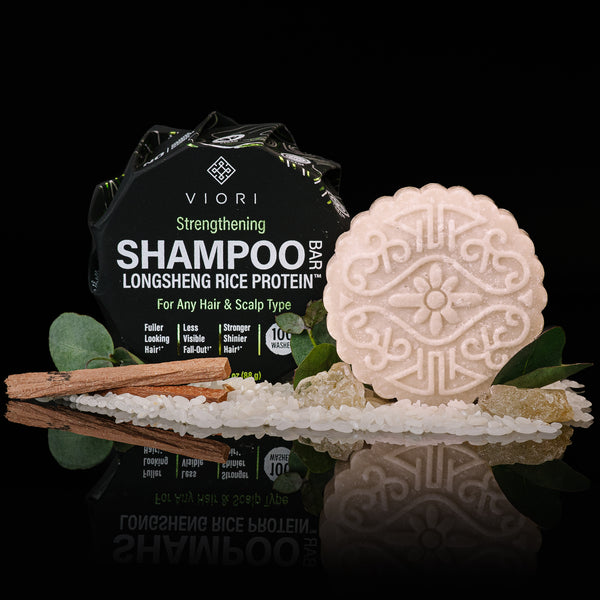
What’s Actually In a Real Shampoo Bar? (Spoiler: It’s Not Soap)
A genuine shampoo bar is a marvel of cosmetic formulation. It’s a concentrated solid packed with ingredients chosen for specific, hair-friendly jobs. Here’s what’s missing from that melted block:
1. The Cleansing System: Surfactants, Not Saponification
Forget lye and oils. Professional bars use gentle, solid cleansing agents called surfactants. A common star is Sodium Cocoyl Isethionate (SCI), a coconut-derived powder that creates a luxurious, creamy lather without the harsh stripping of traditional soap or sulfates. It’s often blended with conditioning agents right in the shampoo formula to provide slip and softness from the very first wash. You cannot replicate this sophisticated system by melting a craft store base.
2. Active Ingredients That Do More Than Smell Good
The best bars are built around a core of nourishing actives, often inspired by time-tested traditions. Take fermented rice water, for example. When prepared with care, fermentation unlocks key nutrients:
- Inositol (Vitamin B8): Known to strengthen hair and help reduce breakage.
- Panthenol (Vitamin B5): Penetrates the hair shaft to boost moisture retention and elasticity.
- Hydrolyzed Rice Protein: Binds to hair to repair damage, fortify strands, and enhance shine.
These aren’t just sprinkled in; they are integral, working components designed to improve your hair’s health with every use.
WHAT CUSTOMERS ARE SAYING
Real reviews for Hidden Waterfall Barra de Champú
3. Scent with a Purpose
In a well-formulated bar, fragrance can be functional. A citrus-forward scent often contains natural citric acid, which can help manage excess oil. The choice between a fresh floral, a warm musk, or no scent at all becomes a thoughtful decision for different scalp types-oily, dry, or sensitive.
How to Spot a Bar That’s Worth Your Hair
So, how do you find a bar that respects this level of science and care? Look for brands that commit to principles that a company like Viori highlights-principles that are the antithesis of a quick DIY project:
- Heritage-Meets-Science Actives: Look for ingredients with a story, sourced and processed in ways that maximize their benefits (like specific fermentation techniques).
- Hair-First Formula: The product should be designed to cleanse gently, deliver nutrients, and support the scalp’s health, all while maintaining that crucial pH balance.
- Clean, Purposeful Ingredients: A steadfast avoidance of harsh sulfates, parabens, and silicones, in favor of a transparent list where every component has a reason for being there.
The bottom line? Your hair is a complex, delicate structure. It deserves more than a melted novelty. It deserves the thoughtful engineering of a true shampoo bar-one that cleanses without compromising, and nourishes without nonsense. Ditch the DIY soap experiment, and give your strands the professional-grade care they’ve been waiting for.


