
Onion juice for hair growth has a way of coming back around every few years-passed along like a family secret, reposted in hair forums, and packaged as a “natural miracle.” And to be fair, it isn’t completely baseless. There’s real chemistry behind why onions can appear to help some people.
But here’s the nuance most articles skip: onion isn’t a true hair-growth switch. It’s better viewed as a blunt, DIY way to influence the scalp environment-especially microbes and inflammation. That can improve hair retention (less shedding, less breakage), which looks like growth. It can also irritate the scalp and trigger the exact problems you’re trying to fix.
Before we talk onions, let’s define “hair growth” the way pros do
When clients tell me, “My hair won’t grow,” they’re rarely talking about what’s happening inside the follicle. More often, they’re experiencing one (or several) of these:
NOT SURE WHICH PRODUCT IS RIGHT FOR YOU?
TAKE THE QUIZTakes 30 seconds · 134,000+ customers matched
- Shedding (more hair than usual in the shower, brush, or on your pillow)
- Breakage (hair snaps, so you never keep length)
- Thinning (the ponytail feels smaller, scalp shows more)
- Patchy slow fill-in (areas that seem to take forever to recover)
That matters because onion doesn’t reliably force follicles to “produce more hair.” Where it may help is by making the scalp calmer and less reactive, so fewer hairs drop early and strands hold up better.
Why onions became a hair-growth hack: the chemistry is the real story
You’ll often hear: “Onions have sulfur, and hair is made of sulfur bonds, so onions grow hair.” Catchy-but incomplete.
When you cut or crush an onion, you trigger a cascade of reactions that creates reactive sulfur-containing compounds. Onions also contain flavonoids (including quercetin). Those compounds can meaningfully affect the scalp-but not in the simplistic “feeding keratin” way people claim.
What onion may actually be doing
The most overlooked angle is that onion behaves less like a growth serum and more like a rough-and-ready scalp intervention. Depending on your scalp type, it may:
- Act as a crude antimicrobial, shifting the scalp’s microbial balance
- Temporarily reduce certain inflammation patterns linked to itch and flaking
- Or, if you’re sensitive, cause irritation that increases inflammation and shedding
The “rarely discussed” reason onion sometimes works: the scalp microbiome factor
Here’s the part I wish more people understood: some “hair growth” problems are really scalp inflammation problems. Not always dramatic-sometimes it’s low-grade irritation that keeps follicles stressed.
If your scalp runs oily and gets itchy or flaky easily, microbial imbalance can become part of the cycle. Onion’s sulfur chemistry can suppress certain microbes, which may reduce that irritated, inflamed feeling. When inflammation drops, shedding can drop too-so density looks better over time.
But the same antimicrobial punch can be too much for a reactive scalp. In that case, you can disrupt the scalp’s balance and end up with dryness, burning, and flaking-followed by more shedding.
If it tingles, is that good? Not necessarily
A lot of DIY advice frames burning or tingling as proof something is “stimulating” growth. From a scalp-health perspective, that’s a risky assumption.
If onion triggers persistent itching or burning, you’re more likely to scratch, inflame the skin, and create micro-injury around follicles. That environment is not friendly to hair retention.
The pH and barrier issue: why onion experiments go sideways
Healthy hair and scalp generally behave best in a mildly acidic range. The problem with homemade onion juice is that it’s not standardized-concentration, freshness, and even how long it sits after crushing can change how it behaves on skin.
If the scalp barrier gets disrupted, you can see a chain reaction: more sensitivity, more dryness, more itch, and sometimes even oily rebound. That’s exactly why I’m big on having a stable baseline routine before you test any DIY “active.”
Where a steady routine (like Viori) makes a difference
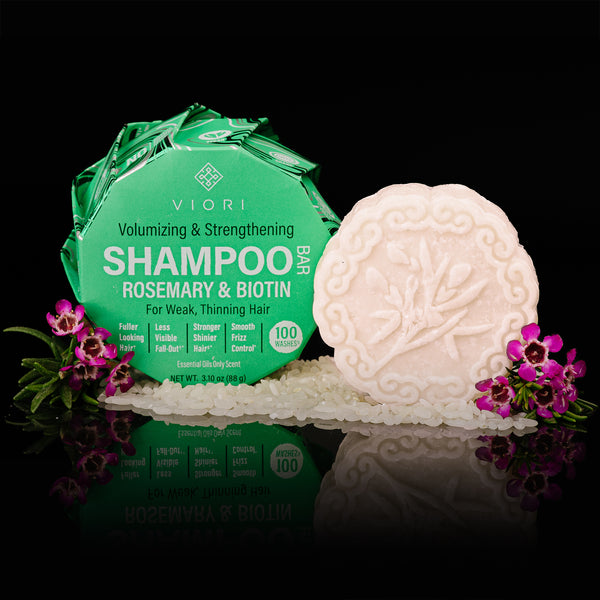
If you want to experiment, the smartest move is keeping everything else calm and consistent. Viori bars are formulated to be pH balanced, and Viori uses a lower concentration of Longsheng rice water because high concentrations of rice water can disrupt hair and scalp pH when overused. A balanced baseline helps you avoid stacking irritation on top of irritation-and it makes it easier to tell whether onion is helping or just aggravating your scalp.
Who might benefit from onion (and who should skip it)
Onion is not a universal “yes” or “no.” It depends on what your scalp is already doing.
WHAT CUSTOMERS ARE SAYING
Real reviews for Rosemary Biotin Shampoo Bar – Thinning Hair | VIORI
Onion might be worth a cautious trial if you have:
- Oily scalp that feels greasy again within 1-2 days
- Flaking that seems oily/waxy rather than dry/powdery
- Mild itch or buildup that improves when your scalp is deeply cleansed
Skip it (or be extremely cautious) if you have:
- A history of eczema, psoriasis, or contact dermatitis
- A scalp that’s already dry, tight, or reactive
- Redness or burning with new products
- A compromised barrier from over-washing, aggressive scrubs, or frequent “detox” routines
Why results are all over the place: dose is never controlled
Two people can both say “I tried onion juice,” but the reality is they often used completely different strengths and methods. These details change everything:
- Fresh juice vs. stored juice (the chemistry shifts as it sits)
- Short contact vs. long contact (minutes vs. an hour is a major difference)
- Frequency (daily use is where irritation commonly shows up)
- Occlusion (covering the scalp can intensify effects-and irritation)
- Friction (vigorous rubbing can inflame the scalp and rough up the cuticle)
If you’re determined to try it: a harm-minimizing plan
This isn’t medical advice-just the safest structure I’d suggest from a scalp-first, hair-retention perspective.
- Patch test first (behind the ear or inner arm), then wait 24-48 hours.
- Dilute it. Stronger isn’t better with reactive ingredients.
- Keep contact time short and rinse thoroughly.
- Stop immediately if irritation continues after rinsing.
- Don’t apply after scratching, exfoliating, or on broken skin.
- Keep your routine gentle and steady-especially your wash day products and technique.
And if you’re using a bar format like Viori, keep friction low: build lather in your hands, apply with fingertips, and avoid scrubbing with the bar directly on the scalp. Less mechanical stress means fewer variables working against you.
So-do onions actually grow hair?
Onion doesn’t reliably “turn on” hair growth. What it can do, when it works, is create a scalp environment where you shed less and keep hair longer-so density and length improve over time.
If your real goal is fuller hair, the most consistent wins I see come from boring (but powerful) fundamentals: a calm scalp, balanced cleansing, proper conditioning, reduced breakage, and patience. If you want to experiment with onion, do it cautiously-and let a stable, pH-considered routine like Viori carry the day-to-day work.


