
If you’ve ever stared at the hair in your brush (or the shower drain) and thought, “I need a women’s hair loss shampoo-now,” you’re not alone. I’ve had this conversation with clients for two decades, and the same frustration comes up every time: you want less shedding, less breakage, and a fuller-looking head of hair without turning your bathroom into a chemistry lab.
Here’s the truth most marketing skips: shampoo is a rinse-off product. That means it isn’t a magic switch for follicles. But a smart shampoo routine can absolutely change what you see day-to-day by improving the scalp environment and reducing the kind of wash-day damage that makes hair look thinner fast.
The unique angle that rarely gets talked about online is this: for many women, the biggest “hair loss shampoo” lever isn’t a trendy growth ingredient-it’s friction. In other words, how much wear-and-tear your hair experiences while you wash it.
First, define what “hair loss” means for you
In the salon, when someone says “I’m losing hair,” I always clarify what kind of loss they’re seeing. Because two completely different issues can look identical in the drain.
1) Shedding from the root (a hair-cycle shift)
Your hair grows in cycles-growth, transition, rest, then release. When life factors push more follicles into the “release” stage at once, shedding spikes. That can happen with stress, illness, postpartum changes, and other internal shifts.
NOT SURE WHICH PRODUCT IS RIGHT FOR YOU?
TAKE THE QUIZTakes 30 seconds · 134,000+ customers matched
A shampoo can’t override hormones or fix a nutrient deficiency. What it can do is reduce scalp stressors that make shedding feel worse-things like irritation, itching, and imbalance from over-cleansing.
2) Breakage along the length (the kind that masquerades as thinning)
This is the one I wish more people understood. Breakage is not your follicle “giving up”-it’s the hair fiber snapping because it’s rough, dry, tangled, or repeatedly stressed.
Breakage is commonly driven by:
- Raised cuticles (rough texture = more snagging)
- Tangling and aggressive detangling
- Frequent wetting/drying cycles that swell and shrink the hair
- Heat styling and chemical history
- Harsh cleansing or poor conditioning balance
- Mechanical abrasion during washing
If your “hair loss shampoo” routine reduces breakage, you may see improvement faster than you’d expect-because you’re keeping more hair on your head instead of snapping it off.
The overlooked science: friction is a hair-loss amplifier
Here’s the term I don’t see enough in hair-loss conversations: tribology-the science of friction and wear. It matters because hair that’s rough or tangled creates more resistance, and resistance turns into pulling, snapping, and breakage.
When your cuticle is lifted, hair grips hair. That can lead to:
- More tangles
- More snapping
- More hair pulled out during detangling (often mistaken for “shedding”)
- A bigger visible “hair loss” moment every wash day
So yes-ingredients matter. But technique and cuticle behavior matter just as much, especially if your hair is fine, porous, highlighted, or easily tangled.
Your scalp is an ecosystem, not just “skin with hair on it”
A healthy scalp is calm, balanced, and comfortable. When it isn’t, you’ll often notice itching, tightness, flaking (dry or oily), and sensitivity. Those symptoms can become a loop: discomfort leads to scratching, and scratching leads to more fall-out and more inflammation.
Another under-discussed issue is buildup and residue-sometimes described as a “film” feeling. Even gentle routines can leave the scalp feeling congested if cleansing and rinsing aren’t matched to your oil level and product load.
A practical way to evaluate a hair-loss shampoo is to ask: Does it cleanse well without leaving my scalp stripped or irritated?
Why pH matters more than most people realize
One of the easiest ways to make hair feel rough and fragile is to use products that are too alkaline. Hair generally behaves best when products stay within a hair-friendly pH range (often discussed around 3.5-6.5).
When pH runs too high, you’re more likely to see:
- Cuticle lift
- More friction
- Dullness
- More tangling
- More breakage during detangling
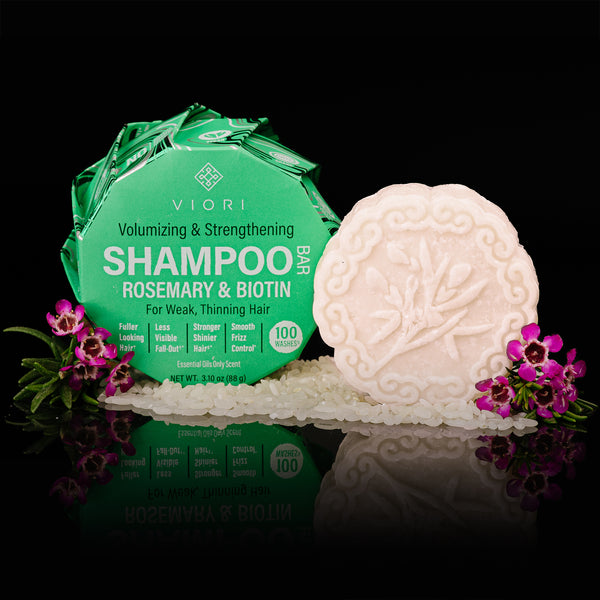
Viori notes that their bars are pH balanced. From a professional standpoint, that’s not a throwaway detail-pH influences cuticle position, and cuticle position affects how much hair survives wash day intact.
“Growth ingredients” in shampoo: what’s realistic?
Because shampoo is rinsed away, the most reliable benefits tend to be supportive rather than dramatic follicle changes. In real life, the best outcomes usually look like healthier scalp comfort and less breakage-not overnight regrowth.
Viori’s formulas include fermented Longsheng rice water and rice-related supporting ingredients such as hydrolyzed rice protein, plus nutrients referenced in their FAQs like inositol (vitamin B8) and panthenol (vitamin B5). In a routine, that combination is most believable for improving the way hair feels and behaves-smoother, stronger, shinier, and easier to manage-while supporting a healthier scalp environment.
A nuance I appreciate: Viori explains they use a lower concentration of rice water because using very high concentrations too often can disrupt scalp and hair pH. That’s the kind of formulation detail that matters if you want a routine you can keep.
The shower habit that can make hair look thinner: rubbing a bar directly on the hair
If you use shampoo bars, this one is important. Rubbing a solid bar directly onto your lengths can create extra friction-especially on fragile ends. That friction can translate into more tangling and more breakage, which can absolutely show up as “I’m losing more hair.”
Viori recommends building lather in your hands and applying with your fingers rather than rubbing the bar directly on your head. That’s not just about preserving color-treated hair-it’s a friction-reduction strategy.
A low-friction wash routine (my pro method)
- Soak hair thoroughly-don’t rush this part.
- Rub the shampoo bar between wet palms to build lather.
- Apply lather mainly to the scalp; let the rinse cleanse the lengths.
- Massage with the pads of your fingers (skip the nails).
- Rinse very well-leftover product can feel like buildup fast.
How to choose a Viori bar for hair-loss concerns (based on scalp type)
Choosing the right “hair loss shampoo” often comes down to choosing the right scalp match. If you get this wrong, you can accidentally create dryness, rebound oil, or buildup-none of which help shedding or breakage.
If your scalp is oily
Viori commonly recommends Citrus Yao for normal-to-oily scalps. Their FAQs note that this scent contains citric acid, which helps break down oil and may help you go longer between washes.
If your scalp is dry or easily irritated
Viori commonly recommends Terrace Garden, Hidden Waterfall, or Native Essence for dry-to-normal scalp types.
If you’re sensitive to fragrance
Native Essence is Viori’s unscented option and is often the gentlest choice for sensitive scalps.
WHAT CUSTOMERS ARE SAYING
Real reviews for Rosemary Biotin Shampoo Bar – Thinning Hair | VIORI
If your roots get oily but your ends are dry
This is incredibly common, especially with fine hair or long hair. Viori’s FAQs suggest using Citrus Yao shampoo for the scalp and a more moisturizing conditioner option on the ends (such as Hidden Waterfall, Terrace Garden, or Native Essence).
Porosity: the reason some routines “work” and others feel like buildup
Porosity is your hair’s ability to absorb and retain moisture. Viori shares a simple water-glass test: if a strand floats it’s typically low porosity, if it sinks it’s typically high porosity.
Low porosity hair
Low porosity hair can be more prone to buildup and can look weighed down at the root-making hair appear thinner. Viori often points low-porosity needs toward a lighter, more cleansing direction such as Citrus Yao.
High porosity hair
High porosity hair absorbs easily but struggles to hold onto moisture. It tangles and breaks more readily, so a more moisturizing direction like Terrace Garden, Hidden Waterfall, or Native Essence is often a better fit-especially if you’re trying to reduce breakage that’s being mistaken for shedding.
What results should you realistically expect (and when)?
Timelines depend on what you’re actually dealing with-shedding, breakage, scalp irritation, or all three.
- Breakage reduction: often days to a few weeks (less snapping, easier detangling).
- Scalp normalization: commonly 4-12 weeks, depending on sensitivity and routine consistency.
- True density changes: typically months, and only if underlying triggers are addressed.
Viori notes that results vary widely and they recommend giving a routine 2-3 months before deciding it isn’t for you.
My bottom line as a stylist
The best women’s hair loss shampoo routine is the one that keeps your scalp calm and your hair intact. That usually means pH awareness, gentle but effective cleansing, solid conditioning, and-most importantly-reducing friction on wash day.
Viori’s pH-balanced approach, gentle cleansing base, fermented Longsheng rice water focus, and their guidance to lather in hands (instead of scrubbing the bar on your hair) align well with what I see work in real life: fewer scalp flare-ups, less breakage, and hair that looks and feels fuller because it’s staying on your head.
If your shedding is sudden, patchy, or accompanied by scalp pain, it’s worth checking in with a qualified medical professional to rule out internal triggers. Shampoo is powerful support-but it shouldn’t carry the entire load.


