
“Organic rice shampoo bar” sounds like it should be an easy win: a simpler routine, fewer questionable additives, and a time-tested ingredient that’s been used in beauty rituals for generations. But once you put a bar into real-life rotation-hard water, heat styling, color, curls, oily roots with dry ends-things get more interesting fast.
After 20 years as a stylist, I’ve learned that the difference between “my hair has never looked better” and “why does my hair feel weird?” usually comes down to a few technical details almost nobody talks about: friction, pH behavior, and how rice-derived ingredients actually deposit and perform on different porosity levels.
Why bars can feel amazing… or totally wrong
Liquid shampoos are largely water, which helps ingredients spread quickly. A bar is concentrated and solid, and that changes the mechanics of washing. Most people instinctively rub the bar directly on their hair-and that’s where things can go sideways.
NOT SURE WHICH PRODUCT IS RIGHT FOR YOU?
TAKE THE QUIZTakes 30 seconds · 134,000+ customers matched
With a bar, you’re more likely to create application friction. Friction lifts the cuticle, and lifted cuticles can mean roughness, tangling, frizz, and faster fading on color-treated hair. The formula matters, yes-but technique matters more than most people want to admit.
The bar technique that protects your hair
If you take only one tip from this entire post, let it be this: build lather in your hands and apply with your fingers. Viori recommends this approach as well, and it’s the same advice I give clients who want smoother results-especially anyone with color or fragile ends.
- Wet hair thoroughly (give it time-hair needs to be fully saturated).
- Rub the shampoo bar between your palms to create a creamy lather.
- Apply lather to the scalp and massage with fingertips (not nails).
- Let the suds rinse through the lengths; avoid aggressive scrubbing on ends.
The most overlooked issue: pH drift in real showers
You’ll hear “pH balanced” tossed around a lot, but it’s not just a label-it’s a performance factor. Hair generally behaves better when products stay in a slightly acidic range, because that supports a smoother cuticle. When products run too alkaline, hair can swell, feel rough, frizz more easily, and become harder to detangle.
Viori is transparent about keeping their bars pH balanced, and that matters-especially if you’re coming from products that leave hair feeling squeaky or stripped.
Here’s the part that rarely gets mentioned online: even a well-formulated product can behave differently depending on your environment. Things that can influence “in-shower” results include:
- Hard water minerals (they can change how cleansing and rinsing feel)
- How concentrated your lather is (thicker lather can behave differently)
- Whether your bar stays wet between uses (softened surfaces can overdose product)
Rice isn’t one ingredient-think of it like a performance system
Most articles reduce rice haircare to one sentence: “Rice protein strengthens hair.” That’s not wrong, but it’s incomplete. A well-designed rice shampoo bar is usually doing several jobs at once-especially when fermentation is involved.
Hydrolyzed rice protein: the “micro-repair” effect (when it’s done right)
Hydrolyzed rice protein can form a light, smoothing film on the hair. On many heads of hair, that translates to improved shine, better body, and a stronger feel-particularly if the cuticle is a little roughed up from heat, color, or everyday wear.
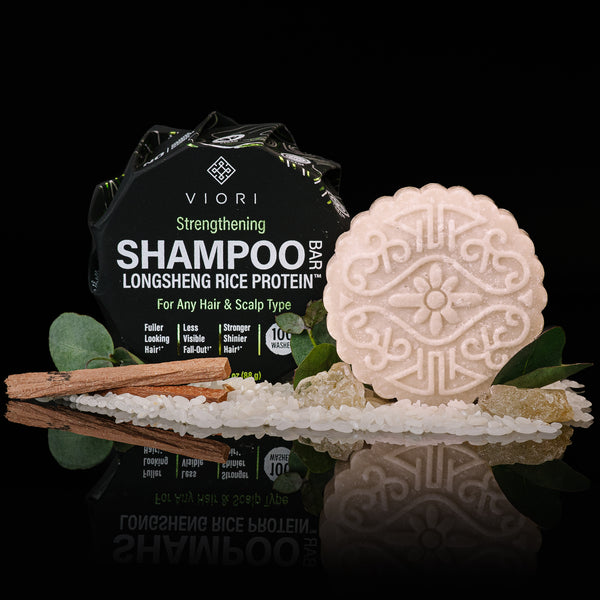
But protein is dose-dependent. Too much, too often-especially on low-porosity hair or protein-sensitive strands-can leave ends feeling stiff or dry. Viori notes they use a low concentration of rice protein, which is a smart choice if you want something that can be used regularly without pushing hair into that “too much protein” zone.
Fermented rice water components: the “wearability” factor
Fermentation changes what rice water brings to the table. Viori highlights fermented Longsheng rice water and the presence of inositol (Vitamin B8) and panthenol (Vitamin B5). In practical hair terms, those kinds of components are often associated with a softer feel, better manageability, and improved resilience over time.
Another important point Viori makes: very high concentrations of rice water can disrupt the scalp and hair’s pH if used too often. Their approach uses rice water in a safe, pH-balanced amount, which is one reason the experience can feel more consistent than heavy DIY routines.
“Organic” isn’t the whole story-the cleanser system matters
One of the biggest differences between a shampoo bar that feels salon-friendly and one that feels like a brick of regret comes down to what’s doing the cleansing. Some bars behave more like traditional soap (which can run more alkaline), and hair often doesn’t love that long-term-especially in hard water.
Viori uses Sodium Cocoyl Isethionate (SCI) as the cleanser, a well-known mild cleansing agent that creates a creamy foam and is generally considered gentler than harsher cleansing systems. This is a major reason some bars cleanse effectively without leaving hair feeling stripped.
The quiet hero in a great bar: built-in conditioning and slip
Bars can be more “hands-on” during application, which is exactly why I pay close attention to whether a formula supports detangling and cuticle smoothness. Viori uses Behentrimonium Methosulfate (BTMS), a conditioning ingredient that helps improve slip and manageability. (Despite the confusing name, it’s used for conditioning performance-not as a harsh cleansing sulfate.)
That built-in conditioning support is especially helpful because it reduces the urge to over-scrub-which is where breakage and frizz often start.
The real selector: porosity (more than “oily vs. dry”)
Most people shop haircare by scalp oil level, but porosity is often the dealbreaker for how a rice bar feels. Viori even shares a simple porosity check using a strand of hair in water. In the salon, porosity is one of the first things I assess because it predicts how hair will absorb, hold, and respond to ingredients.
WHAT CUSTOMERS ARE SAYING
Real reviews for Hidden Waterfall Barra de Champú
- Low porosity: tends to resist absorption and can be prone to buildup; often prefers lighter cleansing and careful conditioning placement.
- Medium porosity: usually the easiest to satisfy; responds well to balanced cleansing and consistent conditioning.
- High porosity: absorbs quickly but loses moisture quickly (often color-treated or damaged); usually benefits from more moisture support and gentle handling.
Color-treated hair: the bar-specific rule that saves your tone
Viori notes that because bars can involve friction, there’s potential for color to release-especially if the color isn’t fully locked into the hair structure. This is why I’m strict about technique for anyone who highlights, tones, glosses, or colors regularly.
Color-preserving rule: palm-lather, apply with hands, and avoid rubbing the bar directly on mid-lengths and ends. Less friction equals less cuticle disruption, and that usually equals better color longevity.
How to tell if your rice shampoo bar routine is working (and what to tweak)
Haircare should feel better over time-not like a chemistry experiment that never ends. Here are the signals I look for when a bar is a good match, and what I adjust when it isn’t.
Signs it’s working
- Clean scalp without tightness or itch
- Less frizz after drying
- Better shine and smoother feel through the lengths
- Easier detangling in the shower
Signs you need an adjustment
- Stiff or brittle ends: can be protein sensitivity or not enough conditioning time; focus conditioner on ends and let it sit longer before rinsing.
- Waxy or draggy feel: often hard water, under-rinsing, or applying the bar directly; lather in hands and rinse longer.
- Roots get oily too fast: scalp may not be fully cleansed (not enough lather at the roots) or conditioner is creeping too close to the scalp.
The bottom line
An organic rice shampoo bar isn’t automatically great-or automatically wrong. The best results come when the formula and the mechanics of washing are working together: a mild cleanser system, pH balance, smart (not excessive) protein use, and enough slip to keep friction low.
Viori’s approach checks those boxes in a way that tends to translate well across many hair types: pH-balanced bars, SCI cleansing, low-level rice protein, fermented Longsheng rice water components (including Vitamins B5 and B8), and conditioning support designed to keep hair feeling soft instead of stripped.
If you want help dialing in your routine, start with your scalp type, porosity, and whether your hair is color-treated. Those three details will tell you more than any trend ever will.


