
“Orvus shampoo” gets talked about online like it’s the nuclear option for buildup-the kind of wash you reach for when your hair feels heavy, dull, oily, or just plain coated. And yes, products in this category can absolutely deliver that just-washed, ultra-clean feeling.
But after 20 years behind the chair, I can tell you the real story is more interesting (and more useful): the biggest issue isn’t simply “it’s drying.” The bigger risk is that an Orvus-style deep cleanse can change how your hair behaves mechanically-how it slides, how it tangles, how it snags, and how easily it breaks during the detangling and styling that comes afterward.
So let’s talk about what’s actually happening, why some people love the results, why others swear it “ruined” their hair, and how to get the benefits of a reset without accidentally starting a cycle of frizz, irritation, and overcorrection.
What people usually mean by “Orvus shampoo”
In most hair conversations, “Orvus shampoo” is shorthand for a very high-detergency cleanser-a product that cuts through oil and residue fast and leaves little behind. It’s popular because it feels decisive: one wash and your roots feel lifted, your hair feels lighter, and the foam makes it feel like it’s working.
NOT SURE WHICH PRODUCT IS RIGHT FOR YOU?
TAKE THE QUIZTakes 30 seconds · 134,000+ customers matched
That intensity is exactly why you have to use it thoughtfully. Strong detergency doesn’t just remove “dirt.” It removes the things that make hair feel smooth and behave nicely between your fingers.
The rarely discussed part: hair has “friction settings”
Most people think hair health is all about moisture and protein. Those matter, of course, but day-to-day manageability often comes down to something less talked about: friction.
Your hair shaft is covered in overlapping cuticle layers-like shingles on a roof. When those “shingles” have a little lubrication, strands glide past each other. When that lubrication is stripped, hair shifts into a higher-friction mode and everything feels harder: washing, detangling, styling, and even air-drying.
Why strong cleansers can cause tangles and breakage (without “melting” your hair)
This is where people get confused. They’ll say, “That wash damaged my hair,” and they’re not imagining it-yet it’s often not because the cleanser chemically destroyed the hair fiber in one go.
More often, what happens is:
- The boundary layer gets stripped (your natural slip and softness).
- Strand-to-strand friction increases (more tangling and grabbing).
- Detangling forces go up (you pull harder without realizing it).
- Mechanical wear increases (cuticle chips, split ends, breakage at weak points).
So the “damage” can show up during the comb-out or blow-dry afterward-especially if your hair is color-treated, bleached, gray/white, or naturally high-porosity.
Scalp reality check: clean isn’t always calm
Your scalp is skin, and skin has a barrier. Very aggressive degreasing can interfere with that barrier, which can leave the scalp feeling tight, itchy, or reactive. Sometimes it even triggers flaking that looks like dandruff, but is actually dryness-related shedding of the scalp’s outer layer.
Another pattern I see constantly: someone deep-cleans because they get oily, the scalp gets stripped too hard, and then oil comes back quickly-sometimes faster than usual. Not everyone experiences rebound oiliness, but it’s common enough that I always flag it for clients who are chasing that squeaky-clean feeling.
The hard water twist that makes people clarify again (and again)
Here’s a detail that doesn’t get nearly enough attention: if you live with hard water, your “reset wash” may not feel like a reset for long.
Hard water minerals can interact with cleansing and rinsing in ways that leave hair feeling:
- rough or draggy
- dull
- strangely coated even after “deep cleaning”
And when hair feels coated, the instinct is to clarify harder next time-which can turn into a frustrating loop. If your hair feels worse the more you “reset,” hard water and friction are two of the first things I investigate.
When an Orvus-style cleanse actually makes sense
There are times when a true deep cleanse is useful. I’m not anti-clarifying-I’m pro-purpose. A strong reset can be helpful occasionally, especially when you need to remove something stubborn.
Examples where a deep cleanse can be a legitimate tool:
- heavy oils or waxy layers that won’t budge
- persistent residue affecting volume or curl pattern
- a periodic “blank slate” before reworking a routine
The key is frequency and follow-up. A powerful cleanser without a plan afterward is where people get into trouble.
If you’re going to do a reset wash, do it like a pro
If you want the benefits without the fallout, focus on reducing friction during and after the wash. This is where technique matters as much as product choice.
Reset-wash technique (low-friction version)
- Detangle before the shower so you’re not fighting knots on stripped hair.
- Cleanse the scalp, not the lengths. Most buildup lives at the root area; let the suds rinse through the ends.
- Keep contact time short. Clean, rinse, move on-don’t “soak” the hair in high detergency.
- Condition on purpose. You’re restoring slip so hair can glide again.
A more modern solution: balanced cleansing that doesn’t start the pendulum swing
Many people reach for an Orvus-style cleanser because they feel stuck between two extremes: “gentle” cleansers that seem to leave residue, and “strong” cleansers that leave hair squeaky but unruly.
In practice, the healthiest routines usually sit in the middle-effective cleansing paired with a system that supports the cuticle and scalp long-term. This is where pH balance and consistent conditioning make a noticeable difference over time.
How Viori fits into a “clean but not stripped” routine
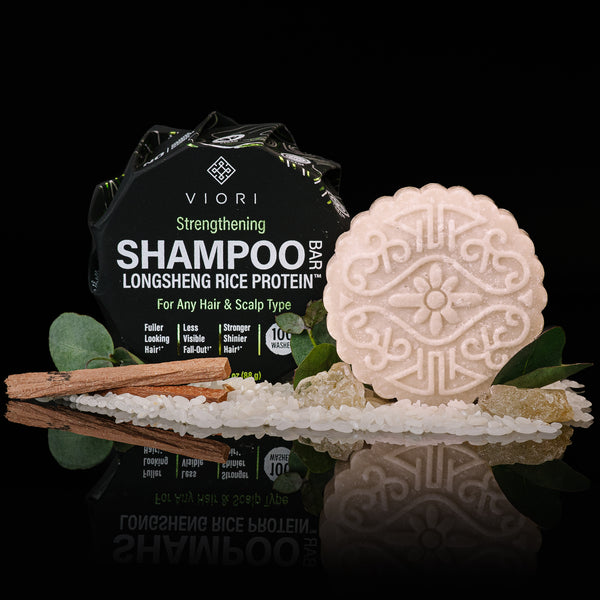
Viori’s shampoo and conditioner bars are designed around a balanced approach: they’re formulated to be pH balanced, and they pair cleansing with conditioning support so hair doesn’t get stuck in that high-friction, tangle-prone state.
They also include fermented Longsheng rice water in a controlled amount. That matters because very high concentrations of rice water used too often can disrupt hair and scalp pH, while a thoughtfully balanced formula can deliver many of the same feel-good benefits-softness, shine, and stronger-looking hair-without pushing the hair into that stripped zone.
WHAT CUSTOMERS ARE SAYING
Real reviews for Hidden Waterfall Barra de Champú
Another detail I like for real-world routines: Viori’s options can be matched to how your scalp behaves. If you tend to be oilier at the scalp, Citrus Yao is commonly chosen. If you run normal-to-dry or you’re trying to calm the scalp, Terrace Garden, Hidden Waterfall, or the fragrance-free Native Essence are often better fits.
The hidden downside nobody warns you about: clarifiers can break your “style memory”
This is one of the biggest reasons people feel like their hair goes off the rails after a harsh cleanse: the hair may behave differently for several washes, not just one.
When the boundary layer is stripped, you can see changes like:
- more static and flyaways
- waves and curls that won’t clump the same way
- hair that suddenly feels like it needs more heat to cooperate
Then people add heavier leave-ins or oils to compensate, hair gets weighed down, and the urge to clarify returns. That’s the pendulum swing. A balanced routine helps stop it.
Bottom line
Orvus-style shampoos are famous because they’re powerful. But power without strategy can cost you: more tangles, higher breakage risk during detangling, irritated scalp, and hair that feels unpredictable from wash to wash.
If your goal is hair that feels genuinely clean and stays soft, manageable, and consistent, aim for a routine built on effective cleansing, pH balance, and reliable conditioning slip. That’s exactly the kind of framework Viori supports-and it’s what keeps your hair out of the strip-and-repair cycle.
If you want help tailoring this to your hair, start with three questions: how oily are you by day two, do you have color or bleach, and do you suspect hard water. Those details make a bigger difference than most people realize.


