
If you’ve been Googling rice soap for hair loss, you’ve probably noticed how the conversation tends to flatten into the same promise: rice equals stronger hair, stronger hair equals growth, end of story.
In real life (and in the salon), it’s rarely that simple. The more useful-and honestly, more interesting-truth is this: rice-based cleansing bars often help people with “hair loss” by improving hair retention. That means fewer hairs breaking off, less scalp irritation-driven shedding, and less damage during the wash process. Growth is slow and complicated. Retention is where your daily routine has the most leverage.
Before anything else: “Hair loss” usually means two different things
When someone tells me they’re losing hair, I always ask one question first: “Are you seeing full hairs, or lots of shorter broken pieces?” Because those are two different problems-and they need different solutions.
NOT SURE WHICH PRODUCT IS RIGHT FOR YOU?
TAKE THE QUIZTakes 30 seconds · 134,000+ customers matched
1) Breakage that looks like hair loss
This is damage along the hair shaft. The follicle isn’t necessarily the issue-the strand is simply snapping before it ever gets a chance to look long and full.
- What it looks like: short hairs everywhere, frayed ends, flyaways that won’t behave
- What it feels like: tangly, rough, “dry no matter what,” or prone to knots after washing
- Common triggers: harsh cleansing, raised cuticle, heat/chemical history, aggressive detangling
2) True shedding from the root
This is hair leaving the follicle (often with a small white bulb on one end). Shedding can increase for reasons that have nothing to do with shampoo-stress, hormones, inflammation, nutrient status, medication changes, and more.
- What it looks like: full-length hairs in the shower, brush, or on your pillow
- What may accompany it: itch, tightness, flaking, tenderness (though shedding can also happen with a totally “normal” scalp)
The piece most people miss: pH can make rice-based routines brilliant-or a mess
One reason rice water gets such mixed reviews online is that DIY fermentation is inconsistent. Same rice, different day, different temperature, different container, different timing-and the final pH can drift more than people realize.
That matters because hair and scalp generally behave best in a mildly acidic range. When cleansing routines push too alkaline, hair can swell, the cuticle can lift, and tangles ramp up fast. When routines skew too acidic too often, some scalps get tight, stingy, or reactive.
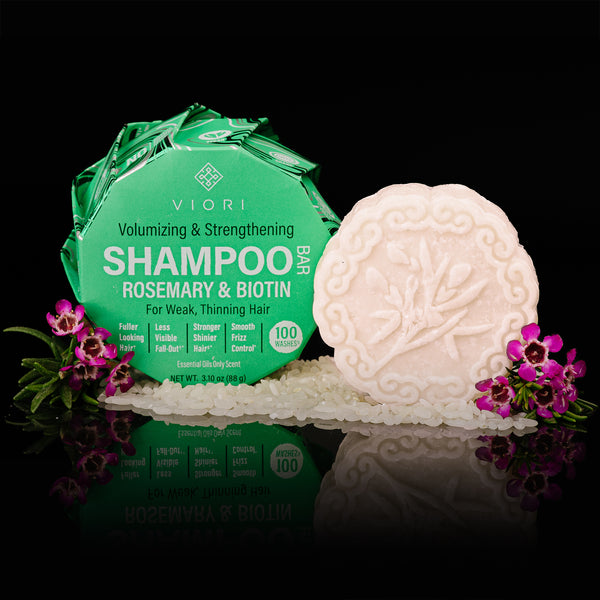
This is where a modern bar approach can be a game-changer. Viori uses a lower concentration of Longsheng rice water specifically because high concentrations used too frequently can disrupt hair and scalp pH. Their products are designed to be pH balanced, which is one of those “not sexy but extremely important” details that affects how your hair behaves wash after wash.
The “bar effect”: friction is the hidden problem nobody warns you about
Bars can be amazing-but they change how people wash. I’ve watched plenty of clients unintentionally get rougher with their hair because a bar feels more “direct,” and that extra friction is a big deal when you’re already worried about thinning.
When you rub a bar directly on your hair (especially on the crown, hairline, and nape), you can increase:
- Cuticle abrasion (the strand gets rougher and snags more easily)
- Tangling (hair fibers catch on each other when friction is high)
- Breakage during detangling (the moment many people interpret as “hair loss”)
If hair loss is the concern, technique matters. For color-treated hair, Viori even recommends building lather in your hands and applying with your fingers rather than rubbing the bar directly on the head-this same technique is a smart move for anyone trying to reduce breakage and protect fragile strands.
Fermented rice isn’t just “protein”: the more interesting story is in the fermentation
Most rice haircare talk stops at protein. But fermentation changes the conversation. Viori notes that fermenting rice increases levels of vitamin B8 (inositol) and vitamin B5 (panthenol), both of which are widely used in haircare for their conditioning and strengthening support.
Here’s why that matters for hair loss concerns: ingredients that improve flexibility, surface smoothness, and overall strand resilience can reduce breakage. Less breakage often equals a noticeable improvement in “hair loss” complaints, even before any true growth change could realistically show up.
Viori also uses hydrolyzed rice protein in a low concentration. That’s worth mentioning because “more protein” isn’t always better-some hair types become stiff or brittle when protein is overdone. Balanced formulation tends to behave more consistently across different textures and porosities.
Not all “rice soap” is actually hair-friendly cleansing
Another common confusion: people say “soap” when they mean any solid cleanser. But true soap (saponified oils) often runs alkaline, which can be rough on hair-especially if your hair is fine, porous, curly/coily, or chemically processed.
Viori’s shampoo bars use Sodium Cocoyl Isethionate (SCI) as the cleanser, a mild surfactant often called “baby foam.” For anyone dealing with scalp sensitivity or breakage, a gentler cleansing system can make it easier to keep the scalp clean without setting off the dryness-tangle-breakage cycle.
If you’re trying to keep hair on your head, conditioner is not optional
When people panic about shedding, they sometimes strip their routine down to “just cleanse.” The problem is that hair left without enough conditioning tends to tangle, and tangles create breakage-fast.
Viori explains it well: washing removes some protective sebum, and conditioner-being positively charged-can cling to the hair fiber to help restore slip and protection while your natural oils rebuild. In practical terms, slip reduces combing force, knotting, and snap-off.
Choose based on scalp type, not just scent preference
Scalp comfort plays a bigger role in hair retention than most people realize. When the scalp is irritated, people scratch. When people scratch, they create inflammation and mechanical trauma. And when hair feels greasy too quickly, people overwash-and overwashing adds friction.
WHAT CUSTOMERS ARE SAYING
Real reviews for Rosemary Biotin Shampoo Bar – Thinning Hair | VIORI
Viori’s recommendations are built around scalp type:
- Normal to oily scalp: Citrus Yao is often recommended because citrus (including citric acid) helps break down oil effectively.
- Dry to normal scalp: Terrace Garden, Hidden Waterfall, or Native Essence are commonly suggested for a more moisturizing experience.
- Sensitive scalp or fragrance concerns: Native Essence is the unscented, gentlest option.
A realistic timeline (so you don’t quit right before things start working)
Hair growth is slow. Retention signals show up sooner. Viori notes results vary-some people notice changes quickly, while others need consistency, and they generally recommend giving it 2-3 months before giving up.
- After 1-3 washes: changes in feel-less squeak, less tangling-if you’re using good technique and conditioning well
- 2-6 weeks: breakage reduction and scalp comfort are easier to spot
- 2-3 months: a fair window to judge “hair loss” improvements more honestly
- 4-6+ months: a better timeframe to evaluate true density trends
The stylist-approved way to use a rice-based bar for hair loss concerns
If you want the benefits without turning your wash routine into a friction fest, use this approach:
- Lather in your hands first and apply the foam to your scalp with fingertips.
- Cleanse the scalp, not the ends; let runoff wash through lengths.
- Condition every wash, focusing mid-lengths to ends.
- Detangle gently (wide-tooth comb is your friend) and don’t rush it.
- Match the bar to your scalp type so you’re not chasing oil or dryness with the wrong tool.
One last note: when it’s time to look beyond haircare
If shedding is sudden, patchy, painful, or dramatically heavier than your normal, don’t try to “shampoo your way out of it.” It’s worth checking in with a medical professional to rule out hormonal shifts, thyroid issues, nutrient deficiencies, inflammatory scalp conditions, or medication-related triggers.
And as with any personal care product, especially if you have sensitivities or allergies, patch testing is always a smart move.
Bottom line
The best way to think about rice soap for hair loss is not as a magical growth trick, but as a technical, daily support system: balanced pH + gentle cleansing + fermented rice components + low-friction technique + consistent conditioning. When those pieces click, many people see what they’re actually hoping for-less breakage, a calmer scalp, and hair that has a better chance of staying put long enough to look fuller over time.


