
After twenty years working hands-on with every hair type imaginable, I've developed a healthy skepticism about "miracle" ingredients. Most come with bold promises and little substance. But yucca powder? This botanical deserves the attention it's finally receiving-not because of marketing hype, but because of genuinely fascinating chemistry that most people have never heard about.
Let me take you behind the scenes of this ancient cleansing ingredient and show you why it's capturing the attention of both traditional hair care enthusiasts and modern formulation scientists.
The Saponin Paradox: Nature's Self-Cleaning Molecule
Here's what makes yucca powder genuinely remarkable: it's not just that it cleans hair-it's how it accomplishes this feat through a chemical phenomenon that deserves more recognition.
Yucca contains steroidal saponins, which are complex molecules that function as nature's surfactants. Unlike synthetic cleansers, these saponins have a unique molecular architecture: one end loves water (hydrophilic) while the other loves oil (lipophilic). This dual personality allows them to form structures called micelles-think of them as tiny spherical cages that trap oils and debris, suspending them in water so you can rinse everything away cleanly.
But here's where it gets truly fascinating: yucca saponins operate at a significantly lower pH than most commercial shampoos.
While conventional shampoos typically clock in at a pH of 5-7, yucca-based cleansers naturally maintain a pH closer to 4.5-5.5. Sound familiar? That's nearly identical to your scalp's natural acid mantle.
Why this matters: When you cleanse with ingredients that match your scalp's natural pH, you preserve the delicate microbiome-that ecosystem of beneficial bacteria protecting you against inflammation, dandruff, and excessive oil production. This is biological harmony, not chemical warfare against your own body.
The Molecular Gentleness Factor: Size Matters
Here's an angle rarely explored in hair care discussions, but one that changed how I think about cleansing: yucca saponins are significantly larger molecules than synthetic sulfates.
NOT SURE WHICH PRODUCT IS RIGHT FOR YOU?
TAKE THE QUIZTakes 30 seconds · 134,000+ customers matched
This molecular size difference has profound implications for hair health that I wish more people understood.
Synthetic sulfate molecules are small enough to penetrate the hair cuticle and reach the cortex, where they can disrupt protein structures and strip natural lipids from deep within the hair shaft. This leads to that notorious "squeaky clean" feeling-which, I hate to break it to you, is actually a sign of damage, not cleanliness.
Yucca saponins, conversely, are too large to deeply penetrate the cuticle. They work primarily on the surface, lifting away dirt and excess sebum without infiltrating and disrupting the hair's internal structure. The result? Clean hair that retains its structural integrity and natural moisture balance.
Think of it this way: synthetic detergents are like power washers, while yucca saponins are like precision brushes. Both clean, but only one preserves what it touches.
The Anti-Inflammatory Underground
Beyond cleansing, yucca powder contains compounds called yuccaols and resveratrol analogs-potent anti-inflammatory agents that deserve far more attention in hair care discussions.
Scalp inflammation is an underlying factor in numerous hair problems I see in my chair every week: accelerated graying, follicle miniaturization (thinning), seborrheic dermatitis, and even certain types of hair loss. Yet conventional shampoos often exacerbate inflammation through harsh surfactants and synthetic fragrances.
Yucca's anti-inflammatory compounds work at the cellular level, inhibiting pro-inflammatory cytokines (particularly IL-1β and TNF-α for the science enthusiasts) that trigger the inflammatory cascade. For anyone dealing with sensitive scalp conditions, this biochemical action represents a fundamentally different approach-addressing root causes rather than merely managing symptoms.
I've watched clients struggle with sensitive scalps for years, cycling through "gentle" formulas that still left them irritated. Understanding this anti-inflammatory mechanism helped me realize they needed something that worked with their scalp biology, not just something marketed as "soothing."
The Hard Water Phenomenon (This One Surprised Me)
Here's a technical consideration that came up repeatedly with clients in certain areas: yucca saponins demonstrate exceptional performance in hard water-water with high mineral content like calcium, magnesium, and iron.
In hard water, synthetic detergents form insoluble complexes with minerals, creating that dreaded soap scum that dulls hair and requires periodic clarifying treatments. Yucca saponins, however, have a different chelating profile. Their molecular structure allows them to continue functioning effectively even in mineral-rich water, preventing buildup while maintaining cleansing efficacy.
If you live in an area with hard water and struggle with dull, product-laden hair despite regular washing, this chemical difference could be genuinely transformative. I've seen it work wonders for clients who thought their hair was the problem when it was actually their water chemistry.
The Protein-Sparing Effect
Most people don't realize that every time you wash your hair, you remove some amount of structural protein from the hair shaft-a process called protein leaching. Over time, this contributes to weakened, brittle, porous hair.
Yucca powder contains mucopolysaccharides-long-chain sugars that form a protective film on the hair surface during cleansing. This biofilm acts as a barrier, significantly reducing protein loss during the washing process.
Even more intriguing: these same mucopolysaccharides have been shown in dermatological studies to enhance moisture retention by up to 30% compared to untreated hair. They work by forming hydrogen bonds with the hair's keratin structure, essentially reinforcing the cuticle's natural barrier function.
After two decades of watching people damage their hair through the very process meant to care for it, this protein-sparing effect represents a genuinely different approach to cleansing.
The Enzymatic Dimension: Gentle Exfoliation
A rarely discussed aspect of yucca is its natural enzyme content, particularly proteases and amylases. In the context of scalp health, these enzymes serve a fascinating purpose: they gently digest dead skin cells and protein-based debris that accumulate on the scalp.
This enzymatic exfoliation is far gentler than physical scrubs or chemical exfoliants, yet remarkably effective at maintaining scalp clarity and promoting healthy follicle function. It's a biological approach to scalp care that works with your skin's natural turnover cycle rather than forcing it.
I've recommended enzymatic approaches for clients with buildup issues who couldn't tolerate harsher clarifying methods, and the results consistently impress me.
The Environmental Chemistry Angle
From an ecological standpoint, yucca saponins are completely biodegradable, breaking down into simple sugars and sterols within days of entering water systems. Contrast this with synthetic surfactants, which can persist in aquatic environments for months, accumulating in sediments and potentially disrupting aquatic ecosystems.
But there's a deeper environmental consideration: yucca plants are remarkably drought-resistant and require minimal water to cultivate. In an era where water scarcity is becoming increasingly critical, the sustainability mathematics of yucca-based hair care becomes genuinely compelling.
As someone who's watched the beauty industry's environmental impact firsthand, ingredients that deliver results and environmental responsibility aren't just nice-they're necessary.
The Practical Reality: Limitations to Consider
Professional honesty requires acknowledging that yucca powder shampoo isn't without limitations. After twenty years in this industry, I've learned that overselling anything ultimately does a disservice to clients.
The lather factor: Yucca saponins produce less foam than synthetic surfactants. For many people psychologically conditioned to associate lather with cleanliness, this can feel unsatisfying-even though cleaning efficacy isn't dependent on foam volume. I'll admit, retraining your brain on this takes time.
The preparation requirement: Powdered yucca typically requires mixing with water before use-an extra step that some find inconvenient compared to ready-to-use liquid formulations. In our fast-paced world, this isn't trivial.
The scent profile: Pure yucca has an earthy, slightly vegetal aroma that some find unappealing. Without added fragrance, it lacks the aromatic experience many associate with shampooing. Not everyone considers this a drawback, but it's worth knowing upfront.
Availability and cost: High-quality yucca powder remains relatively niche and can be more expensive than conventional alternatives. Access and affordability matter, especially for everyday essentials.
A Formulation Perspective: Working With Yucca
For those interested in incorporating yucca powder into their hair care routine, understanding proper formulation makes all the difference. Here's what I've learned through experimentation:
Concentration matters: Effective cleansing typically requires a 2-5% concentration of yucca saponins. Too little won't adequately cleanse; too much can feel slightly drying due to the saponins' degreasing action. Finding your sweet spot takes some trial and error.
pH optimization: Adding a small amount of citric acid or vitamin C powder can help maintain the ideal pH range, enhancing both cleansing performance and scalp health benefits.
Synergistic ingredients: Yucca pairs exceptionally well with other gentle botanical cleansers and conditioning agents like aloe vera and plant proteins. Combination formulations often perform better than single ingredients.
Water quality consideration: In very hard water, adding a chelating agent like citric acid can enhance yucca's performance by preventing mineral interference.
The Future Frontier: Yucca Extracts in Modern Formulations
The most exciting development in this space isn't powdered yucca itself, but rather advanced extraction technologies that isolate and concentrate specific saponin fractions while removing compounds that contribute to color and odor.
These refined extracts can be incorporated into modern bar and liquid formulations, offering the biochemical benefits of yucca in more consumer-friendly formats. Some innovative formulations are beginning to explore this territory, though it remains largely under the radar.
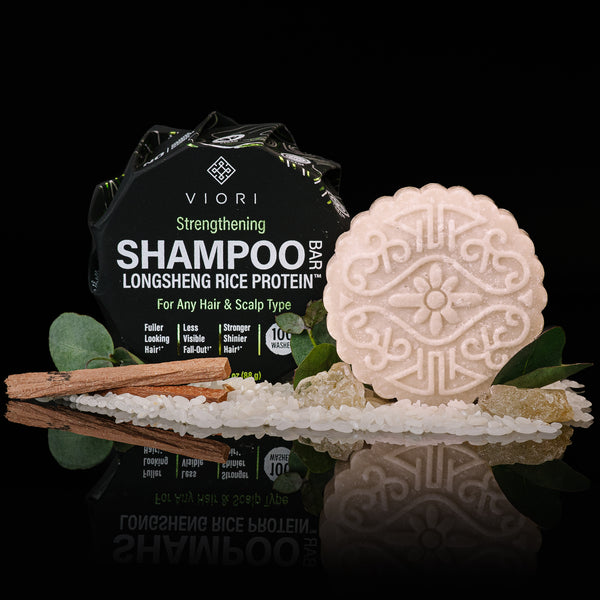
At Viori, while our formulations center on the time-tested benefits of fermented Longsheng rice water, we recognize that the broader movement toward plant-based, pH-balanced cleansing represents an important evolution in hair care science. Whether through rice, yucca, or other botanical saponins, the principle remains the same: working in harmony with hair's natural chemistry rather than against it.
WHAT CUSTOMERS ARE SAYING
Real reviews for Hidden Waterfall Barra de Champú
The future of hair care isn't about a single "perfect" ingredient-it's about understanding diverse botanical chemistry and choosing what aligns with your hair's unique needs.
The Bottom Line: Redefining "Clean"
Perhaps the most important paradigm shift yucca powder represents is a fundamental reconceptualization of what "clean" means.
For decades, we've equated cleanliness with complete oil removal, high foam, and that stripped, squeaky feeling. Yucca challenges this definition, offering instead a gentler approach: selective cleansing that removes excess oil and debris while preserving the protective lipid layer that keeps hair healthy.
It's the difference between sterilization and balance-and increasingly, both scientific research and my professional experience suggest that balance produces superior long-term results.
I've watched countless clients improve their hair health not by doing more, but by doing less damage through their cleansing routine. Sometimes the breakthrough isn't a new treatment-it's stopping the harm your current routine unknowingly causes.
Who Should Consider Yucca-Based Cleansing?
Based on my experience, yucca powder shampoo particularly benefits:
- People with sensitive, inflammation-prone scalps who react to conventional formulations
- Those with fine or chemically-treated hair that can't tolerate protein loss from aggressive cleansing
- Hard water sufferers struggling with dullness and buildup despite regular washing
- Anyone seeking genuinely sustainable hair care that aligns environmental values with performance
- Individuals with dry, brittle hair who need gentler cleansing that preserves natural moisture
That said, every head of hair is unique. What transforms one person's hair care routine might require adjustment for another.
Final Thoughts From the Salon Chair
After two decades of working with hair, I've learned that the most profound improvements often come from questioning our basic assumptions. For years, we accepted that effective cleansing required harsh chemistry. We believed squeaky-clean hair was healthy hair. We thought plant-based alternatives were nice philosophically but couldn't match synthetic performance.
Yucca powder challenges all of these assumptions through legitimate biochemistry, not marketing spin.
For anyone struggling with dry, damaged, or sensitive scalp-prone hair despite using "gentle" formulations, exploring yucca-based cleansing might reveal that the problem wasn't your hair at all-it was the very definition of clean you were working toward.
Sometimes the ancient wisdom and modern science aren't opposites-they're two paths leading to the same truth. Your hair doesn't need to be stripped to be clean. It needs balance, protection, and chemistry that works with its natural structure rather than against it.
That's not revolutionary. That's just good sense-backed by really fascinating science.
As with any significant change to your hair care routine, introduce new ingredients gradually and observe how your unique hair and scalp respond. Start with once or twice weekly and adjust based on your results. The art of hair care lies in finding your own perfect balance.


