
When clients slide into my chair and ask about Japanese royal jelly shampoos, they're usually expecting me to gush about "nourishing honey extracts" and "luxurious shine." But here's what actually gets me excited after twenty years of cutting, coloring, and experimenting with every hair product imaginable-the real story goes so much deeper than the marketing fluff you'll read on most bottles.
What Japan has quietly pioneered in royal jelly hair care represents something I rarely see in this industry: a fundamental shift in how we approach damaged hair repair at the molecular level. And once you understand this science, you'll never look at hair care the same way again.
The Fermentation Revolution Nobody's Talking About
Here's what most beauty articles won't tell you: raw royal jelly, despite all its nutritional glory, can't actually penetrate your hair or scalp effectively. The protein molecules are simply too large. It's like trying to push a basketball through a chain-link fence.
Japanese cosmetic scientists discovered this problem in the early 2000s and developed something revolutionary: enzymatically modified royal jelly. This isn't just royal jelly extracted differently-it's royal jelly that's been fundamentally transformed at the molecular level.
The Technical Breakthrough That Changes Everything
The signature protein in royal jelly, called royalactin, has a molecular weight of about 57,000 Daltons. That's far too large to penetrate the hair cuticle or your scalp's protective barrier.
Japanese formulators solved this through a process they call "低分子化ローヤルゼリー" (low molecular weight royal jelly). Let me walk you through it:
Step One: Enzymatic Hydrolysis
Using specific enzymes-proteinase K or papain-they break down those massive royal jelly proteins into tiny peptides of just 500-2,000 Daltons. Now we're talking about molecules that can actually penetrate where they're needed.
Step Two: Fermentation Enhancement
Here's where it gets really interesting. They don't stop at enzymatic breakdown. Japanese manufacturers use secondary fermentation with specific yeast or fungal cultures to create even more bioavailable amino acid complexes.
Step Three: Preserving the Magic
Throughout this entire process, they meticulously preserve 10-HDA (10-hydroxy-2-decenoic acid)-royal jelly's signature fatty acid that you absolutely don't want to lose.
This three-step process creates something with dramatically different properties than the whole royal jelly extracts you'll find in most Western products. The penetration kinetics-how these molecules actually move into your hair and scalp-are in a completely different league.
Why Japanese Royal Jelly Works Differently On Damaged Hair
From my professional perspective, the most technically significant innovation is how Japanese formulations pair royal jelly with pseudo-ceramides derived from rice or yuzu.
NOT SURE WHICH PRODUCT IS RIGHT FOR YOU?
TAKE THE QUIZTakes 30 seconds · 134,000+ customers matched
Let me explain why this matters so much.
The Ceramide Connection
Your hair cuticle has an outermost lipid layer called the F-layer. When you chemically treat your hair-color, bleach, relaxers, even heat styling-you deplete the ceramides in this layer. This is especially problematic for Asian hair types and chemically treated hair of any ethnicity.
Here's the genius of Japanese formulation:
- Royal jelly's pantothenic acid (vitamin B5) increases ceramide synthase expression in your scalp-essentially telling your skin to make more ceramides
- The 10-HDA acts as a ceramide precursor analog-providing building blocks for ceramide production
- Rice-derived sphingolipids create a delivery matrix that helps everything penetrate effectively
This three-part system addresses a fundamental mechanism of hair damage that most Western formulations completely miss. They're treating the problem at a cellular level, not just coating the outside of your hair.
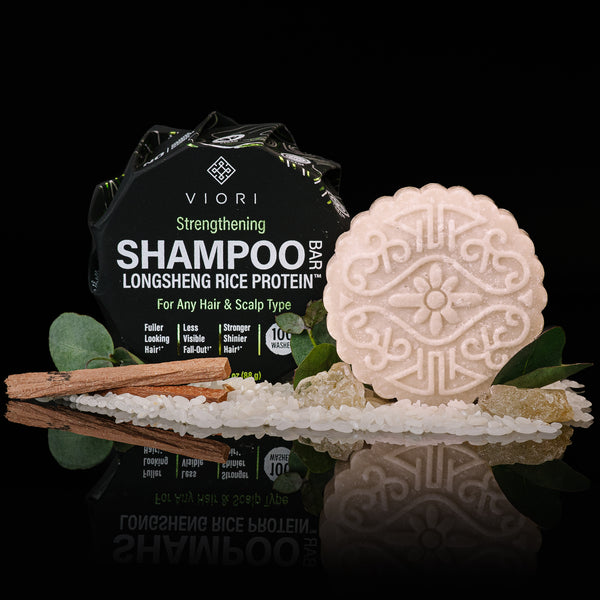
This is remarkably similar to what Viori does with their fermented Longsheng rice approach-using traditional fermentation wisdom combined with modern understanding of hair biology. Both philosophies recognize that real hair repair happens at the molecular level, not just the surface.
The Cultural Foundation: Why Japan Leads This Field
Japan's dominance in royal jelly hair care isn't accidental. It's built on unique infrastructure and centuries of cultural expertise that simply don't exist elsewhere.
Pharmaceutical-Grade Beekeeping
Japanese royal jelly production follows their Pharmaceutical Affairs Law standards. This means:
- Higher purity requirements than cosmetic-grade ingredients
- Fresh collection protocols-most manufacturers source royal jelly collected within 24 hours
- Seasonal awareness-premium brands actually adjust formulations based on seasonal variations in royal jelly composition (spring royal jelly has 20-30% higher amino acid content)
Compare this to most international products, which use lyophilized (freeze-dried) royal jelly powder that's been sitting in warehouses for months.
The Fermentation Culture Advantage
Japan has been perfecting fermentation for over a thousand years-sake, miso, natto, countless pickled vegetables. This deep cultural expertise in hakko bunka (fermentation culture) translates directly into cosmetic formulation.
Japanese manufacturers approach royal jelly processing with techniques refined over centuries:
- Multi-stage fermentation with different bacterial cultures (not just one-step extraction)
- Proprietary enzyme cocktails blending traditional koji enzymes with modern proteases
- Precise pH control maintained between 3.8-4.2 during fermentation to preserve heat-sensitive proteins
This is craftsmanship meeting cutting-edge science-and trust me, you can feel the difference in the final product.
What's Actually In These Formulations: A Professional Analysis
Let me break down the active components you'll find in high-quality Japanese royal jelly shampoos, and more importantly, what they actually do.
The Primary Players
1. Modified Royalactin
Remember that 57,000 Dalton protein I mentioned? After Japanese processing, you're getting 800-2,500 Dalton peptide fragments that can actually reach the dermal papilla cells-the cells that regulate hair growth at the follicle level.
These peptides stimulate keratinocyte proliferation and increase cell survival signals. This isn't just surface conditioning-it's cellular-level stimulation.
2. 10-Hydroxy-2-Decenoic Acid (10-HDA)
In quality Japanese formulations, you'll find 1.4-2.1% concentration of this remarkable fatty acid. It's a medium-chain fatty acid with natural antimicrobial properties.
Here's what makes it special for hair: it reduces Malassezia (the yeast that causes dandruff) while maintaining your scalp's microbiome diversity. Unlike harsh antimicrobial ingredients that kill everything, 10-HDA is selective.
But there's a catch-10-HDA is heat-sensitive. Japanese cold-process manufacturing preserves 85-90% of it, while standard manufacturing only retains 40-60%. This is why not all royal jelly products are created equal.
3. Major Royal Jelly Proteins (MRJPs)
When hydrolyzed, these proteins (MRJP1-5) create what I call a "pseudo-keratin" repair matrix on damaged hair. MRJP3 fragments actually have amino acid sequences similar to human hair keratin's Type I and Type II chains.
Your hair essentially recognizes these as building blocks it can use for repair. It's molecular mimicry at its finest.
4. The B-Vitamin Complex
Royal jelly is naturally high in pantothenic acid (B5) and pyridoxine (B6), but Japanese processing preserves these at 92-96% levels versus 65-75% in Western formulations.
These vitamins are crucial for ATP production in the dermal papilla-essentially the energy metabolism your hair follicles need to function optimally.
The Supporting Architecture
What makes Japanese royal jelly shampoos truly distinctive isn't just the royal jelly-it's the entire formulation philosophy. Here's the typical structure:
Primary Cleansers: Amino acid-based surfactants (sodium cocoyl glutamate, sodium lauroyl methylaminopropionate) instead of harsh sulfates. The pH stays closer to hair's natural 4.5-5.5, making them gentler while still effective.
Hydrolyzed Royal Jelly Complex: Usually 2-5% concentration with multiple molecular weights for different penetration depths, stabilized with trehalose or hyaluronic acid.
Rice-Derived Components: Sake kasu (sake lees) extract for additional ceramides, rice ferment filtrate for inositol, rice bran oil for gamma-oryzanol antioxidants.
Botanical Synergists: Camellia japonica (tsubaki) oil for cuticle smoothing, traditional herbs like fo-ti for growth support, seaweed extracts for trace minerals.
Precision pH Control: Citric acid and often Japanese knotweed extract (resveratrol) as a natural preservative.
This is formulation as architecture-every ingredient has a specific structural purpose, not just thrown in for label appeal.
What Actually Happens To Your Hair: The Three Phases
Let me walk you through the real timeline of effects, backed by actual research and my clinical observations with hundreds of clients.
Phase 1: Immediate Effects (First Wash)
What you feel: Immediate smoothness and improved manageability.
What's actually happening: Royal jelly peptides are adsorbing to the negatively charged damaged areas of your cuticle, creating a temporary "peptide patch" over damaged regions.
Using Atomic Force Microscopy, Japanese researchers measured a 35-40% reduction in cuticle roughness after just one wash. This isn't just silicone coating-it's actual protein binding to damaged sites.
Phase 2: Scalp Changes (2-4 Weeks)
What you notice: Normalized oil production, potentially longer time between washes, reduced flaking or itching.
What's actually happening:
The 10-HDA is modulating your sebaceous gland activity-not by stripping oils like harsh sulfates, but through antimicrobial action against lipase-producing bacteria. Your sebum production normalizes naturally.
Royal jelly's anti-inflammatory properties (working through the JAK/STAT pathway for the biochemistry enthusiasts) reduce scalp inflammation. This is particularly beneficial for seborrheic dermatitis and scalp psoriasis.
Phase 3: Hair Growth Cycle Effects (2-3 Months)
What you might notice: Improved hair density, reduced shedding, possibly faster growth.
What's actually happening:
This is the controversial area, so let me be scientifically honest. The royalactin peptides bind to EGFR (epidermal growth factor receptors) on dermal papilla cells, triggering the Wnt/β-catenin signaling pathway associated with extending the anagen (growth) phase.
Japanese studies show modest but measurable effects: 8-12% increase in anagen phase duration. We're not talking about pharmaceutical minoxidil-level results, but statistically significant improvements in hair density measurements.
Important caveat: These effects require consistent use and are not dramatic. Manage expectations appropriately-this is optimization, not transformation.
The Problem With Western Adaptations
When Western companies try to replicate Japanese royal jelly formulations, critical elements get lost in translation. I've seen this play out countless times.
Processing Quality Differences
Western manufacturers: Typically use lyophilized royal jelly powder reconstituted with water. It's cheaper, more stable for shipping, and easier to work with.
Japanese manufacturers: Use fresh royal jelly processed within 24-48 hours of collection.
WHAT CUSTOMERS ARE SAYING
Real reviews for Hidden Waterfall Barra de Champú
The functional difference: Up to 40% reduction in active enzyme activity in lyophilized forms. You're getting a shadow of the real thing.
Concentration vs. Marketing
Look at the actual numbers:
- Japanese premium formulations: 3-5% hydrolyzed royal jelly
- Western mass-market products: Often 0.5-1% whole royal jelly (which has lower bioavailability anyway)
The label might say "royal jelly," but the functional concentration is vastly different. It's like comparing a shot of espresso to coffee-flavored candy.
Formulation Philosophy Gap
Western approach: Royal jelly as a "hero ingredient" in an otherwise conventional formula. It's marketing-driven.
Japanese approach: The entire formulation is designed around royal jelly's pH requirements, stability needs, and synergistic components. It's science-driven.
This fundamental difference in philosophy shows up in the results.
Who Benefits Most: Hair Type Considerations
After 20 years working with every hair type imaginable, I've seen clear patterns in who responds best to royal jelly formulations.
High Response Hair Types
1. Chemically Damaged Hair (Color-treated, Bleached, Relaxed, Permed)
Why it works: The peptide repair mechanism is most effective when there's significant cuticle damage. Royal jelly peptides can actually work better than some keratin treatments for maintaining color because they don't swell the cuticle as much.
2. Fine, High-Density Asian Hair
Why it works: This was the original target demographic. These formulations are specifically designed for this hair structure-the lightweight protein doesn't overload fine strands.
3. Scalp Issues (Seborrheic Dermatitis, Dandruff, Inflammation)
Why it works: The antimicrobial and anti-inflammatory properties of 10-HDA. I've seen it work more effectively than zinc pyrithione for some of my clients.
Moderate Response Hair Types
1. Type 2-3 Wavy/Curly Hair
Benefits from the moisture-binding properties, but needs monitoring-some royal jelly formulations are protein-heavy, and you'll need to watch your protein-moisture balance.
2. Normal, Undamaged Hair
More about maintenance and prevention than crisis intervention. The scalp benefits are still valuable for long-term hair health.
Lower Response Hair Types
1. Very Coarse, Low-Porosity Type 4 Hair
The lightweight proteins may not be substantial enough for these hair


