
Shampoo bars look simple-just add water and wash, right? In practice, they behave more like a concentrated, “on-demand” cleansing system than a bottled shampoo substitute. That difference is why some people get incredible shine and airy volume from bars, while others end up with tangles, dullness, or that frustrating coated feeling.
After 20 years doing hair, I’ve learned that most shampoo-bar problems aren’t really “bar problems.” They’re usually a mix of application technique, friction, pH behavior, and even how your water interacts with the formula. Once you understand those pieces, shampoo bars become far more predictable-and far more satisfying.
The “micro-lather zone”: why a bar cleans differently than a liquid
Liquid shampoo comes out pre-dissolved. A shampoo bar doesn’t. With a bar, you create a thin film of water and cleanser as you work-what I call the micro-lather zone. It forms right where the bar meets wet hands or hair, and it’s one of the most overlooked reasons bars can feel “stronger” in certain spots.
NOT SURE WHICH PRODUCT IS RIGHT FOR YOU?
TAKE THE QUIZTakes 30 seconds · 134,000+ customers matched
Because the bar is dissolving as you use it, the cleanser concentration can temporarily spike in the area you’re rubbing most. If you keep hitting the same zone-often the crown-you can accidentally create cleansing hotspots (clean/dry at the top, but not as clean underneath).
A simple fix is also one of the most professional: instead of using the bar like a scrub brush, build your lather first, then distribute it evenly. Viori even recommends getting a lather in your palm and working it through with your hands rather than rubbing the bar directly on your head-especially helpful if you’re protecting color-treated hair.
The friction factor: the mechanical “variable” shampoo bars introduce
Here’s the part that almost never gets discussed clearly online: shampoo bars introduce friction. Bottled shampoo is mostly glide. A bar can tempt you into dragging a solid surface across the hair shaft, and that changes the wear-and-tear equation.
Hair cuticles behave like overlapping shingles. When you repeatedly rub a bar along the lengths, you can lift and roughen those shingles-especially on already-fragile hair. That can lead to tangling, frizz, dullness, and a rough feel that people mistake for “buildup.” Sometimes it’s not buildup at all; it’s abrasion.
Hair types that notice friction the fastest
- Fine hair (less structural tolerance for rough handling)
- High-porosity or chemically processed hair (cuticle edges are already compromised)
- Curly/coily hair (more bends and weak points where friction catches)
If you want the bar format to be consistently kind to your hair, think like a stylist: cleanse the scalp thoroughly, but treat your lengths gently and sparingly.
pH: not a buzzword, the difference between shine and swell
When the pH of a cleanser is too high (too alkaline), the cuticle can swell and lift, which makes hair feel rough and look dull. Over time, that can contribute to dryness and breakage. This is why pH-balanced haircare matters-especially in solid formats where consumers tend to group everything together as “just a bar.”
Viori notes an important guideline: hair products are best kept in a pH range of roughly 3.5-6.5. Products that trend alkaline can create that squeaky-clean sensation that some people interpret as “extra clean,” when in reality it often signals cuticle stress.
The cleanser architecture: why “mild” can still feel powerful
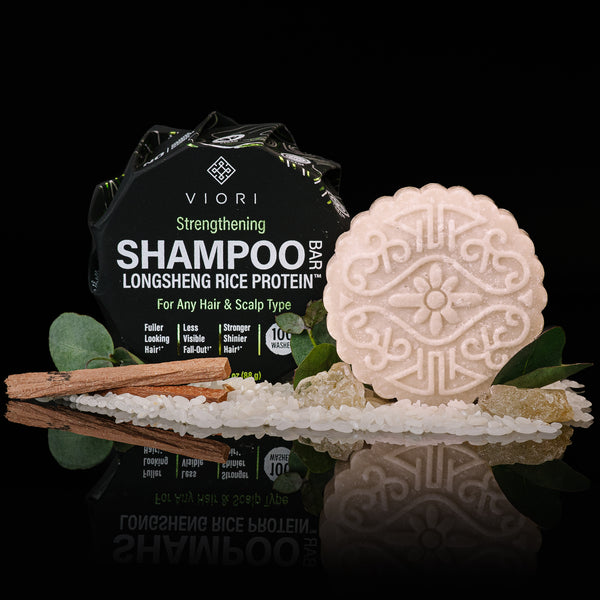
Foam can be misleading. A rich lather doesn’t automatically mean harsh cleansing; it depends on the surfactant system. Viori uses Sodium Cocoyl Isethionate (SCI), a cleanser often considered very mild while still creating satisfying lather. In day-to-day use, that usually translates to a clean scalp without that tight, stripped feeling that makes people overcompensate with heavy conditioning.
The charge dance: why conditioner changes everything after cleansing
One of my favorite “behind the curtain” explanations is about charge. After shampooing, hair can present more negative charge sites, especially where it’s damaged. Conditioners are typically positively charged, so they bind to the hair fiber-particularly to the most stressed areas-helping restore slip, manageability, and softness.
Viori explains this nicely: shampooing removes some natural sebum, and conditioner (being positively charged) adheres to the strands to help replace that protective feel until your natural oils rebalance.
In real life, this is why people who say “bars make my hair tangle” often improve dramatically when they stop scrubbing lengths and start conditioning with intention.
A detail most people miss: “scent” can have a functional impact
Usually, fragrance is just fragrance. But sometimes a scented version can slightly shift how a product behaves. Viori points out that Citrus Yao contains citric acid, which helps break down oil effectively-one reason it’s commonly recommended for normal-to-oily scalps. That’s an uncommon, useful nuance: the base formula may be consistent, but certain components can still influence performance for specific scalp types.
Porosity + shampoo bars: why low-porosity hair often thinks it has “residue”
Low-porosity hair tends to resist absorption. With shampoo bars, I see two common patterns: people don’t emulsify enough lather before applying, or they apply too much trying to “feel” the product working. Both can leave hair feeling like there’s something sitting on it.
Viori’s porosity guidance is practical: low porosity often does better with a lighter, more cleansing approach (many people lean toward Citrus Yao) and avoiding heavy oils and leave-ins that can sit on the surface.
Hard water: the silent saboteur
If you live in a hard-water area, you already know the struggle-your hair can feel coated or dull no matter what you use. Hard water can interfere with cleansing and rinse-off, which makes people use more product, which then makes rinsing even harder. It’s a vicious cycle.
WHAT CUSTOMERS ARE SAYING
Real reviews for Hidden Waterfall Barra de Champú
If your shampoo bar results are inconsistent, don’t ignore your water. Small changes-better lather-building, longer rinsing, and not over-conditioning near the roots-often make a dramatic difference.
Color-treated hair: bars can be great, but friction matters
Viori notes their bars are formulated to be color-safe, but they also include an important caution: because bars can encourage friction, the way you apply them matters for color longevity. If you’re protecting color, the simplest upgrade is to lather in your hands and apply with your fingers rather than rubbing the bar directly on hair.
Storage is performance: how you keep the bar changes how it behaves
A shampoo bar should dry fully between uses. If it stays wet, it can soften, dissolve faster, and deliver inconsistent “doses” each wash. Viori recommends keeping bars out of direct water contact and allowing airflow (their bamboo holders are designed to help bars air out and dry). This isn’t just about making the bar last longer-it’s about keeping performance consistent.
The stylist-approved shampoo bar routine
If you want shampoo-bar results without the common headaches, follow this routine. It’s simple, but it’s structured for how hair actually behaves.
- Soak thoroughly. Most cleansing failures start with not enough water saturation.
- Build lather in your hands. This prevents hotspots and reduces friction on the cuticle.
- Cleanse the scalp-don’t scrub the lengths. Let the rinse water carry suds through the ends.
- Consider two passes. A quick first cleanse removes surface oil; the second actually cleans the scalp.
- Condition strategically. Apply mid-length to ends; let it sit a few minutes if you’re frizz-prone or high-porosity.
- Rinse longer than you think. Pay attention to the nape and behind the ears.
- Dry the bar properly. Keep it out of standing water and give it airflow.
Choosing a Viori direction based on real scalp needs
If you’re deciding where to start with Viori, I like to keep it grounded in scalp behavior, not guesswork.
- Normal to oily scalp: Citrus Yao (citric acid helps break down oil)
- Dry to normal scalp: Terrace Garden or Hidden Waterfall
- Sensitive scalp or fragrance sensitivities: Native Essence (unscented)
- Oily scalp + dry ends: Citrus Yao shampoo on the scalp, then a more moisturizing Viori conditioner choice on the ends
Final thoughts: shampoo bars reward precision
Shampoo bars aren’t difficult, but they are different. If you treat a bar like a scrubber, you can create unnecessary friction and uneven cleansing. If you treat it like a concentrated professional cleanser-emulsify, distribute, rinse well-you’ll get the best of what the format offers: clean roots, soft lengths, and a routine that feels refreshingly simple.


