
Shampoo bars have been having a moment for a while now-and for good reason. Done well, a bar can leave your hair light, clean, and surprisingly soft. Done poorly (or used the wrong way), it can leave you wondering why your ends feel rough, your roots feel coated, or your color seems to fade faster than usual.
After two decades behind the chair, I can tell you the truth most articles skip: a shampoo bar isn’t just “liquid shampoo without water.” It’s a different delivery system-and that changes how cleansing agents release, how conditioning ingredients cling to hair, how friction affects the cuticle, and even how consistent your results feel week to week.
This post breaks down the hidden mechanics of shampoo in bar form in a way that’s technical enough to be accurate, but practical enough to actually use in your real routine-especially if you’re using Viori.
NOT SURE WHICH PRODUCT IS RIGHT FOR YOU?
TAKE THE QUIZTakes 30 seconds · 134,000+ customers matched
Not all “shampoo bars” are the same (and this is where most confusion starts)
People talk about shampoo bars like they’re one category. They’re not. The biggest divide is between bars that behave like soap and bars that behave like a modern shampoo.
Soap-based bars vs. syndet bars
- Soap-based bars are made by saponifying oils. They often run more alkaline, which can leave the hair cuticle more raised over time-meaning more tangles, more frizz, and a rougher feel (especially on porous or color-treated hair).
- Syndet bars are built with shampoo-style cleansers (surfactants) and can be formulated to be pH balanced, which is far more hair-friendly.
With Viori, you’re working with a cleanser called Sodium Cocoyl Isethionate (SCI). In the haircare world, SCI is often considered a gentler, more refined cleansing option than many harsher surfactants-one reason people frequently describe the wash as clean but not stripped.
The rarely discussed factor: bars change the physics of washing
If there’s one “unique angle” I wish more people understood, it’s this: shampoo bars don’t just change ingredients-they change friction. And friction is a huge deal for hair health.
A bar is solid. If you rub it directly along your lengths repeatedly, you can unintentionally increase:
- Cuticle abrasion (think: roughness and loss of shine over time)
- Tangling from hair-on-hair friction
- Frizz from cuticle edges lifting
- Color fade risk if you’re heavy-handed (more friction = more cuticle disturbance)
This isn’t a reason to avoid bars-it’s a reason to use them like a pro.
The “stylist method” for using a shampoo bar
Viori actually recommends the technique I prefer in the salon: don’t scrub your head with the bar. Use the bar to make lather, then cleanse with your hands.
- Thoroughly saturate your hair (incomplete saturation makes cleansing uneven and increases friction).
- Rub the bar between wet hands to build a lather.
- Apply the lather to your scalp in sections (that’s where oil and buildup live).
- Massage with fingertips and let the rinse water cleanse the mid-lengths and ends.
- Rinse well, then follow with conditioner.
Why some bars feel “conditioning” even during the shampoo step
Here’s a piece of hair science most people never hear: your hair fiber carries a charge, and damaged hair tends to skew more negatively charged. Ingredients with a positive charge are naturally attracted to it, which can improve slip and manageability.
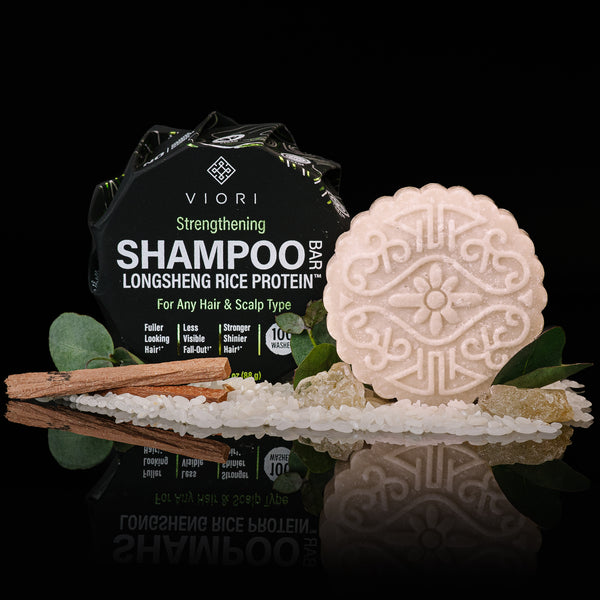
Viori includes Behentrimonium Methosulfate in their formulas. Despite the intimidating name, it’s widely used in haircare as a conditioning agent because it helps hair feel smoother and detangle more easily. This can be part of why some people are surprised by how soft their hair feels even right after cleansing.
pH balance isn’t marketing-it’s cuticle control
If your hair has ever felt “squeaky,” tangled, or dull after washing, pH is often part of the story. Hair products generally perform best in a mildly acidic range-commonly referenced around pH 3.5-6.5. In that zone, the cuticle tends to lie flatter, which can mean more shine and less friction.
Viori emphasizes that their products are pH balanced. That matters even more in bar form because a bar lives a double life: it gets wet during use, then sits in a humid shower environment between washes. A well-engineered, pH-balanced bar is designed to keep performing consistently through that wet/dry cycle.
The rice water conversation is oversimplified-here’s the real version
Rice water gets treated like “the more, the better.” In practice, concentration and balance matter. Viori notes they use a lower concentration of Longsheng rice water because overly concentrated rice water used too often can disrupt scalp and hair pH.
They also build the formula with other supportive ingredients and highlight fermentation-associated components like Vitamin B8 (inositol) and Vitamin B5 (panthenol). Panthenol, in particular, is a workhorse ingredient in haircare for improving feel and flexibility.
Another detail I appreciate as a stylist: Viori states they use a low concentration of rice protein. That’s important because while protein can be strengthening, too much can leave certain hair types feeling stiff-especially if hair is already dry or protein-sensitive.
Porosity matters more than curl pattern (and it predicts bar success)
People love to sort products by “curly vs. straight,” but the more useful lens is often porosity-your hair’s ability to absorb and hold onto moisture.
- Low porosity hair can resist moisture and is more prone to buildup, so it often responds best to lighter cleansing and careful conditioning.
- High porosity hair absorbs quickly but struggles to retain moisture, so it typically needs more moisture support and gentle handling to reduce frizz and breakage.
Viori’s own guidance reflects this: they often point low porosity users toward a more cleansing direction like Citrus Yao, while higher porosity or drier-feeling hair often does well with more moisturizing options like Terrace Garden, Hidden Waterfall, or the fragrance-free feel of Native Essence.
WHAT CUSTOMERS ARE SAYING
Real reviews for Hidden Waterfall Barra de Champú
Storage isn’t just about making the bar last-it affects your results
This one surprises people: how you store a shampoo bar can change how it performs. If your bar stays damp or sits in water, it can soften and release more product than intended. That means your “dose” per wash changes-so your results can feel inconsistent.
Viori recommends keeping bars out of direct water contact and allowing them to dry between uses. Their bamboo holders are designed to help with airflow and dry-down, which supports more predictable performance over time.
Yes, scent can influence performance (it’s not always just preference)
Scent is usually discussed like it’s purely aesthetic. With Viori, there’s also a functional side: they note that Citrus Yao contains citric acid, which can help break down oil more effectively-one reason it’s commonly recommended for normal-to-oily scalps. Meanwhile, Native Essence is unscented and tends to be a smart starting point for those who are fragrance-sensitive or simply prefer no added scent.
A simple routine that makes a shampoo bar shine
If you want your bar to deliver the best possible hair day, keep it simple and consistent.
- Fully wet hair and scalp before you start.
- Lather the bar in your hands and apply to the scalp (not the ends).
- Rinse thoroughly.
- Use conditioner after washing-especially on mid-lengths and ends.
- If frizz is a struggle, let conditioner sit for at least 5 minutes before rinsing.
Final thoughts
A shampoo bar isn’t just a trend. When it’s formulated well and used with the right technique, it’s a smart piece of hair engineering-one that balances cleansing, cuticle behavior, and scalp comfort in a compact format.
If you’ve tried bars before and felt unsure, don’t assume the format is the issue. Most of the time, the fix is choosing a pH-balanced bar, matching it to your scalp needs, and adjusting your technique so friction stays low. That’s where Viori tends to stand out: pH-balanced design, thoughtful ingredient choices, and usage guidance that actually protects the hair fiber.


