
If you’ve ever searched for shampoo reviews and walked away more confused than before, you’re not alone. One person claims it’s “the cleanest my hair has ever felt,” another says it “destroyed my curls,” and someone else insists it caused flakes. It’s tempting to treat those comments like a simple thumbs up or thumbs down-but most of the time, they’re not actually reviewing the shampoo itself.
After 20 years working with every hair type you can imagine, I’ve learned that reviews are usually reporting something more complicated: the collision between a formula and a person’s scalp biology, hair porosity, water quality, and application technique. Once you know how to decode those variables, reviews suddenly start making sense-and you get much better at predicting what will work for you.
The rarely discussed trick: “review forensics”
Here’s the idea: treat each review like a tiny, uncontrolled experiment. The outcome depends on more than the product. It depends on what else is happening around it.
NOT SURE WHICH PRODUCT IS RIGHT FOR YOU?
TAKE THE QUIZTakes 30 seconds · 134,000+ customers matched
In almost every shampoo review, there are four forces at play:
- The cleanser system (how oil and dirt are removed)
- The conditioning/deposition system (what’s left behind on the hair for slip and softness)
- The person’s baseline (sebum production, sensitivity, damage level, porosity)
- The environment + technique (hard water, wash frequency, friction, how the product is applied)
Most review sections don’t control for any of this, which is why you’ll see two people honestly reporting totally opposite results.
What reviewers mean when they say “clean” (the surfactant story)
A shampoo’s job is to lift away oil (sebum) and grime. That happens through surfactants-cleansing agents that surround oil so it can rinse away. Reviewers rarely mention surfactants, but their wording gives them away.
How to translate common review phrases
- “Squeaky clean,” “stripped,” “tangles instantly” usually points to cleansing that’s too aggressive for that person’s scalp and hair, or a routine with too much friction.
- “Doesn’t feel like it cleans,” “my hair is still oily,” “waxy film” can mean the cleanser is mild, but it can also signal hard water issues, product buildup, or simply not working the cleanser through long enough.
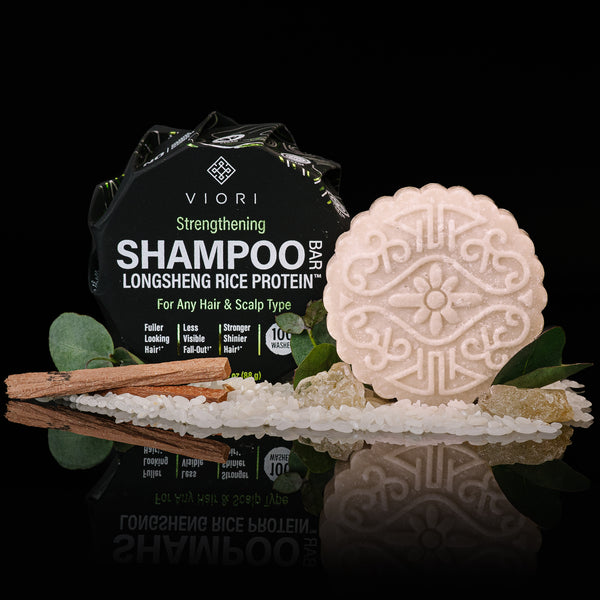
This is where a bar like Viori is a useful reference point. Viori uses Sodium Cocoyl Isethionate (SCI), a mild cleanser known for a creamy lather and gentler feel than many traditional detergent-style cleansers. Mild cleansers can be fantastic-but they also expose technique problems fast, especially on oily scalps.
The invisible variable most reviews ignore: pH
If there’s one technical detail that explains a shocking number of “it was great… until it wasn’t” reviews, it’s pH. Hair and scalp tend to behave best when products stay within a mildly acidic range. When a product runs too alkaline, the cuticle can lift more, hair can feel rougher, and the scalp can feel tight or reactive over time.
Viori emphasizes that its bars are pH balanced, and it also notes something most brands never explain clearly: high concentrations of rice water used too often can interfere with hair and scalp pH. In other words, even a beloved traditional ingredient needs smart formulation and restraint to stay comfortable for regular use.
How pH trouble shows up in reviews (without anyone saying “pH”)
- “It worked for the first week, then my hair got frizzy.”
- “My ends started feeling rough after a few washes.”
- “My scalp feels tight once it dries.”
When you see that delayed pattern, start thinking about long-term cuticle behavior, not just one-wash softness.
“My hair feels coated”: the good version and the bad version
Conditioning isn’t only “moisture.” A lot of it is deposition: ingredients that are designed to bind to the hair surface to reduce friction and increase manageability. The twist is that what feels “silky” on one person can feel “heavy” on another.
Viori’s conditioner bar includes Behentrimonium Methosulfate (BTMS), a conditioning agent widely used in haircare for slip and smoothing. Despite the name, BTMS isn’t a cleansing sulfate like the ones people typically avoid; it’s a conditioning ingredient that helps hair feel more combable and less rough.
The nuance most people miss: porosity decides the outcome
- High porosity / damaged hair often loves deposition: more softness, less frizz, easier detangling.
- Low porosity / fine hair can feel weighed down faster: flat roots, “coating,” or buildup sensations if the routine gets too heavy.
This is why reviews can look like they’re describing two different products. They’re not. They’re describing two different hair structures.
Rice water isn’t just “moisturizing” (and reviews oversimplify it)
Rice-derived ingredients can contribute to shine, smoothness, and a strengthened feel because they often act as film-formers and can support the hair’s surface. Viori uses fermented Longsheng rice water along with other supportive ingredients, and it keeps the concentration intentionally low enough to be used regularly without the common downsides people run into when they DIY high-strength rice rinses too often.
When you read reviews that say “strong but stiff” or “soft but limp,” don’t treat that as random. It’s usually a sign that someone’s hair either needed (or didn’t need) that kind of reinforcing surface support at that frequency.
The bar-format trap: friction and technique change everything
This one is huge and rarely spelled out: with shampoo bars, how you apply the bar can dramatically change your results. Too much direct rubbing on the lengths can increase friction, rough up the cuticle, and make detangling harder-especially on fragile, color-treated hair.
Viori’s guidance is smart here: build lather in your hands and apply it through the hair with your fingers rather than scrubbing the bar directly on your head. That one change can be the difference between “my hair felt rough” and “my hair felt like glass.”
WHAT CUSTOMERS ARE SAYING
Real reviews for Hidden Waterfall Barra de Champú
The checklist: how to spot the only reviews worth reading
If you want reviews that actually help you decide, look for the ones that include details. Without them, you’re just reading reactions without context.
- Scalp type (how many days after washing before it feels oily)
- Porosity (low/medium/high)
- Water conditions (hard water, well water, softened water)
- Hair history (bleach, highlights, permanent vs semi color, chemical treatments)
- Routine context (styling products, oils, wash frequency, whether they double cleanse)
- Time tested (one wash isn’t a pattern; weeks are)
How to test a shampoo like a professional (so you don’t get fooled)
If your goal is a clear answer-not a roller coaster-test the product like you’re trying to get clean results from an experiment.
- Weeks 1-2: Watch the scalp. Comfort, itch, oil rebound, flaking, tightness.
- Weeks 3-6: Watch the hair. Slip, frizz, curl definition, detangling, ends.
- Weeks 6-12: Watch the long game. Breakage, consistent shine, how often you need to wash.
Viori also recommends giving haircare about 2-3 months before deciding it’s not for you, because hair and scalp adaptation is real. Some people see results immediately; others need time for the routine to settle in.
Putting it together with Viori: choosing the right bar on purpose
One reason people do well with Viori is that the brand makes the matching process easier. The bars are pH balanced, formulated to support scalp health, and offered in options that align with common scalp needs. For example, Citrus Yao is often recommended for normal-to-oily scalps because citrus components (including citric acid) help break down oil more effectively, while Terrace Garden, Hidden Waterfall, and Native Essence tend to be favored for normal-to-dry scalps. Native Essence is also the go-to for people who prefer an unscented option.
The bigger takeaway, though, isn’t “trust this product” or “trust that product.” It’s this: once you learn to read reviews through the lens of scalp type, porosity, pH, deposition, and technique, you’ll stop getting surprised by your results. And that’s when haircare gets a lot more predictable-and a lot less frustrating.


