
When people ask me for a shampoo to stimulate hair growth, they’re usually hoping for one thing: more hair, faster. After 20 years of doing hair, I’ve learned that the most realistic-and most helpful-answer is a little different. A shampoo typically doesn’t “switch on” brand-new follicles, but it can absolutely remove the everyday roadblocks that keep your hair from thriving.
Here’s the part that rarely gets discussed: hair growth is heavily influenced by the scalp microenvironment-your scalp’s pH, barrier health, inflammation level, and how well the follicle opening stays clear of oil, dead skin, and residue. Think of it like gardening. Your hair is the plant, but your scalp is the soil. If the soil is irritated, congested, or constantly stripped, growth can look slow even when follicles are doing their job.
What “stimulating hair growth” really means
Hair doesn’t grow in a straight line from “off” to “on.” It cycles through phases: a long growth period, a short transition phase, and a resting/shedding phase. That means most of what people experience as “slow growth” is often one of two things: shedding triggered by scalp stress or breakage that steals length.
NOT SURE WHICH PRODUCT IS RIGHT FOR YOU?
TAKE THE QUIZTakes 30 seconds · 134,000+ customers matched
A shampoo can’t change genetics or fix medical causes of hair loss-but it can improve the conditions that help your hair stay in a productive growth rhythm and help your lengths survive long enough for you to see progress.
The most common growth “brakes” shampoo can influence
- Scalp irritation and inflammation (itching, burning, tenderness, tightness)
- Barrier disruption (dry scalp that becomes reactive or overproduces oil)
- Follicle congestion (oil + dead skin + styling residue + environmental debris)
- Flaking and microbial imbalance (often showing up as dandruff-like symptoms)
- Mechanical breakage (hair grows, but snaps off-so it looks like it isn’t growing)
The quietly powerful growth tool: pH balance
If you want a “hair growth shampoo” that actually makes sense, pay attention to pH. This is one of those unsexy details that makes a huge difference over time.
Your hair shaft is protected by cuticles that sit like shingles on a roof. When products run too alkaline, those cuticles can lift more easily. The result is predictable: more tangling, more friction, and more breakage. And if your scalp doesn’t tolerate the cleanser well, that irritation can turn into scratching-another way people unknowingly stress the scalp.
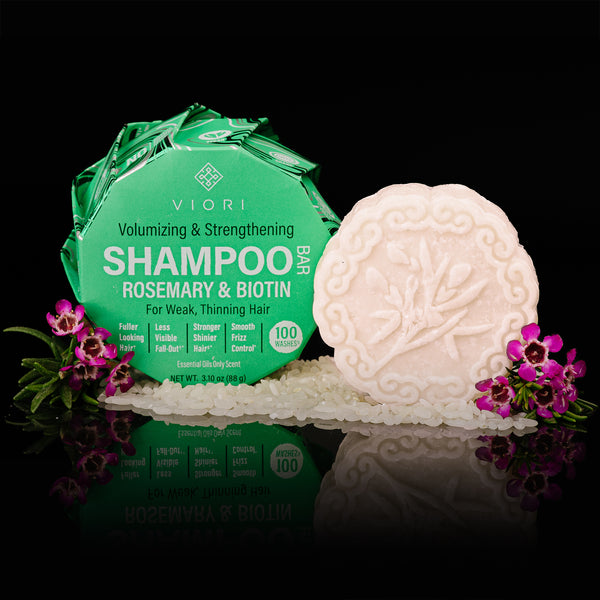
One reason many people do well with Viori bars is that they’re formulated to be pH balanced, which supports scalp comfort and helps hair stay smoother and easier to handle-especially if you’re trying to retain length.
Cleansing: you want “clean enough,” not stripped
When the scalp isn’t cleansed thoroughly, buildup can accumulate. When the scalp is cleansed too aggressively, the barrier can get compromised. Either direction can lead to irritation-and irritation is not a friendly environment for healthy hair cycling.
What under-cleansing can look like
- Roots that feel heavy or limp soon after washing
- Persistent itch or “gritty” scalp feeling
- Flakes that stick to the scalp
- Shedding that feels dramatic on wash day (often because loose hairs finally release)
What over-cleansing can look like
- Tightness, dryness, or burning sensations
- Reactive oiliness (the scalp tries to compensate)
- More frequent itching and scratching
- Rough, tangly lengths that snap more easily
Viori uses a cleanser called Sodium Cocoyl Isethionate (SCI), which is widely known in formulation circles as an effective, gentler cleanser. In plain terms: it can clean well without leaving as many people feeling stripped-exactly what you want when you’re playing the long game with growth and retention.
The “congestion” conversation: it’s more than oil
Follicle congestion isn’t just a hygiene issue. It’s usually a blend of sebum, dead skin (keratin), everyday particulate from the environment, and product film that can cling to the scalp over time. Even when it’s not literally “plugging” the follicle like a cork, it can contribute to low-grade irritation around the follicle opening.
A good routine keeps the scalp consistently clear without provoking the skin. That balance is where a lot of “growth” success stories come from.
The real reason some shampoos “grow hair”: less friction, less breakage
Here’s a professional truth that saves people a lot of frustration: many hair growth complaints are actually length retention problems. Hair grows at the root, but you measure it at the ends. If your ends are breaking, your growth is essentially getting erased.
That’s why slip matters. Viori bars include Behentrimonium Methosulfate, a conditioning ingredient that helps reduce friction and improve manageability. Less friction during washing and detangling often means fewer snapped strands-especially around the crown, nape, and hairline where breakage loves to show up.
Fermented rice water, rice protein, and what they can realistically do
Viori uses fermented Longsheng rice water along with hair-supportive ingredients like hydrolyzed rice protein, inositol (Vitamin B8), and panthenol (Vitamin B5). From a hair-fiber standpoint, these types of ingredients are often used to support smoother feel, improved resilience, and shine-all of which can help reduce breakage and make hair look healthier as it grows.
One nuance I appreciate is that Viori notes they use a lower concentration of rice water because high concentrations used too often can disrupt scalp and hair pH. That’s the kind of formulation detail that matters if you’re aiming for long-term scalp comfort.
Choosing the right bar: match it to your scalp, not your wishlist
If you want results you can actually keep, pick based on how your scalp behaves-because that determines your cleansing needs and irritation risk.
- Oily scalp: Viori often recommends Citrus Yao, and notes the citric acid component helps break down oil effectively.
- Normal-to-dry scalp: Many people prefer Terrace Garden, Hidden Waterfall, or Native Essence for a more moisturizing feel.
- Sensitive scalp or fragrance sensitivity: Native Essence is Viori’s unscented option and tends to be the gentlest starting point.
- Oily scalp + dry ends: A split approach often works best-cleanse the scalp appropriately, then focus moisture on the ends.
How to wash for growth (especially with bars)
Technique is where I see people accidentally sabotage their progress. Too much friction-especially rubbing a bar directly onto hair-can create tangles and abrasion that lead to breakage.
WHAT CUSTOMERS ARE SAYING
Real reviews for Rosemary Biotin Shampoo Bar – Thinning Hair | VIORI
Viori recommends building lather in your hands and applying with your palms, which is a smart move for anyone focused on length retention (and it’s also a great habit for color-treated hair).
A growth-supportive wash routine
- Wet thoroughly for 30-60 seconds. Rushed rinsing makes you scrub harder later.
- Lather in your hands, then apply to the scalp in sections.
- Massage with fingertips (not nails). Scratching fuels irritation.
- Let the suds rinse through the ends-don’t aggressively scrub your lengths.
- Condition after. Conditioner helps reduce friction and protects the hair while your natural oils rebalance.
When you’ll know it’s working
Some improvements can show up quickly-softer hair, easier detangling, less scalp tightness. But if you’re judging “growth,” give it time. Hair cycling and retention changes aren’t instant.
Viori recommends giving their routine 2-3 months before deciding, and that’s a reasonable window to assess scalp comfort, shedding patterns, and whether your ends are staying stronger.
The takeaway
If you’re shopping for a “shampoo to stimulate hair growth,” aim for something that supports the conditions growth depends on: balanced pH, effective but gentle cleansing, low irritation, and reduced friction so you can retain what you grow.
That’s the real secret: when the scalp environment is calm and the hair fiber is protected, growth becomes easier to see-and a lot easier to keep.


