
I'll never forget the day a client sat in my chair, pulled out a shopping bag filled with half-empty bottles, and said with complete exhaustion: "I've spent over $800 on hair fall shampoos this year. Nothing works. What am I doing wrong?"
She wasn't doing anything wrong. The products were.
After twenty years of hands-on experience with every hair type imaginable, I've noticed something the marketing departments don't want you to know: most American anti-hair fall shampoos are sabotaging themselves before they even have a chance to work. And it's not about the flashy active ingredients they advertise-it's about the foundational chemistry they ignore.
Today, I'm sharing what I wish every person struggling with hair fall understood about what's actually happening on your scalp, and why the solution might be simpler (and more complex) than you think.
The Chemistry Problem Nobody Talks About
Let me start with a question that will probably surprise you: Do you know the pH level of your anti-hair fall shampoo?
If you're like 99% of my clients, you don't. And why would you? It's not on the label. There's no regulation requiring it. But here's the thing-this invisible number might be the single most important factor determining whether your expensive hair fall treatment is helping or hurting.
Your scalp naturally maintains a pH between 4.5 and 5.5. That's slightly acidic, and it's that way for excellent reasons. This acidic environment keeps your hair cuticle sealed flat (imagine roof shingles lying smooth against a roof), maintains the protective acid mantle around each follicle, and creates the ideal conditions for beneficial bacteria to thrive.
Most American anti-hair fall shampoos? They clock in between 6.5 and 8.0 on the pH scale. That's alkaline. And alkaline formulations create a cascade of problems that directly contribute to the very hair loss they claim to prevent.
What Happens When pH Goes Wrong
Picture this: You're washing your hair with an alkaline shampoo. Within seconds, the cuticle layer-those protective shingles-starts to lift and roughen. Now your hair catches on everything. Towels. Pillowcases. Other strands. The result? Increased breakage that looks exactly like hair loss, even though it's really mechanical damage.
NOT SURE WHICH PRODUCT IS RIGHT FOR YOU?
TAKE THE QUIZTakes 30 seconds · 134,000+ customers matched
The frustrating part? Most people see this increased shedding in the shower drain and think, "My hair loss is getting worse-I need a stronger treatment." So they buy an even more aggressive anti-fall shampoo, which usually has an even higher pH, and the cycle continues.
I've watched this heartbreaking pattern repeat itself hundreds of times.
But the damage doesn't stop at the cuticle. Alkaline conditions on the scalp trigger low-grade inflammation around the hair follicle itself. We now know that chronic inflammation is a significant contributor to excessive shedding and may even accelerate genetic hair loss patterns. Your well-intentioned shampoo might literally be inflaming the very follicles you're trying to protect.
Your Scalp Is an Ecosystem, Not a Kitchen Floor
Here's where it gets really interesting, and where modern hair science is having its biggest revelations: your scalp hosts an entire universe of bacteria and fungi. This isn't gross-it's essential.
These microorganisms produce compounds that support scalp health and may even influence the hair growth cycle through their interaction with your local immune system. But here's the catch: they thrive in acidic conditions. When you use an alkaline shampoo, you're essentially strip-mining their habitat.
The beneficial bacteria decline. Opportunistic organisms move in. Suddenly you're dealing with conditions like seborrheic dermatitis or folliculitis-both associated with increased hair shedding. You might even develop that itchy, flaky scalp that sends you shopping for yet another specialized shampoo.
We've been treating the scalp like it's a sterile surface that needs aggressive cleaning, when what it actually needs is gentle support for its natural ecosystem. It's the difference between bombing a forest and tending a garden.
Why American Formulations Keep Getting This Wrong
So if pH balance is this critical, why do so many products ignore it? The answer is equal parts frustrating and illuminating.
First, there's a regulatory gap. Unlike some international markets, the USA doesn't require pH disclosure on cosmetic products. There's no standard mandating that shampoos fall within the scalp's optimal range. Manufacturers can formulate at whatever pH is cheapest or easiest, with zero accountability for the long-term impact on scalp and hair health.
Second, we've been conditioned wrong. American consumers have been trained to associate "squeaky clean" with effective cleansing. That stripped, tight feeling after shampooing? We've been taught that's what clean hair feels like. In reality, that sensation indicates over-cleansing at alkaline pH levels-exactly what compromises follicle health over time.
That squeaky feeling is actually your cuticle standing at attention, vulnerable and exposed. It's not a badge of cleanliness-it's a red flag.
The Ancient Solution That Modern Science Validates
This is where my professional skepticism met something I couldn't ignore: the Red Yao women of Longsheng.
These women maintain extraordinarily long, healthy hair well into their 80s using fermented rice water-a tradition passed down through centuries. When I first heard about this, I'll admit I rolled my eyes a bit. Folk remedies and ancient traditions don't always hold up under scrutiny.
But then I looked at the actual chemistry, and everything clicked.
Why Fermentation Changes the Game
Fermented rice water isn't just rice water that's been sitting around. The fermentation process transforms it into something scientifically remarkable:
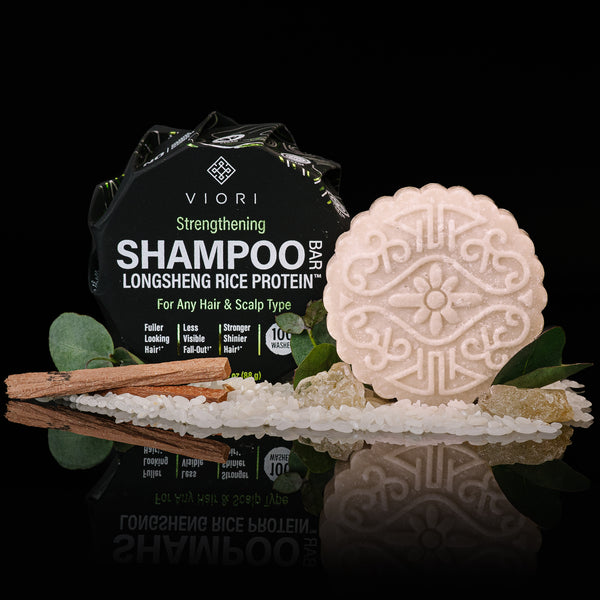
Perfect pH by nature: Fermentation produces lactic acid and other organic acids that naturally bring the pH down to that ideal 4.5-5.5 range. No chemist required-nature does the balancing act automatically.
Enhanced nutrient availability: Fermentation breaks down rice starches into smaller molecules-amino acids, peptides, and vitamins that can actually penetrate the hair shaft instead of just sitting on the surface. Think of it like pre-digesting vitamins. The nutrients are already in a form your hair can immediately absorb and use.
Anti-inflammatory compounds: The fermentation process creates gamma-oryzanol and ferulic acid-both documented antioxidants with anti-inflammatory properties. These compounds address follicular inflammation, which is a root cause of excessive shedding that most topical products completely ignore.
When Viori built their formulations around this fermented rice water tradition while maintaining that critical pH balance, something clicked for me professionally. Finally, a brand that understood these foundational principles weren't just nice-to-haves-they're non-negotiables.
After two decades in this industry, I've learned that reducing inflammation often matters more than adding growth stimulants. You simply cannot grow healthy hair in an inflamed environment. Period.
The Protein Problem Everyone Misses
Let me share something that surprises even experienced stylists who haven't kept up with recent research: protein can be too much of a good thing, and it might be making your hair fall worse.
We've all been taught that protein equals strength, right? Many anti-fall formulations are loaded with hydrolyzed keratin, wheat protein, silk amino acids-under the assumption that more protein automatically means stronger hair.
But hair needs balance. It requires both strength AND flexibility. Think of a willow branch that bends in the wind without breaking, versus a dry twig that snaps at the slightest pressure.
When Protein Becomes the Problem
Over-proteinated hair becomes rigid and brittle. It actually becomes more susceptible to breakage during the normal expansion-contraction cycles that happen when hair gets wet and dries again. This creates mechanical shedding that looks exactly like pattern baldness.
I've had clients come to me with hair that literally snaps with minimal tension because they've been layering protein treatment upon protein treatment, thinking more is better. Their hair has become like over-starched fabric-stiff and seemingly strong, but it tears more easily than fabric with some natural give.
The solution isn't eliminating protein-it's calibrating it. You need protein for structure, but you also need moisture, oils, and humectants for flexibility. Viori's formulations include hydrolyzed rice protein at carefully measured concentrations, balanced with cocoa butter, shea butter, and rice bran oil. This addresses the full spectrum of what hair needs for retention, not just one piece of the puzzle.
This kind of thoughtful formulation separates truly effective products from marketing hype. It's not about loading up on one miracle ingredient-it's about understanding how everything works together.
The Microbiome Revolution You Haven't Heard About
If you follow health news, you've probably heard about gut microbiome and probiotics. That research has exploded over the past five years, changing everything we thought we knew about digestion, immunity, and overall health.
The exact same revolution is happening in scalp science, but somehow this information hasn't trickled down to consumer products or mainstream hair care conversations.
Your scalp hosts specific bacterial and fungal species that either support healthy hair growth or contribute to excessive shedding. Recent research has identified protective species-certain Staphylococcus and Cutibacterium strains-that produce compounds supporting scalp barrier function and modulating local inflammation.
There are also problematic organisms. Malassezia fungi, when allowed to proliferate beyond normal levels (often due to those alkaline, stripped scalp conditions we talked about), trigger inflammatory cascades linked to both dandruff and diffuse hair shedding.
When I explain this to clients, I use the gut health comparison everyone now understands. Your scalp works the same way. There's a delicate ecosystem up there, and when it gets disrupted, everything goes wrong.
How Conventional Products Destroy Your Scalp Ecosystem
Most anti-fall shampoos contain ingredients that work directly against healthy scalp microbiome:
- Broad-spectrum antimicrobials that kill beneficial and harmful microorganisms indiscriminately-like taking a broad-spectrum antibiotic when you only need targeted treatment
- Alkaline pH that creates an environment where beneficial acid-loving bacteria decline while opportunistic organisms thrive
- Aggressive sulfates that strip not just excess oil but the protective lipid layer beneficial microbes rely on, triggering reactive sebum overproduction and creating a feast-or-famine cycle
Your scalp responds to being stripped by overproducing oil, which makes you wash more frequently with harsh shampoo, which strips it again... It's a vicious cycle I see constantly.
Viori's use of sodium cocoyl isethionate-a mild, coconut-derived cleanser sometimes called "baby foam"-represents a microbiome-friendlier approach. It effectively removes dirt and excess sebum without the harsh stripping action of conventional sulfates, allowing your scalp's protective acid mantle and resident microbiome to remain intact.
When I first started recommending Viori to clients concerned about hair fall, this gentle-but-effective cleansing approach was one of the key factors. You can't heal your scalp while simultaneously assaulting it with harsh detergents.
WHAT CUSTOMERS ARE SAYING
Real reviews for Hidden Waterfall Barra de Champú
What to Expect When You Switch: The Uncomfortable Truth
I'm going to tell you something that might concern you, but I'd rather you hear it from me than panic when it happens: when you switch from conventional alkaline, sulfate-heavy shampoos to pH-balanced, gentle formulations, you might experience a temporary increase in shedding for 2-4 weeks.
I always warn my clients about this because otherwise they panic and immediately go back to their old products, convinced the new approach is "making things worse."
Here's what's actually happening:
Detox Shedding
Hair follicles weakened by chronic alkaline assault and inflammation may release resting-phase hairs more readily once scalp conditions normalize. This isn't new hair loss-it's clearing out hairs that were already in the shedding phase but clinging to a compromised follicle.
Think of it like cleaning out a clogged drain. All that hair was coming out eventually anyway; the new product is just accelerating the inevitable so healthier growth can take its place.
Microbiome Rebalancing
As your scalp microbiome shifts from imbalance to healthy balance, temporary inflammation can occur-similar to the "die-off" effect discussed in gut microbiome restoration. This transient response may trigger some additional shedding before things stabilize.
Texture Adjustment
Your hair may feel different initially-sometimes "flatter" or even "greasier"-as the cuticle reseals at optimal pH. If you've been using alkalizing, stripping products for years, your sebaceous glands are in overdrive. It takes time for them to recalibrate to a gentler cleansing routine.
Your hair has to relearn its natural behavior. Be patient with it.
The key insight: True anti-hair fall efficacy requires a 2-3 month commitment. The hair growth cycle operates on this timeline. Hairs entering the growth phase today won't reach meaningful length for months, making early assessment essentially meaningless.
This is perhaps the hardest message to convey in our instant-gratification culture. Hair growth is slow. There's no way around that biological reality.
Let's Be Honest About What Shampoo Can Actually Do
This brings us to perhaps the most important discussion: the inherent limitations of topical delivery for nutrients meant to support hair growth.
I appreciate brands like Viori that don't make outlandish promises about what a shampoo can accomplish. Let's be clear-eyed about what topical products can and cannot do.
Realistic Capabilities
- Strengthen the hair shaft to reduce breakage-induced shedding
- Optimize scalp environment-pH, inflammation, microbiome-to support healthy follicle cycling
- Remove sebum and buildup that may miniaturize follicles or trigger inflammatory responses
- Provide brief contact with growth-supportive compounds that may penetrate the follicular opening
Honest Limitations
- Cannot reverse genetic hair loss patterns-this requires systemic intervention or direct follicular stimulation
- Brief contact time (minutes) limits absorption of most active ingredients compared to leave-on treatments
- Cannot address internal factors like nutritional deficiencies, hormonal imbalances, or autoimmune processes driving many forms of hair loss
The most effective anti-hair fall shampoos should be understood as foundation-setters rather than miracle cures. By creating optimal scalp conditions-balanced pH, healthy microbiome, reduced inflammation, adequate moisture-protein balance-these products remove barriers to your hair's natural growth potential.
That's actually huge, even though it's not as sexy as promising to regrow a full head of hair in 30 days.
Who Benefits Most
pH-balanced, gentle formulations like Viori's can make a genuine difference for:
- Telogen effluvium (stress, post-pregnancy, illness-related shedding): By avoiding additional follicular stress, I've seen dramatic improvements in clients going through difficult life events who switched to gentler hair care
- Traction alopecia (damage from tight hairstyles): Strengthening formulations reduce breakage at vulnerable points-every bit of preserved length matters when recovering from traction damage
- Seborrheic dermatitis: Microbiome-supporting, anti-inflammatory ingredients can reduce s


