
“Dry hair” sounds simple-until you’re standing in the shower wondering why your ends still feel rough even after you’ve bought the most “moisturizing” products you can find.
After 20 years behind the chair, I’ve learned this: dry hair is rarely just a lack of moisture. It’s usually a mix of scalp behavior, hair porosity, cuticle damage, and (one of the most overlooked culprits) friction. If you’ve tried going more “natural” and felt like your hair got drier, there’s a very real reason-and it has nothing to do with your hair “not liking natural products.”
In this post, I’ll walk you through a more technical, stylist-approved way to choose the best all-natural shampoo and conditioner for dry hair, using Viori as the example of what well-designed, performance-focused natural haircare can look like.
First: what kind of “dry” are we talking about?
Most people diagnose their hair as dry when the real issue is something else happening underneath. Before you pick a shampoo or conditioner, get clear on which category fits you best.
NOT SURE WHICH PRODUCT IS RIGHT FOR YOU?
TAKE THE QUIZTakes 30 seconds · 134,000+ customers matched
1) Dry scalp that leads to dry hair
If your scalp feels tight, irritated, or flaky (often a lighter, powdery flake), and your roots don’t get oily quickly, you’re likely dealing with true scalp dryness.
Your goal here is not “strip it clean and add oil back.” Your goal is gentle cleansing + barrier-friendly conditioning so your scalp doesn’t feel like it’s constantly playing catch-up.
2) Oily or normal roots with dry ends (the most common salon scenario)
This one is everywhere: your scalp gets oily in a day or two, but your mid-lengths and ends feel frizzy, rough, tangly, or “crispy.” That’s usually not a moisture shortage at the scalp-it’s a cuticle and porosity problem on the hair shaft.
What works best is targeted washing (mainly scalp) and targeted conditioning (mainly mid-lengths and ends), plus reducing the physical stress you put on your hair during wash day.
3) High-porosity dryness (moisture goes in fast and disappears faster)
If your hair drinks up water and product but still feels dry again as soon as it dries, your hair likely has higher porosity. That can be natural, but it’s also common after heat styling, chemical services, sun exposure, and years of mechanical wear (brushing, tight styles, rough towel drying).
High-porosity hair usually needs cuticle support, not just extra oils.
What actually makes an all-natural routine work for dry hair?
“All-natural” is a broad label. For dry hair, the better question is: does the formula protect the cuticle and reduce friction while keeping the hair in a healthy pH range? When those pieces are in place, hair holds onto softness longer between washes.
1) A cleanser that cleans without leaving hair squeaky
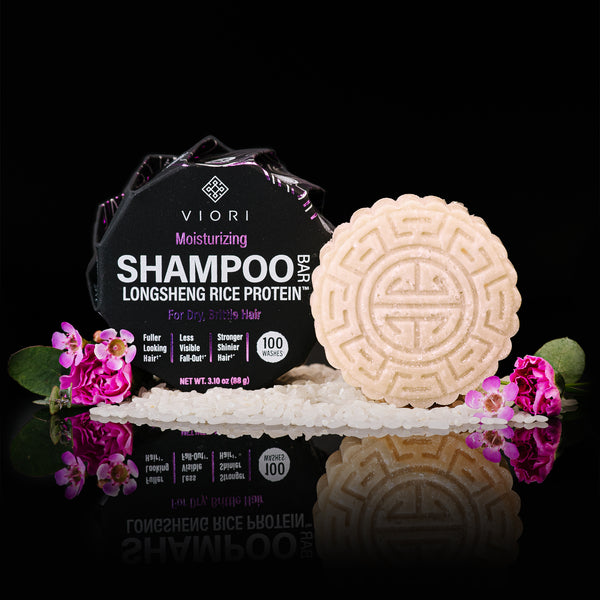
Dry hair doesn’t just need more conditioning-it needs you to stop over-removing what it already has. Viori uses Sodium Cocoyl Isethionate (SCI), a coconut-derived cleanser described in their FAQs as very mild (it’s often nicknamed “baby foam” in the industry).
Translation: you can get a clean scalp without that stripped, rough feeling that makes ends feel even drier.
2) The conditioning detail most blogs never explain: cationic “stick”
Here’s the part that’s strangely absent from most “natural haircare” discussions: how conditioner actually binds to the hair.
Hair-especially damaged hair-tends to carry a more negative charge. Conditioners that are positively charged (cationic) are attracted to that surface, which helps smooth the cuticle and reduce tangling. Viori’s conditioner includes Behentrimonium Methosulfate (BTMS), a conditioning ingredient Viori explains is not the same as harsh sulfate cleansers (like SLS/SLES), despite the confusing name.
Why this matters for dryness: when you reduce friction, hair feels softer, detangles easier, breaks less, and holds onto that “conditioned” feel longer.
3) Protein can help dry hair-until it doesn’t
Protein is a classic double-edged sword. Porous, compromised hair often benefits from strengthening support, but too much protein too often can leave some hair types feeling stiff, rough, and dry.
Viori notes they use a low concentration of rice protein that’s considered safe for regular use, alongside fermented Longsheng rice-water components associated with hair-supportive nutrients like Vitamin B8 (inositol) and Vitamin B5 (panthenol).
The sweet spot is always the same: strength without rigidity.
4) pH balance: the dryness trigger almost nobody tracks
This is one of the most underappreciated pieces of the puzzle. Viori emphasizes their products are pH balanced and explains why that matters: overly alkaline products can rough up the cuticle over time, which increases frizz, tangling, and moisture loss.
If you’ve ever thought, “My hair feels okay when it’s wet, but turns into a frizzy, thirsty mess when it dries,” cuticle behavior and pH are often part of the reason.
Choosing the best Viori option for dry hair (it’s not only about scent)
Viori notes that while their bars share a core formula, the scent profile can influence which bar is best suited for different scalp types. For dry hair and dry scalp, Viori commonly recommends:
- Terrace Garden (fresh, green, floral)
- Hidden Waterfall (sweet, vanilla, musk)
- Native Essence (unscented; very gentle and a great option for fragrance sensitivity)
If frizz is a major complaint, Viori also points to their most moisturizing options-particularly Terrace Garden and Native Essence-and recommends cooler water and thorough conditioning from mid-lengths to ends.
WHAT CUSTOMERS ARE SAYING
Real reviews for Terrace Garden Barra de Champú
The make-or-break factor with shampoo bars: friction
This is the part I wish more people were told upfront. With dry hair, the formula matters-but application matters just as much.
Dry hair already has more surface roughness. If you rub a bar directly down the lengths, you can add mechanical stress that leaves hair feeling rougher and drier over time.
Viori recommends (especially for color-treated hair) building lather in your hands and applying with your hands rather than rubbing the bar directly on your head. That same technique is ideal for dry hair too.
My stylist method for using Viori on dry hair
- Saturate your hair completely (dry hair needs thorough wetting to cleanse and condition evenly).
- Rub the shampoo bar in your hands to build lather.
- Focus shampoo on the scalp; let the rinse water clean the lengths.
- Apply conditioner from mid-lengths to ends (think “smooth it on,” not “scrub it in”).
- Let the conditioner sit for 3-5 minutes before rinsing (Viori also suggests at least 5 minutes when using it as a deeper conditioning step).
- Rinse thoroughly and finish cooler if frizz is an issue.
How long does it take to see real change?
If dryness is mostly about porosity and damage, you’re not “fixing” the hair overnight-you’re improving the surface feel, reducing breakage, and creating a healthier environment for the hair you’re growing in.
Viori notes that results vary person to person: some people notice improvement quickly, while others may need consistency over 2-3 months. From a professional standpoint, that’s a fair timeline for many dry-hair transformations.
Quick troubleshooting if your hair still feels dry
- Hair feels waxy or draggy: use less product on lengths, keep shampoo mostly on the scalp, and rinse longer.
- Hair feels stiff or rough: increase conditioner contact time, avoid very hot water, and be mindful of how often you’re doing strengthening steps.
- Hair feels soft wet but frizzy dry: focus on cuticle support (pH balance, longer conditioning time, gentler drying habits, less heat).
The bottom line
The best all-natural shampoo and conditioner for dry hair isn’t just the richest formula-it’s the routine that consistently protects the hair fiber. That means:
- Gentle cleansing that doesn’t over-strip
- High-slip conditioning that reduces friction and tangles
- pH balance that helps the cuticle lie smoother
- Smart strengthening support without stiffness
When you pair that with the right technique-especially minimizing friction during application-dry hair typically becomes noticeably softer, shinier, and easier to manage over time. That’s where Viori tends to shine: performance-focused, pH-balanced bars designed to support both scalp comfort and hair feel, without relying on harsh cleansers or heavy buildup.


