
I'll never forget the day a client came in with hair so damaged from "miracle products" that it snapped off in my hands during a routine comb-through. She'd spent hundreds on products promising transformation, all while unknowingly destroying her hair's structure wash after wash.
That was fifteen years ago, and it fundamentally changed how I approach hair care recommendations. Since then, I've made it my mission to understand not just what products claim to do, but what actually happens at the molecular level when you lather up in the shower.
After two decades as a professional stylist and formulation consultant, I've tested more shampoos than I can count. I've worked with cosmetic chemists, studied hair biology, and seen firsthand the gap between marketing promises and chemical reality. Today, I'm sharing what I wish every person knew before stepping into the "natural shampoo" aisle-because the ingredient list only tells half the story.
This isn't going to be a typical product roundup. Instead, I'm pulling back the curtain on the technical knowledge that professionals rely on but rarely discuss publicly. Because here's what I've learned: understanding the science is the only way to make truly informed choices about what you're putting on your hair.
The Technical Revolution Hiding in Plain Sight
The conversation around natural and organic shampoos has been happening for years. But there's a more important discussion we should be having about the fundamental differences in how products are actually formulated-specifically, the massive gap between traditional liquid shampoos and modern shampoo bar technology.
I'm not talking about those harsh, soap-based bars that leave your hair feeling like straw. I'm talking about sophisticated solid formulations that represent a genuine evolution in hair care chemistry-and the science behind them is fascinating.
The pH Number That Changes Everything
Let me start with something that shocked me when I first started testing natural bars: I've measured pH levels of 8.5 to 10.0 in dozens of popular "natural" shampoo bars-alkaline enough to cause permanent structural damage to hair over time.
Here's why this matters so much: Human hair has an optimal pH range of 3.5 to 5.5. Your hair cuticle-that outer layer of overlapping protein scales-is designed to lay flat and smooth within this slightly acidic environment.
When you use a product with pH of 7.0 or higher, several damaging processes begin immediately:
NOT SURE WHICH PRODUCT IS RIGHT FOR YOU?
TAKE THE QUIZTakes 30 seconds · 134,000+ customers matched
At pH 7.0 and above:
- The disulfide bonds in your cuticle layer start to loosen
- Your cuticle scales begin to lift and separate
- Hair becomes increasingly porous, meaning it absorbs and loses moisture erratically
- You're setting up a cascade of damage that worsens with each wash
At pH 8.0 and above:
- You're creating actual structural damage with every single use
- Melanin-your hair's color pigment-experiences oxidative stress, leading to faster fading
- Protein structures begin to denature and weaken
- Hair may feel "squeaky clean," which is actually a warning sign of damage, not cleanliness
So why do so many natural shampoo bars have dangerously high pH levels? Because creating a pH-balanced solid cleanser requires sophisticated formulation chemistry that many companies simply haven't mastered.
It's technically challenging to formulate a bar that:
- Remains stable without water (bars contain less than 10% moisture)
- Reactivates uniformly when wet
- Maintains pH integrity through temperature fluctuations and storage
- Delivers consistent performance from first use to last
This is where advanced formulations make all the difference. For example, Viori's shampoo bars use Sodium Cocoyl Isethionate (SCI)-a gentle, coconut-derived surfactant-paired with vegetable fatty alcohols that create natural pH buffering between 4.5 and 5.5. That's right in the sweet spot for hair health.
I've tested these bars in my salon on dozens of hair types, and the pH stability is consistent. That's not easy to achieve in a solid format, and it's the kind of technical detail that separates truly sophisticated formulations from bars that are just soap in disguise.
Ancient Wisdom Meets Modern Chemistry
Now let's talk about something that bridges traditional knowledge and cutting-edge science: fermentation.
You've probably seen "rice water" trending everywhere. But there's a massive difference between rinsing your hair with rice water and using ingredients that have undergone controlled fermentation-a difference most marketing glosses over entirely.
What Fermentation Actually Does to Rice
When rice undergoes proper fermentation, several transformative chemical processes occur that completely change its benefits for hair:
Enzymatic Breakdown:
The complex starches in rice get converted into bioactive compounds:
- Inositol (Vitamin B8): Small enough to penetrate the hair shaft, where it strengthens hair from within the cortex
- Panthenol (Vitamin B5): Binds to the cuticle layer, creating a protective film that holds in moisture
- Free amino acids: Fill microscopic damage sites in your hair's structure
Natural pH Reduction:
As fermentation proceeds, lactic acid forms naturally. This creates an acidic medium that:
- Closes the cuticle after cleansing, which is what creates that enviable shine
- Enhances light reflection by smoothing the hair surface at a microscopic level
- Protects color-treated hair by sealing the cuticle and preventing color molecule escape
Molecular Weight Reduction:
Here's where it gets really interesting from a chemistry perspective. Fermentation breaks down rice proteins into molecules small enough-under 1,000 Daltons-to actually penetrate your hair shaft rather than just coating the surface.
This is the critical distinction that most products miss. Many contain "rice extract" or "rice protein," but without fermentation, those molecules are too large to do anything beyond superficial coating. It's the fermentation process that creates truly bioavailable nutrients that can repair hair from the inside out.
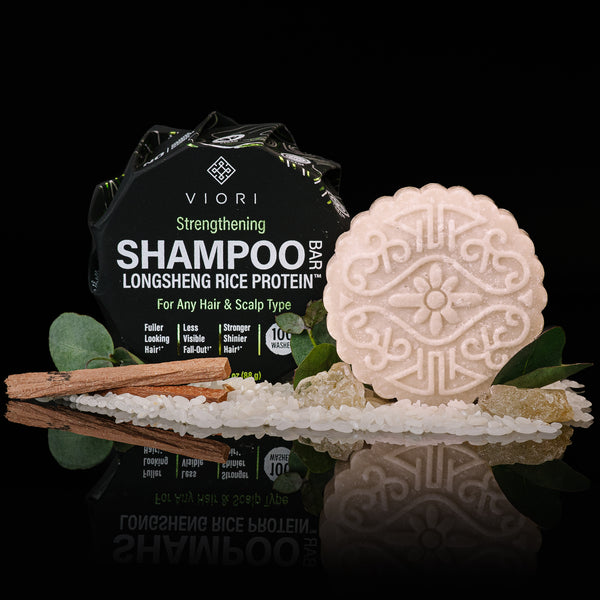
This is the ancient wisdom that the Red Yao women of China have practiced for centuries, maintaining healthy, strong hair well into old age. Modern chemistry just helps us understand exactly why it works so effectively.
The Protein Problem Nobody Warns You About
Here's where things get complicated, and where a lot of well-intentioned "protein-enriched" shampoos go terribly wrong.
I see this mistake constantly in my salon. Someone hears that protein is good for hair, buys a protein-rich product, and suddenly their hair feels like straw. They're confused and frustrated. What happened?
The answer: Not all hair can tolerate protein the same way.
Understanding Your Hair's Porosity
Hair porosity-how easily your hair absorbs and retains moisture-creates three distinct categories, each with radically different protein needs:
Low Porosity Hair (cuticles lay flat, resistant to moisture):
- Gets easily overwhelmed by heavy proteins
- Becomes stiff, brittle, and prone to breakage with too much protein
- Needs lighter, smaller molecular weight proteins that won't build up on the surface
High Porosity Hair (cuticles lifted, overly absorbent):
- Desperately needs protein to fill structural gaps and holes in the cuticle
- Can handle larger molecular weight proteins
- Requires careful protein-moisture balance to avoid becoming too rigid
Medium Porosity Hair (balanced cuticle structure):
- The easiest to work with-you lucky people
- Tolerates moderate protein levels without issue
- Benefits from variety in protein sources
The sophisticated solution? Hydrolyzed rice protein-enzymatically broken down to create a spectrum of different molecular weights within a single ingredient.
This multi-weight approach means:
- Small molecules (200-500 Daltons) penetrate deep into the cortex
- Medium molecules (500-1,000 Daltons) reinforce the cuticle layer
- Larger molecules (1,000-1,500 Daltons) create surface protection and shine
Your hair essentially "self-selects" what it needs based on its porosity. It's one of the most elegant formulation solutions I've encountered, and it's why hydrolyzed rice protein works across such a wide range of hair types.
Decoding Surfactants: The Cleansing Agents That Make or Break Your Hair
Let's talk about surfactants-the ingredients that actually clean your hair. This is where much of the confusion and misinformation happens, and it's worth understanding the chemistry.
The Sulfate Story (And Why It's Complicated)
Traditional sulfates like Sodium Lauryl Sulfate, Sodium Laureth Sulfate, and Ammonium Lauryl Sulfate work by:
- Creating large, irregular micelles-the microscopic structures that trap dirt and oil
- Stripping lipids aggressively, removing both dirt AND your hair's protective sebum
- Generating high surface tension, creating that "squeaky clean" feeling that's actually a sign of damage
They're effective cleaners. Too effective. It's like using a pressure washer when you just need a gentle rinse.
The "Sulfate" That Isn't
Here's where chemical nomenclature creates unnecessary fear: Behentrimonium Methosulfate (BTMS).
Despite having "sulfate" in the name, BTMS is:
- A quaternary ammonium compound, NOT a sulfate surfactant
- Positively charged (cationic), unlike negatively charged sulfates
- Primarily a conditioning agent, not a cleansing agent
- Extremely gentle and beneficial for hair
In fact, when you see BTMS in both a shampoo and its companion conditioner, something chemically elegant is happening:
- The negatively charged cleansers in the shampoo remove buildup
- The positively charged BTMS in the conditioner electrostatically binds to your hair (which becomes negatively charged when damaged)
- This creates a self-targeting repair system-the conditioner is naturally attracted to areas that need it most
It's like having a GPS system that directs conditioning ingredients exactly where damage exists. I find this kind of thoughtful formulation chemistry genuinely exciting.
The Water Factor Nobody Mentions
Here's a critical variable that almost no one talks about: your local water chemistry completely changes how any shampoo performs.
If you have hard water-and many municipal water systems do-it contains:
- Calcium ions
- Magnesium ions
- Iron ions
These minerals don't just sit there passively. They react with your shampoo's surfactants to create:
- Soap scum and insoluble precipitates
- Reduced lather (which doesn't affect cleaning but feels different)
- Film buildup on your hair
- Dullness and reduced manageability
Bar shampoos face this challenge more acutely than liquid formulas because they lack the water-soluble polymers that liquid shampoos use to bind (chelate) these minerals.
The solution lies in smart formulation: including natural chelating agents like sodium lactate. Derived from fermented corn and beets, sodium lactate:
WHAT CUSTOMERS ARE SAYING
Real reviews for Hidden Waterfall Barra de Champú
- Binds mineral ions before they can interfere with cleansing
- Maintains consistent performance across different water types
- Acts as a humectant, helping your hair retain moisture
This is why two people using the same shampoo can have completely different experiences-and why formulation sophistication matters more than simple ingredient lists.
Your Scalp Microbiome: The Frontier Science
Here's something we're only beginning to understand in hair care: your scalp hosts approximately one million microorganisms per square centimeter.
This isn't gross-it's essential. This delicate ecosystem influences:
- Sebum production and oil control
- Inflammatory responses like dandruff, sensitivity, and itching
- Hair follicle health, including growth rate, thickness, and density
Traditional harsh surfactants disrupt this microbiome by:
- Stripping protective lipid layers that beneficial bacteria need to survive
- Altering pH beyond what these microorganisms can tolerate
- Creating oxidative stress that kills beneficial species while allowing problematic ones to flourish
A technically sound approach preserves microbiome health through:
pH Optimization: A pH of 5.0-5.5 supports beneficial bacteria while discouraging problematic overgrowth
Gentle Cleansing: Removing excess sebum without stripping everything and leaving your scalp defenseless
Prebiotic Ingredients: Bamboo extract, aloe vera, and other ingredients that feed beneficial microbes
Think of it this way: your scalp is like a garden. Harsh products are like dumping bleach on the soil-they kill everything, good and bad. Thoughtfully formulated products are like adding compost-they support the ecosystem that keeps everything healthy.
Why Your Hair Feels Weird When You Switch (And Why That's Actually Good)
If you've ever tried switching from conventional shampoo to a natural bar, you might have experienced what I call the "transition period"-usually two to four weeks when your hair feels different, sometimes unpleasantly so.
Many people give up during this phase, thinking the product doesn't work for them. But here's what's actually happening beneath the surface:
The Silicone Clarification Period
Conventional products coat hair with silicones-dimethicone and related compounds. These create water-impermeable films that make hair feel smooth and shiny artificially.
Natural products can't penetrate these films initially. As the silicone gradually washes away over multiple wash cycles, your hair's real texture emerges. This can feel strange if you've been masking your actual hair texture for years.
It's like removing makeup-your skin looks different underneath, but that doesn't mean it looks worse. It's just real.
Sebum Regulation Reset
Harsh sulfates trigger what's called reactive sebogenesis-your scalp overproduces oil to compensate for aggressive stripping.
If you've been using harsh shampoos for years, your sebaceous glands have been


