
Shampoo bars are having a moment-and honestly, they deserve it. When they’re formulated well, they’re easy to travel with, simple to store, and can deliver seriously beautiful hair results without the bottle clutter.
But “best ingredients for shampoo bars” is one of those topics that gets oversimplified online. You’ll find endless lists of oils and botanicals, yet very little discussion about what truly decides whether a bar leaves your hair airy and shiny… or weirdly coated, squeaky, and tangled.
After 20 years behind the chair, here’s the truth: the best ingredients in a shampoo bar aren’t always the most glamorous. They’re the ones that control cleansing performance, cuticle behavior, slip, rinse quality, and pH-all inside a solid format that has to survive steam, water, and daily handling.
Start Here: The Cleanser Is the Bar
If a shampoo bar isn’t cleansing well, nothing else matters. And if it cleans too aggressively, you’ll feel it immediately-tight scalp, rough mids, frizzy ends, and that “why does my hair feel louder?” texture.
The key is the cleanser (also called a surfactant). This is what lifts oil and residue off the scalp and hair. In a high-performing shampoo bar, the surfactant system should be effective, gentle, and able to rinse clean.
NOT SURE WHICH PRODUCT IS RIGHT FOR YOU?
TAKE THE QUIZTakes 30 seconds · 134,000+ customers matched
Why some “shampoo bars” don’t behave like shampoo
A lot of bars marketed for hair are actually true soap bars made from saponified oils. Soap can be very cleansing, but it often comes with two issues that show up fast on hair:
- It tends to be more alkaline, which can lift the cuticle and increase friction.
- It can react with hard water minerals, creating a film that feels like buildup (dullness, drag, tangles).
This is a big reason people sometimes “try a bar” and decide bars aren’t for them-when the real problem is that they tried a soap-style formula on hair.
An ingredient that’s genuinely bar-friendly: Sodium Cocoyl Isethionate (SCI)
One of the most reliable cleansers you’ll see in well-made shampoo bars is Sodium Cocoyl Isethionate (SCI). It’s popular for a reason: it lathers beautifully, feels gentle, and avoids the classic soap scum issue.
Viori uses Sodium Cocoyl Isethionate (SCI) as the cleanser in their shampoo bars, which is exactly the kind of backbone ingredient I look for when I want a bar to feel more like professional haircare and less like a body bar that wandered onto someone’s scalp.
The Ingredient Category Most Articles Ignore: Slip and Friction Control
Here’s a detail that almost never gets discussed: shampoo bars can create more mechanical friction during application. Even if you’re careful, a solid format naturally encourages more rubbing than a liquid shampoo.
And friction isn’t just an “annoying feel” issue. It can turn into real hair problems:
- More friction = more tangling
- More tangling = more snapping and breakage
- More breakage = more frizz and thinner-looking ends
Why positively charged conditioners matter in a shampoo bar
Hair-especially damaged hair-often carries a negative charge. Ingredients with a positive charge are drawn to it, helping smooth and detangle. This is one of the smartest ways to make a shampoo bar feel “silkier” without leaving it greasy.
A common example is Behentrimonium Methosulfate (BTMS). The name alarms people because they see “sulfate” and assume it’s a harsh cleanser, but BTMS is used for conditioning and slip, not stripping.
Viori includes behentrimonium methosulfate in their bars to support manageability-one of those quiet, technical choices that often separates a bar people love from one they tolerate.
“Bar Architecture” Ingredients: The Unsung Heroes of Longevity and Rinse Quality
A shampoo bar isn’t just shampoo with the water removed. It’s a solid that has to hold its shape, dry properly, and still release the right amount of product each wash. That’s where structural ingredients come in.
Fatty alcohols and fatty acids (the good kind)
When you see ingredients like cetyl alcohol and stearic acid, don’t confuse them with drying alcohols. These are fatty ingredients used to support the bar’s structure and improve the “feel” of the lather and rinse.
Viori uses cetyl alcohol and stearic acid as binding/structuring ingredients-exactly what you want in a bar that needs to be firm enough to last, but not so waxy that it drags on the hair.
pH: The Technical Detail That Changes Everything
If you’ve ever used a hair product that made your hair feel rough even after conditioning, pH may have been part of the story. Hair products perform best when they stay in a hair-friendly range. When pH is too high (too alkaline), the cuticle can lift more, which tends to increase:
- Roughness and frizz
- Dullness (less light reflection)
- Tangling and breakage risk
- Color fade (the cuticle is less “sealed”)
Viori states their products are pH balanced, which is a major reason their bars are often described as cleansing without that stripped, brittle aftermath.
Protein and Repair Ingredients: “Best” Depends on Dose
Protein is one of the most misunderstood topics in haircare. Some hair types love it; others get stiff and rough when it’s overdone. In bar form-where you may wash frequently and apply with friction-balance matters even more.
What I like to see is a smart, moderate approach. Hydrolyzed proteins (broken down proteins) are commonly used because they’re more workable on the hair fiber.
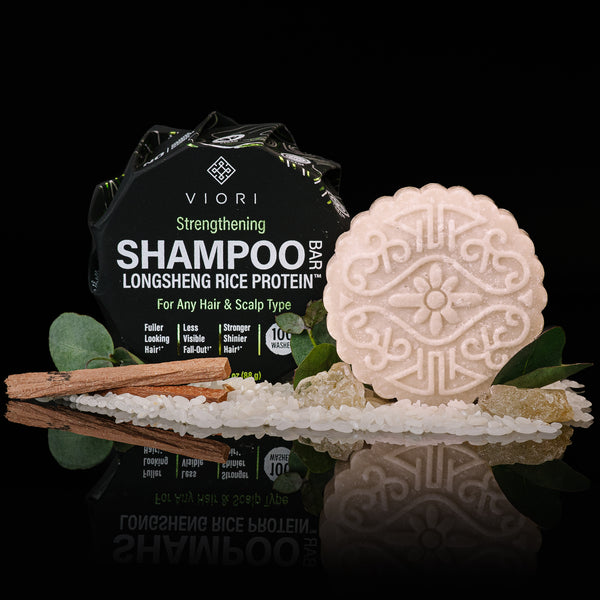
Viori includes hydrolyzed rice protein, and they’ve shared that they use a low concentration that’s considered safe for frequent use. That’s the kind of detail that tells me a formula was built for real-life routines, not just marketing.
Fermented Rice Water: Better When It’s Controlled
Rice water is everywhere online, but DIY rice rinses can be inconsistent and, in high concentration or frequent use, can be tricky for some scalps and hair types. One of the smartest ways to use rice-based benefits is in a pH-balanced, controlled concentration supported by other ingredients.
Viori uses fermented Longsheng rice water in their formulas and notes they use a lower concentration because overly strong rice water can disrupt the hair and scalp’s pH if used too often. That approach is designed to give rice-water-like benefits while staying gentle enough for regular use.
Humectants: Moisture Support Without Turning the Bar to Mush
Humectants can make hair feel softer and more hydrated, but in a shampoo bar they have to be carefully balanced. Too much can cause a bar to soften quickly in a steamy shower.
Two functional ingredients that often show up in well-designed bars are:
- Vegetable glycerin (helps with moisture feel)
- Sodium lactate (supports hydration feel and can help with bar stability)
Viori uses vegetable glycerin and sodium lactate, which is a thoughtful pairing when you want performance and longevity in the same bar.
WHAT CUSTOMERS ARE SAYING
Real reviews for Hidden Waterfall Barra de Champú
Oils and Butters: Helpful, But Not the Whole Point
Yes, butters and oils can make a bar feel more conditioning-but they aren’t automatically “the best ingredients.” In the wrong balance, they can weigh down fine hair, reduce lather, or leave a coated feel (especially in hard water areas).
In a well-built shampoo bar, emollients are supporting players-there to improve softness and manageability without interfering with cleanse and rinse.
Fragrance: Sometimes the Best Ingredient Is No Fragrance
Scent can make haircare more enjoyable, but it can also be a sensitivity trigger. If your scalp is reactive, an unscented option is often the simplest path to consistency and comfort.
Viori offers an unscented option (Native Essence) that is free of added fragrance, which can be a great choice for fragrance-sensitive users.
A Quick “Best Ingredients” Checklist You Can Use While Reading a Label
If you want the fastest way to judge a shampoo bar, look for signals that the formula was engineered for hair-not just shaped into a bar. Prioritize:
- A mild, bar-suitable cleanser (for example, SCI)
- pH-balanced formulation (critical for smoothness, shine, and color support)
- Slip/deposition support (conditioning agents that reduce friction)
- Structural ingredients that improve longevity and rinse feel (like cetyl alcohol and stearic acid)
- Balanced protein support (hydrolyzed proteins in sensible amounts)
- A fragrance-free option if you’re sensitive (like Viori Native Essence)
Pro Tips: How to Get Better Results From Any Shampoo Bar
Even the best formula can be undermined by rough technique. If you want your hair to stay smoother and your color to last longer, these small changes make a big difference:
- Lather in your hands first, then apply the foam to your hair. This reduces friction (and Viori recommends this approach, especially for color-treated hair).
- Condition after shampooing. Cleansing removes some protective sebum; conditioner helps replace slip and protection until your natural oils return.
- Give it a fair trial. Results vary by hair type, buildup level, and water quality. Viori recommends using their products for 2-3 months before deciding they’re not for you.
Final Thoughts: The Best Shampoo Bar Ingredients Work as a System
The internet loves a single hero ingredient. Real hair results don’t work that way. A shampoo bar succeeds when the formula behaves like a coordinated system: effective cleansing, hair-friendly pH, reduced friction, clean rinse, and smart strengthening and moisture support.
When you start judging shampoo bars by these fundamentals-not just by the prettiest oil on the label-you’ll have a much easier time finding one that genuinely makes your hair look and feel better.


