
In my 20 years behind the chair, I've watched nearly every ingredient trend sweep through the beauty industry. Argan oil. Keratin treatments. Charcoal everything. Biotin bombs. But the most concerning trend I'm seeing isn't about what's in the products-it's about who's making them.
I'm talking specifically about companies whose core expertise lies in creating pest-control products who are now pivoting into personal care. And look, I understand the appeal from a marketing perspective-natural ingredients, botanical formulas, sustainability messaging. But there's a fundamental chemistry problem here that nobody's discussing, and it's showing up in the condition of my clients' hair.
This isn't marketing fluff or brand warfare. This is about the actual chemical reactions happening on your scalp every single time you wash your hair.
Why Formulation Intent Actually Matters
Here's the foundational issue that keeps me up at night: the chemistry designed to repel pests is fundamentally incompatible with the chemistry that nurtures hair.
There's a principle I learned early in my career from a cosmetic chemist I deeply respect: formulation intent must align with delivery mechanism. You can't just take ingredients that work brilliantly for one purpose and expect them to work for another-especially when those purposes are biochemically opposite.
Let me walk you through the three major technical disconnects I see constantly.
The pH Disaster Your Hair Doesn't Recover From
Most botanical pest-control formulations operate at a pH between 6.5 and 8.0. This alkaline-to-neutral range keeps essential oils like cedarwood, lemongrass, and peppermint stable-all common ingredients in pest-deterrent products.
But here's what every professional stylist learns in their first year: your scalp has an optimal pH of 4.5 to 5.5. Slightly acidic. Always.
NOT SURE WHICH PRODUCT IS RIGHT FOR YOU?
TAKE THE QUIZTakes 30 seconds · 134,000+ customers matched
When you use a product formulated at pH 6.5 or higher on your hair, here's what happens at the molecular level:
- The hair cuticle lifts and stays open
- Moisture escapes from the inner cortex
- Your hair becomes porous and vulnerable
- Color fades rapidly (if you color treat)
- Breakage increases over time
- Frizz becomes unmanageable no matter what products you layer on top
I see this damage pattern at least three times a week in my salon. Clients come in with straw-like texture, excessive breakage at the mid-shaft, and color that won't hold for more than two weeks. When I ask about their routine, they're often using a "natural" bar that's actually formulated at completely the wrong pH.
And here's the technical catch-22 that formulators face: those essential oils that work beautifully as pest deterrents at higher pH become significantly less stable when you try to formulate them at the acidic pH your hair actually needs. You can't simply lower the pH without destabilizing the entire system. It requires a completely different approach to formulation.
The Surfactant Problem Nobody Talks About
Let's talk surfactants-the ingredients that actually clean your hair. This is where formulation expertise really shows itself.
Pest-control soaps traditionally use simpler surfactant systems, often just saponified oils (traditional soap made from fat plus lye) or basic coconut-derived cleansers. These work fine for occasionally washing a dog or cleaning surfaces, but daily human hair care requires something far more sophisticated.
Here's the chemistry breakdown:
Traditional soap (common in pest-control formats):
- Created through saponification
- Naturally high pH (8.0 to 10.0)
- Excellent at cleansing but strips absolutely everything
- Forms soap scum in hard water
- Leaves alkaline residue on hair that keeps cuticles lifted
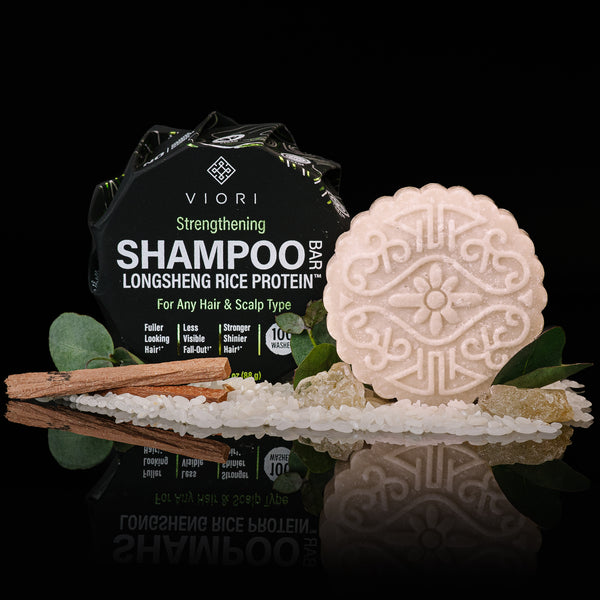
Modern hair care chemistry (like what Viori uses):
- Uses syndet (synthetic detergent) bases like Sodium Cocoyl Isethionate
- pH balanced to match hair (4.5 to 5.5)
- Cleanses without excessive stripping
- Performs consistently in hard water
- Conditions while cleansing
I've had clients tell me, "But it's natural soap, it should be gentle!" And I have to explain-natural doesn't automatically mean gentle or appropriate for your specific use case. Traditional soap is extremely alkaline. It's literally a salt of a fatty acid. That chemistry made perfect sense for pest control applications, but it's fundamentally wrong for hair care.
The Essential Oil Concentration Crisis
This is the aspect almost no one talks about, and honestly, it's perhaps the most important.
Essential oils work as pest control through something called volatile compound disruption of insect neurological systems. To be effective against pests, you need concentrations typically ranging from 2% to 10% of specific essential oils.
However, the International Fragrance Association (IFRA) and dermatological research establish much lower safe limits for personal care products. Here are the maximum safe concentrations for rinse-off products like shampoo:
- Cedarwood oil: 1.4%
- Lemongrass oil: 0.6%
- Peppermint oil: 3.1%
Here's the formulation crisis: If you reduce essential oil concentrations to cosmetically safe levels for daily use, you lose pest-control efficacy. If you maintain pest-control concentrations in a product you're using daily on your scalp, you risk:
- Contact dermatitis
- Scalp sensitization (where you become allergic over time)
- Cumulative irritation with repeated use
- Phototoxicity with citrus oils (sun-triggered skin damage)
- Potential hormonal disruption with certain botanical extracts
I've treated multiple clients who developed sudden, severe scalp reactions after months of using the same product with no issues. Their scalp had become sensitized-meaning repeated exposure finally triggered an immune response. And here's the scary part: once you're sensitized to an ingredient, you can't reverse it. You'll react to that ingredient for the rest of your life.
The Issue Nobody Puts in Their Marketing: Bioaccumulation
Here's something you'll almost never see addressed in product marketing materials: certain botanical compounds used in pest control can bioaccumulate with repeated dermal exposure.
Pyrethrins and pyrethroid-like compounds naturally occur in chrysanthemums and similar plants. They're excellent pest-control agents-they disrupt insect nervous systems effectively. But with high concentrations or prolonged exposure on human skin, they can:
- Accumulate in fatty tissues
- Cause neurological sensitivity
- Trigger immune responses
- Interfere with endocrine function
Yes, these compounds are completely natural. But "natural" and "safe for daily scalp application" are not synonymous. Understanding this distinction requires formulation wisdom typically developed through cosmetic science education, not pest-control product development.
Why Your Hair Feels Clean But Destroyed
One of the most technically challenging aspects of hair care formulation is creating products that simultaneously cleanse AND condition. After two decades in this industry, I can tell you this requires deep understanding of:
- Cationic versus anionic chemistry
- Substantivity (how ingredients adhere to hair)
- Silicone alternatives and natural conditioning agents
- Protein-moisture balance
Let me explain why companies rooted in pest control often completely miss these nuances.
Pest-control soaps need to:
- Remove oils and debris where pests hide
- Dry quickly
- Leave minimal residue
- Repel through scent
Hair care products need to:
- Selectively cleanse (remove dirt, retain beneficial natural oils)
- Add moisture and conditioning
- Leave beneficial residue (conditioners, proteins, nutrients)
- Close the cuticle for shine and protection
These are fundamentally opposite goals. Completely.
Advanced Conditioning Chemistry Makes the Difference
Viori uses Behentrimonium Methosulfate (BTMS) in their formulations-and this ingredient choice exemplifies the difference between pest-control thinking and professional hair care chemistry.
Here's why BTMS represents sophisticated formulation:
- It's a cationic surfactant (positively charged)
- Hair, when wet, is anionic (negatively charged)
- Opposite charges attract, which means superior conditioning adherence
- Despite containing "sulfate" in the name, it's completely non-irritating due to its quaternary ammonium structure
- It provides slip, detangling, and thermal protection
Companies transitioning from pest control rarely have expertise with cationic conditioning technology. Their entire chemistry background focuses on repelling and removing-not attracting and depositing beneficial ingredients onto the hair shaft.
When clients ask me why their hair feels "squeaky clean" but tangled and dry after using certain natural bars, this is exactly why. True cleanliness isn't about stripping everything away-it's about balanced cleansing with simultaneous conditioning.
The Hard Water Problem That Affects Almost Everyone
Here's a technical issue that affects millions of users but gets almost zero attention in marketing: hard water compatibility.
If you live in an area with hard water-which is most of the United States-this matters tremendously.
Traditional soap-based formulations:
- React with calcium and magnesium in hard water
- Form insoluble soap scum (calcium stearate)
- Deposit residue on hair
- Create dullness, buildup, and tangling
- Require acidic rinses (like vinegar) to remove
I cannot tell you how many clients have come to me frustrated, saying "I have to do an apple cider vinegar rinse after every single wash or my hair feels like straw!" That's not normal. That's not how hair care should work. That's a formulation problem.
Syndet-based formulations (modern hair care chemistry):
- Resistant to hard water minerals
- Rinse clean regardless of water quality
- No residue formation
- Consistent performance across water types
If a company's formulation expertise comes from creating pest-control products-which are rarely if ever evaluated for hard water performance-they may not even test for this critical variable. But professional hair care chemists? This is literally Formulation 101.
WHAT CUSTOMERS ARE SAYING
Real reviews for Hidden Waterfall Barra de Champú
Your Scalp Is a Living Ecosystem, Not a Pest-Control Target
Recent dermatological research has completely revolutionized our understanding of scalp health through the lens of the scalp microbiome-the complex ecosystem of beneficial bacteria, fungi, and other microorganisms living on your scalp right now.
A healthy scalp microbiome includes:
- Diverse bacterial populations (Cutibacterium, Staphylococcus species)
- Balanced fungal presence (Malassezia species)
- pH around 5.5
- Adequate sebum production
- Intact barrier function
Here's the critical insight: Formulations designed to kill or repel pests often contain broad-spectrum antimicrobial botanicals that don't discriminate between harmful pests and beneficial scalp flora.
Let me break down common pest-control botanicals and their scalp impact:
Neem oil (pest control concentration: 2-5%):
- Broad-spectrum antimicrobial-kills good and bad bacteria indiscriminately
- Disrupts scalp microbiome balance
- Can trigger rebound oil production (your scalp overcompensates)
- May cause contact dermatitis with repeated use
Tea tree oil (pest control concentration: 2-10%):
- Powerful antifungal and antibacterial
- Eliminates beneficial Malassezia species that actually protect your scalp
- Disrupts scalp pH
- Associated with hormonal effects at high concentrations
Eucalyptus oil (pest control concentration: 1-5%):
- Strong antimicrobial properties
- Strips protective sebum
- Can cause progressive scalp dryness and sensitivity
- Penetrates skin readily (bioaccumulation concern)
I've seen the long-term effects of disrupted scalp microbiome countless times in my chair: persistent dandruff that won't respond to treatment, seborrheic dermatitis, unexplained itching that drives people crazy, reactive scalp that suddenly can't tolerate any products. Once you've disrupted your scalp microbiome, it can take months-sometimes over a year-to restore proper balance.
Viori's Rice Water Approach: Nourishment Over Elimination
Viori's formulation philosophy demonstrates the fundamental difference between pest-control chemistry and scalp-health chemistry.
Longsheng rice water contains:
- Inositol (vitamin B8) - supports cellular health
- Panthenol (vitamin B5) - repairs and strengthens
- Amino acids - building blocks for hair protein
- Minerals - support enzymatic processes
These ingredients work through:
- Nourishment rather than antimicrobial action
- pH optimization (fermentation creates the slightly acidic pH hair needs)
- Protein supplementation (hydrolyzed rice protein fills damaged areas in the hair shaft)
- Microbiome support (fermented ingredients contain beneficial metabolites)
This represents a completely different formulation philosophy-one that views the scalp as a living ecosystem requiring balance and support, not a pest-control target requiring elimination and disruption.
The Protein-Moisture Balance: A Concept That Doesn't Exist in Pest Control
Professional hair care requires understanding the protein-moisture balance-and this concept simply doesn't exist in pest-control formulation.


