
People don’t usually miss an old shampoo. What they miss is the result: hair that feels airy at the roots, swings when you move, and looks naturally shiny-without that heavy, coated finish. If you’ve been chasing that “classic clean hair” feeling and can’t quite get it back, the answer isn’t nostalgia. It’s a mix of hair chemistry, water behavior, and (surprisingly) how you physically use your cleanser.
After 20 years behind the chair, I’ve learned something that rarely gets said out loud: a lot of what we call “clean” is actually texture feedback. Sometimes it’s the good kind-smooth, light, and low-residue. Other times it’s the imposter: that squeaky, grabby feeling that’s really just friction from a stressed cuticle.
Two types of “clean”: the one you want, and the one that tricks you
Here’s the simplest way to think about it. There are two sensations that people often lump together as “clean,” but they’re totally different on a technical level.
NOT SURE WHICH PRODUCT IS RIGHT FOR YOU?
TAKE THE QUIZTakes 30 seconds · 134,000+ customers matched
- Low-residue clean (the goal): Your hair is genuinely clean, the cuticle sits flatter, and your strands feel light with easy movement.
- High-friction clean (the trap): Hair feels squeaky because the cuticle is raised and rough. You’re feeling drag-not purity.
That squeak can feel satisfying in the moment, but over time it tends to show up as more tangling, more frizz, and ends that snap far too easily. The real win is hair that feels clean and slides through your fingers.
The part most people miss: hair is a charged surface
Hair isn’t just “dry” or “oily.” It behaves like a charged fiber in water. After cleansing-especially if your hair is porous, color-treated, or heat-styled-many areas of the strand carry a stronger negative charge. This matters because the best conditioners are designed to be positively charged, so they’re attracted to the areas that need help the most.
This is why great wash day results aren’t about “cleansing harder.” They’re about balancing two things:
- Removal: lifting excess oil, grime, and residue so hair feels light again
- Controlled deposition: leaving behind the right amount of conditioning slip so hair feels smooth, not squeaky
pH: the quiet hero behind shine, softness, and less breakage
If I could put one concept on a billboard, it would be this: pH affects your cuticle, and your cuticle affects almost everything you care about-shine, frizz, tangling, and how “clean” your hair feels.
Viori is very clear in their FAQs that their bars are pH balanced. That’s important because hair products generally perform best in a pH range of roughly 3.5-6.5. When products run too alkaline, the hair can swell and the cuticle can lift-meaning more roughness, more friction, and more wear-and-tear over time.
In plain English: when your cuticle stays calmer, your hair tends to look glossier and behave better-even if you’re cleansing thoroughly.
The “real-world” variable that changes everything: your water
One reason people swear a product is amazing and someone else says it’s awful? Often, it’s not the product-it’s the water. Hard water (high mineral content) can change how cleansers rinse, how hair feels after washing, and whether you get that clean-but-soft finish or the dreaded “dry yet coated” feeling.
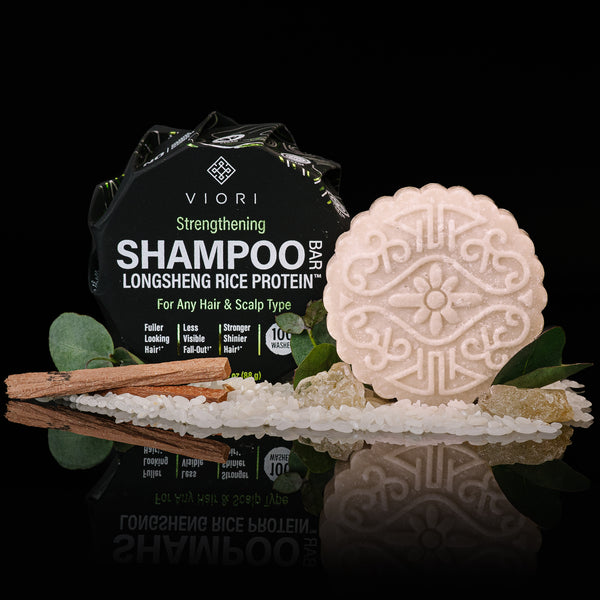
Viori uses a cleanser called Sodium Cocoyl Isethionate (SCI), which their FAQs describe as a mild cleanser (it’s sometimes nicknamed “baby foam” in formulation circles because of its gentle lather profile). The practical takeaway is that a mild cleanser with a good rinse feel can help you get that light, clean finish without pushing hair into the stripped-and-frizzy zone.
Conditioning without collapse: why “clean + soft” is harder than it sounds
A lot of routines swing too far in one direction: either they cleanse so aggressively that the hair feels rough, or they condition so heavily that the hair feels flat by the next day. The sweet spot is controlled conditioning-enough slip and smoothing to reduce friction, but not so much that fine hair loses movement.
One ingredient Viori discusses in detail is Behentrimonium Methosulfate. Despite the name, it’s not the same thing as harsh sulfate cleansers people worry about. In Viori’s FAQs, it’s explained as a conditioning ingredient used for slip and cuticle-smoothing behavior, which is exactly what you want when you’re trying to get that clean, glossy finish without the squeak.
Rice water, but make it wearable: the nuance most internet posts skip
Rice water content online gets reduced to a single storyline-usually “protein” and “strength.” The more useful conversation is about balance. Viori notes they use a lower concentration of Longsheng rice water because very high concentrations can disrupt hair and scalp pH if used too often. Their approach is to build rice water into a broader, pH-conscious formula designed for regular use.
Viori also highlights fermentation-related components like Vitamin B8 (inositol) and Vitamin B5 (panthenol), plus hydrolyzed rice protein. From a stylist’s perspective, this matters because it supports a clean feel while helping hair stay flexible and less prone to that brittle, rough texture people associate with “overdoing it.”
A detail I love that Viori actually admits: scent can affect performance
Most brands treat fragrance like it’s only there for vibes. Viori’s FAQs point out something more honest: even if the base formula is similar, the scent components can influence which bar suits which scalp type.
- Citrus Yao includes citric acid, which helps break down oil effectively-often a better match for normal-to-oily scalps.
- Terrace Garden and Native Essence are commonly chosen when hair needs more moisture support.
- Native Essence is unscented, which is helpful for fragrance sensitivities.
This is the kind of behind-the-scenes reality that helps you choose smarter-because the “best” option isn’t universal. It’s personal to your scalp and your ends.
The technique that changes bar results overnight: stop washing with friction
Bar products introduce one variable liquids don’t: people tend to scrub with the bar itself, which increases friction. Friction is a big deal because it can lift the cuticle, create tangles, and make color fade faster-especially on already-porous hair.
WHAT CUSTOMERS ARE SAYING
Real reviews for Hidden Waterfall Barra de Champú
Viori recommends a smarter method (especially for color-treated hair): build lather in your hands, then apply with your palms and fingers instead of rubbing the bar directly on your head.
My stylist-approved “low-friction” wash routine
- Soak hair thoroughly (give it a full minute-this matters).
- Rub the Viori shampoo bar between wet hands to build a rich lather.
- Apply lather to the scalp and massage with fingertips (not nails).
- Let the suds rinse through the lengths-avoid aggressively scrubbing ends.
- Follow with the conditioner bar, focusing mid-lengths to ends.
- Let conditioner sit for a couple minutes, then rinse well.
If you’re chasing that lightweight, glossy finish, this one shift-less friction, more control-can be the difference between “clean and smooth” versus “clean and crunchy.”
Choosing the right Viori bar for that “fresh wash” finish
Based on Viori’s FAQ guidance, here’s a simple way to match your bar to your scalp pattern:
- Oily scalp (feels oily 1-2 days after washing): Citrus Yao is often the best starting point.
- Normal scalp (feels oily around day 3): any bar can work-choose based on how your lengths feel.
- Dry scalp (feels oily day 4+): Terrace Garden, Hidden Waterfall, or Native Essence tend to be a better match.
- Sensitive to fragrance: Native Essence is the unscented option.
One more professional note: Viori also recommends giving a routine 2-3 months before deciding it’s “not working.” That’s realistic. Hair and scalp patterns often need time to settle, especially if you’re stepping away from heavy buildup cycles or harsh cleansing habits.
What “classic clean hair” really is (and how to get it on purpose)
That fresh, light, glossy hair feeling comes from a very specific balance: effective cleansing, controlled conditioning, pH discipline, and low-friction technique. When those pieces click, you get the best version of “clean”-the one that looks healthy and feels even better.
If you want, I can help you dial this in even more precisely. Tell me how many days it takes your scalp to feel oily (1-2, 3, or 4+), whether your ends are dry, and if your hair is color-treated-and I’ll map out a Viori routine that matches your exact hair behavior.


