
If you’ve ever used the same hair products, followed the same routine, and still ended up with wildly different results from one wash to the next, you’re not alone. In the salon, I see it constantly: hair that behaves beautifully on vacation (or at a friend’s house) and then turns dull, frizzy, or temperamental the minute you’re back home.
When people search “DHW hair products”, they’re often looking for a product recommendation. But there’s a more helpful way to interpret it: DHW stands for domestic hot water, and your home’s hot-water system can quietly shape how your shampoo and conditioner perform. In other words, your shower can act like an extra “ingredient” in your routine-for better or worse.
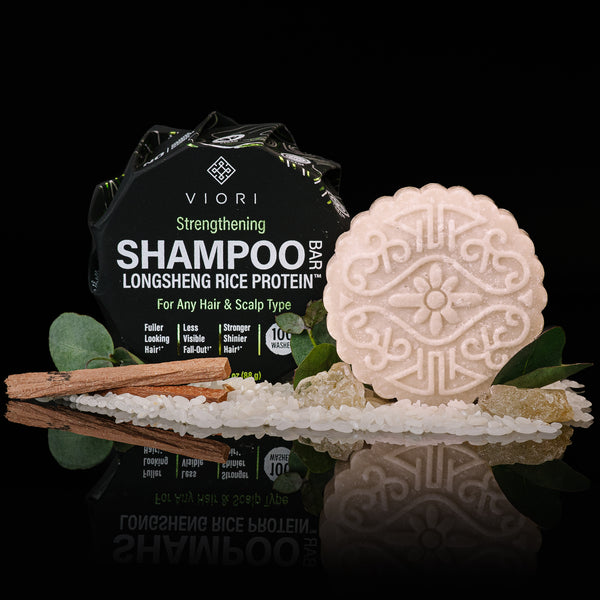
Below is the deep, technical (but still practical) breakdown of what DHW changes on the hair fiber and scalp, plus how to adjust your routine-especially if you use Viori shampoo and conditioner bars, which are pH balanced and formulated with Longsheng Rice Water™ and other hair-supportive ingredients.
What DHW really changes: the hair, the scalp, and the “feel” of your wash
Let’s start with the basics: DHW isn’t just “hot water.” It’s temperature, flow rate, mineral content, and the way your home mixes and delivers water. All of that influences cleansing, conditioning, shine, frizz, and scalp comfort.
NOT SURE WHICH PRODUCT IS RIGHT FOR YOU?
TAKE THE QUIZTakes 30 seconds · 134,000+ customers matched
1) Heat changes hair behavior (and not in the simple “cuticle opens/closes” way)
You’ve probably heard that hot water “opens the cuticle” and cold water “closes it.” The reality is more nuanced. Hair doesn’t have little doors swinging open and shut, but temperature absolutely affects how hair behaves when it’s wet.
- Sebum (oil) gets thinner in warm water, so it spreads and lifts away more easily-great for oily roots.
- The hair fiber swells more in heat, especially if your hair is porous, lightened, or already dry-this can increase tangling and friction.
- Conditioner can rinse differently under very hot water because heat can thin the conditioning film on the hair.
That’s why super-hot showers often create the same frustrating pattern: clean roots + rough ends.
2) Hard water can look like “product residue” (even when it isn’t)
If your water is hard, it contains higher levels of minerals like calcium and magnesium. Those minerals can change the way cleansing and conditioning ingredients behave and can also affect how “clean” your hair feels after you rinse.
Hard water doesn’t just leave hair feeling less shiny-it can mess with your instincts. When your hair doesn’t feel right, most people do one of two things: they scrub harder or they add more conditioner. Both can backfire and lead to more irritation or more heaviness over time.
Viori shampoo bars use Sodium Cocoyl Isethionate (SCI) as the cleanser-well-known in haircare for being mild and effective. In hard water, even a gentle cleanser can feel different than you expect, not because it’s “not working,” but because the rinse and finish are being influenced by the water itself.
3) Hot water can trigger scalp tightness, itch, and flakes
Scalp comfort is a big part of why people quit a routine too soon. Longer, hotter showers can disrupt the scalp’s moisture barrier and increase dryness. That dryness can show up as flaking that looks like dandruff, even when the root issue is simply a dehydrated scalp.
And here’s the twist: dryness can sometimes lead to reactive oiliness-your scalp tries to compensate and produces more oil, which makes the situation feel confusing and inconsistent.
The overlooked variable almost nobody talks about: DHW temperature stability
This is the “stylist-level” detail most articles skip. It’s not just the temperature-it’s whether your shower temperature stays steady. Some home systems create small surges: a quick jump hotter, then cooler, then hot again. You might barely notice it on your skin, but your hair and scalp do.
- During shampooing, a heat surge can increase swelling and friction, making hair feel tanglier.
- During conditioning, a heat surge can make the conditioner film feel like it “vanishes,” leading you to over-apply.
- During the final rinse, sudden cooling can make it feel like the conditioner didn’t distribute evenly.
If you’ve ever said, “My routine works… except when it doesn’t,” this is one of the first things I’d investigate.
Where Viori’s formula matters: pH balance and smart conditioning science
Viori bars are pH balanced, which is a big deal for long-term hair feel. In my professional experience, one of the fastest ways to end up with chronically rough hair is to use products that lean too alkaline over time. Hair generally performs best in a mildly acidic environment.
Viori conditioner bars include Behentrimonium Methosulfate (BTMS), a conditioning ingredient designed to improve slip and smoothness by binding where hair needs it most. That “slip” is not just cosmetic-it reduces friction, which is one of the biggest drivers of frizz and breakage in wet hair.
In challenging DHW conditions (hard water, hotter showers, temperature swings), a strong formula helps-but technique becomes the difference between “okay” and “wow.”
Picking the right Viori bar when DHW is part of your struggle
Viori’s bars share a core formula, but Viori notes that scent variations can still influence performance for different needs. For example, Citrus Yao includes citric acid, which helps break down oil particularly well-useful if your roots get greasy quickly.
- Oily or fast-greasy scalp: Citrus Yao is often the most supportive choice.
- Sensitive scalp or fragrance concerns: Native Essence is the unscented, gentle option.
- Dry scalp or dry hair feel: Terrace Garden, Hidden Waterfall, or Native Essence are commonly preferred.
If you’re the classic “oily scalp, dry ends” combo, consider treating your hair like two zones with different needs-because it is.
The bar technique that changes everything (and helps protect color)
One of the best practical tips from Viori-especially if your hair is color-treated-is to build lather in your hands instead of rubbing the bar directly on your scalp. Why? Bars can encourage more friction, and friction on wet hair is one of the easiest ways to rough up the cuticle and stress the strand.
Here’s a clean, DHW-friendly way to use Viori bars:
- Soak hair thoroughly so water is evenly distributed before you cleanse.
- Lather the shampoo bar in your palms, then apply the lather to your scalp.
- Massage gently with fingertips (no aggressive scrubbing), then rinse well.
- Apply the conditioner bar mainly from mid-lengths to ends.
- Let conditioner sit for a few minutes before rinsing.
And don’t worry if the conditioner doesn’t “foam.” Viori explains that conditioner isn’t meant to lather like shampoo-it’s more of a creamy, paste-like slip. That’s normal, and a little truly goes a long way.
A pro move for DHW issues: the “two-zone rinse”
If your ends frizz easily or feel rough after hot showers, try rinsing in two temperature zones:
- Use comfortably warm water to rinse your scalp area thoroughly.
- Rinse mid-lengths and ends with slightly cooler water.
- If frizz is a constant battle, finish with a brief cool rinse.
Even a small temperature drop can reduce swelling in porous ends and help hair look smoother and shinier.
WHAT CUSTOMERS ARE SAYING
Real reviews for Hidden Waterfall Barra de Champú
If your hair feels “coated,” check these DHW-driven causes first
Viori has heard from many customers that the bars don’t weigh hair down or leave residue. When someone does feel a coating, I usually look at the water context before blaming the product.
- Mineral film from hard water mixing with natural oils
- Conditioner creeping too close to the roots (common when hair feels dry)
- Rinsing too quickly, especially if you turn the water cooler at the end
If your hair only feels “off” at home and not elsewhere, that’s a strong sign DHW is influencing your results.
Flakes? Make sure you’re treating the right type
One of the most important distinctions in scalp care is whether flakes are coming from oiliness or dryness. Viori’s guidance reflects that:
- Oily scalp flakes: Viori often recommends Citrus Yao shampoo and conditioner.
- Dry scalp flakes: Viori often recommends Hidden Waterfall, Terrace Garden, or Native Essence shampoo.
DHW matters here because very hot showers can push a scalp toward dryness and shedding, which people misread as dandruff-then they over-cleanse, and the cycle continues.
Bottom line: “DHW hair products” is really about the system, not the bottle
If your haircare feels inconsistent, consider stepping back and looking at the full system: your water temperature, water hardness, shower length, and how stable your hot water is. Small changes-like lowering the water temperature slightly, rinsing longer, and using a low-friction bar technique-can make your routine feel completely different.
If you want a personalized, DHW-proof routine using Viori, start with these three questions:
- How soon do your roots feel oily after washing (1-2 days, about 3 days, or 4+ days)?
- Are your ends colored, bleached, or heat-damaged?
- Do you suspect you have hard water (scale on fixtures, dull hair, mineral spotting)?
Answer those, and you can match the right Viori bar pairing and technique to your actual scalp and water conditions-so your “great hair days” stop feeling random.


