
People don’t go looking for a fixer shampoo bar because they’re casually browsing for a new eco-friendly option. They’re usually in a mild panic because their hair has started doing that frustrating thing where it feels wrong no matter what they do-waxy at the roots, dull through the lengths, tangly in the shower, frizzy by lunchtime, or somehow greasy and dry at the same time.
In the salon, I hear the same lines over and over: “It never feels clean,” “It feels coated,” “My curls won’t clump,” “My scalp is mad.” And online, the advice is often oversimplified into a tug-of-war between “clarifying” and “moisturizing.” That’s not the full story.
A great fixer bar doesn’t just wash your hair. It resets the way your hair and scalp interact-how they hold onto oils, how product films sit on the cuticle, how much friction you’re creating, and how easily hair can detangle and lay smooth once it dries.
What a “Fixer” Is Actually Fixing (Hint: It’s Mostly Surface Physics)
Hair is a fiber with an outer layer called the cuticle, made of overlapping scales. When hair feels rough, sticky, dull, or snarly, it’s often not that your hair is suddenly “damaged beyond repair.” More commonly, the surface conditions are off-think of it like the difference between a clean glass window and one with invisible film on it. The window is still intact, but it sure doesn’t look or feel the same.
NOT SURE WHICH PRODUCT IS RIGHT FOR YOU?
TAKE THE QUIZTakes 30 seconds · 134,000+ customers matched
Most “my hair is ruined” moments come down to a few fixable surface issues:
- Too much friction (hair grabs itself, tangles easily, breaks during detangling)
- Uneven film buildup (hair feels coated, heavy, or waxy-especially at the crown)
- Charge imbalance (static, flyaways, roughness, that “squeaky” feel)
- Cuticle disruption from pH (hair feels swollen, dry, frizzy, or constantly tangled)
When the right shampoo bar hits the right problem, it can feel like magic. What you’re actually experiencing is improved wetting, rinsing, slip, and cuticle behavior-all the unglamorous mechanics that make hair feel soft and manageable again.
The Part Almost Nobody Explains: Bars Change Your Technique (and Technique Changes Everything)
Here’s the quiet truth: shampoo bars have their own “failure modes.” Not because bars are bad, but because people use them like a crayon-directly on the hair-then wonder why the hair feels rough or uneven afterward.
When you rub a bar directly onto your head, you’re doing two things at once:
- You’re adding mechanical friction, which can lift the cuticle-especially on fragile lengths.
- You’re concentrating product in the same zones over and over (hairline, crown, nape), which can lead to uneven cleansing and uneven feel.
This is why Viori’s usage guidance matters more than it looks on the surface: build lather in your palms and apply with your hands rather than scrubbing the bar directly on your hair. It’s a simple switch that can dramatically reduce tangling, roughness, and breakage for a lot of people-especially if your hair is color-treated or high-porosity.
What Makes a Shampoo Bar a True “Fixer”: Smart Cleansing, Not Harsh Cleansing
A fixer bar isn’t automatically the strongest cleanser in the room. The best “fix” is selective cleansing-removing what’s weighing hair down or irritating the scalp, without stripping hair so aggressively that it creates a new problem.
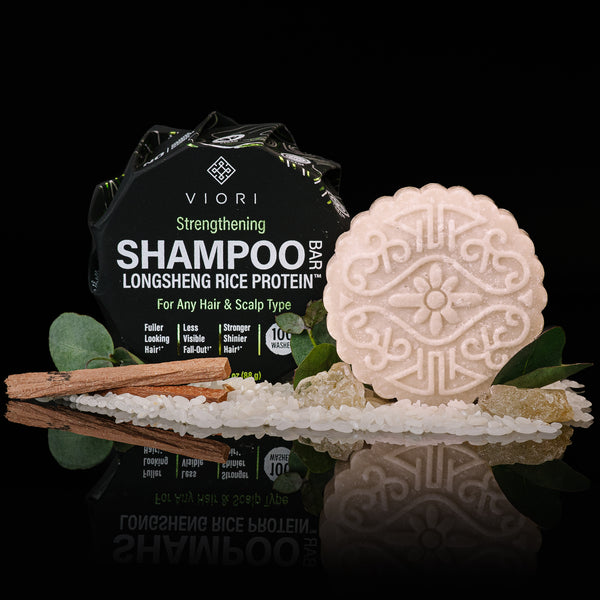
Viori shampoo bars use Sodium Cocoyl Isethionate (SCI) as the cleanser. In haircare formulation, SCI is known for being effective while still feeling relatively gentle and comfortable for many users. It creates a satisfying lather, helps lift oils and grime, and can be less harsh-feeling than more aggressive cleansers that leave hair squeaking and snarling.
Why does that matter for “fixing”? Because hair that’s been over-cleansed often becomes high-friction hair-and high-friction hair is what tangles, breaks, and frizzes.
The Under-the-Radar Fix: Managing Static and Slip Through Charge
One of the most overlooked reasons a fixer bar can feel like it “saved” your hair is charge behavior. Damaged areas on hair tend to attract trouble: more friction, more tangles, and a rougher feel.
Viori’s formula includes Behentrimonium Methosulfate (BTMS), a conditioning agent prized in haircare because it helps improve slip and manage static. Despite the word “methosulfate,” BTMS isn’t used like harsh cleansing sulfates; it’s included for conditioning performance and combability.
In plain language: a formula that cleans while also supporting detangling and smoothness is far more “fixing” than a cleanser that simply blasts everything off the hair and leaves the cuticle feeling raw.
Protein Without the Problems: Why “Low Concentration” Can Be the Sweet Spot
Protein is one of those topics that gets turned into internet drama. Some people swear it’s the answer; others blame it for stiffness and breakage. Both experiences can be real-because it comes down to dose, hair condition, and frequency.
Viori notes they use a low concentration of rice protein designed to be safe for frequent use. That’s a meaningful detail for a fixer product, because most people don’t use a fixer once-they use it repeatedly while they try to get their hair back on track.
Viori also uses fermented Longsheng rice water, and notes fermentation can increase nutrients like inositol (vitamin B8) and panthenol (vitamin B5). Even setting hair-growth conversations aside, these are ingredients associated with improved hair feel, resilience, and scalp-supportive routines-exactly the kind of thing that helps hair look better because it’s breaking less and behaving more consistently.
The “Scent” Choice That’s Not Just About Scent
Most products treat fragrance as pure vibe. Viori’s FAQs point out something more functional: even with the same base approach, the collection you choose can matter depending on scalp type. For example, Citrus Yao is commonly recommended for normal-to-oily scalps, while more moisture-forward options like Terrace Garden and the fragrance-free Native Essence are often a better match for normal-to-dry scalps or people who are scent-sensitive.
In other words, the “fix” isn’t one universal bar-it’s choosing the correction that matches what your scalp and lengths are actually doing.
WHAT CUSTOMERS ARE SAYING
Real reviews for Hidden Waterfall Barra de Champú
Two Common Mistakes That Make a Fixer Bar Seem Like It “Didn’t Work”
1) Scrubbing the lengths like they’re the problem
Your scalp needs cleansing. Your ends need protection. If you repeatedly work cleanser directly into the lengths, you can create excess friction and cuticle lift, which reads as “dryness” even when the real issue is texture and roughness.
2) Skipping conditioner because hair feels “coated”
Hair that feels coated often needs a better cleanse and better conditioning placement-not less conditioning. Viori explains conditioner is positively charged, so it adheres to the hair strand and helps protect it after cleansing removes some natural sebum. The fix is usually applying conditioner where it belongs (mid-lengths to ends), letting it sit briefly, then rinsing thoroughly.
A Simple “Fixer Protocol” You Can Use at Home (Viori-Friendly)
If your goal is that unmistakable “my hair is back” feeling-clean roots, softer lengths, less tangling-use a consistent method for a couple of weeks before you judge results.
- Figure out your scalp type: oily scalps feel oily again in 1-2 days, normal around 3 days, dry 4+ days.
- Choose your Viori collection accordingly: Citrus Yao for oilier scalps; Terrace Garden or Native Essence for drier scalps; Hidden Waterfall often sits comfortably in the middle for many people.
- Palm-lather first, then apply to the scalp with fingertips (skip direct bar-to-hair scrubbing if your hair tangles easily).
- Rinse longer than you think you need-many “residue” complaints are really “not fully rinsed” complaints.
- Condition mid-lengths to ends, let it sit a couple of minutes, then rinse well.
And if you’re trying to shift long-term scalp behavior-oil balance, flakes, irritation-keep in mind that results vary. Viori recommends giving a routine 2-3 months before deciding it’s not for you, especially for scalp-related goals.
The Bottom Line: A Fixer Bar Works When It Restores Balance
A true fixer shampoo bar isn’t just “strong.” It’s well-designed. It cleans without leaving hair rough, supports manageable slip, respects hair-friendly pH behavior, and-when used with a low-friction technique-helps hair stop fighting you.
If you want help choosing the best Viori match, start with two questions: does your scalp get oily fast, or does it stay dry for days? And do your lengths feel more like “frizzy and thirsty” or “heavy and coated”? Those two answers usually point to the right direction immediately.


