
Most “floral shampoo bar” reviews sound the same: the scent is pretty, the lather is decent, and the hair feels soft. And sure-those details matter. But they’re rarely the reason a shampoo bar becomes a staple in your shower (or ends up half-melted and ignored).
Here’s the part that almost never gets discussed: “floral” isn’t just a fragrance preference. In a well-made bar, the scent profile can subtly shift the overall experience-how clean your scalp feels, how your lengths behave, and even how your hair looks and feels the next day. I’m going to walk you through a more technical, more useful way to evaluate a floral bar, using Viori Terrace Garden as the reference point.
The “floral” factor: why scent can change performance
A lot of people assume the only difference between bars is the smell. In real life, the scent system can influence how a bar feels on your hair-especially when you factor in scalp oil levels, porosity, and water quality.
NOT SURE WHICH PRODUCT IS RIGHT FOR YOU?
TAKE THE QUIZTakes 30 seconds · 134,000+ customers matched
Viori specifically notes that while their bars share a consistent formulation approach, the scent profiles can affect which hair and scalp types each bar tends to suit best. Terrace Garden is described as a fresh, green floral scent that isn’t overpowering, and it’s generally recommended for normal-to-dry scalp types-meaning it often reads as more moisture-supportive in day-to-day use.
The hidden variable that ruins most shampoo bar reviews: friction
If I could fix one thing in online shampoo bar reviews, it would be this: people don’t separate chemistry from mechanics. Bars can work beautifully, but they can also create problems simply because of how they’re applied.
Rubbing a shampoo bar directly on the hair creates friction. That friction can lift the cuticle, which shows up as tangling, roughness, frizz, and (for some people) faster fading on color-treated hair.
Viori even recommends a smarter method-especially if your hair is colored: build lather in your hands first, then apply with your fingers. It sounds like a small tweak, but it changes the entire experience.
How to apply a shampoo bar for the fairest “review”
- Soak your hair thoroughly (bars need water to glide and lather evenly).
- Rub the bar between your palms until you get a rich lather.
- Massage the scalp with your fingertips, then let the lather rinse through the lengths.
- Rinse longer than you think you need to-especially in thick hair.
Why Viori lathers like shampoo (not like a “soapy” bar)
One reason people get disappointed by some shampoo bars is that they behave like soap, especially in hard water. Soap-based bars can leave a draggy, coated feeling that gets misread as “residue.”
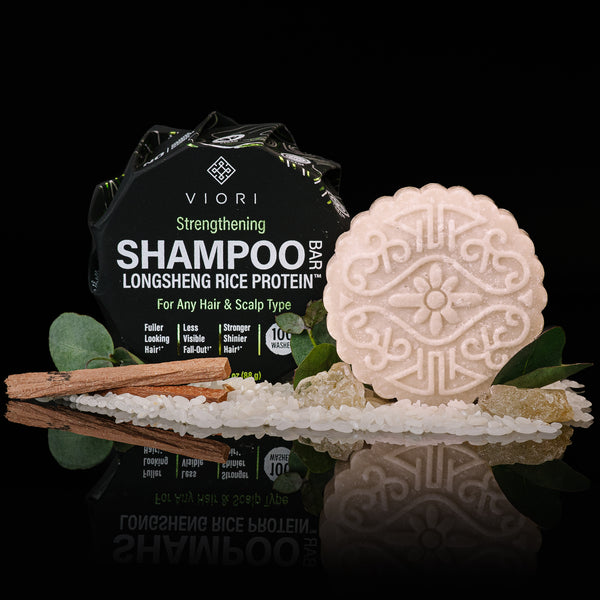
Viori’s shampoo bars use Sodium Cocoyl Isethionate (SCI) as the cleanser. In the professional world, SCI is known for producing a creamy, satisfying lather while staying on the milder side. That matters because it helps hair feel clean without the harsh, squeaky aftermath that makes people over-wash or over-scrub.
The part reviewers skip: conditioner is what decides the finish
If you only judge a shampoo bar by how hair feels right after shampooing, you’re missing the point. Shampoo lifts and removes; conditioner smooths, protects, and improves slip. This isn’t marketing-it’s basic hair physics.
Viori explains conditioner in a way I wish more brands did: conditioner is positively charged, so it binds to the hair shaft and helps replace what cleansing temporarily removes until natural oils return. Their conditioner uses Behentrimonium Methosulfate (BTMS), a conditioning ingredient valued for softening and detangling. Despite the name, it is not the same as harsh cleansing sulfates like SLS/SLES/ALS.
If you want a real result, not a quick impression
- Condition every time you shampoo, especially if you have any dryness, frizz, or color.
- Work conditioner through mid-lengths to ends and give it a minute before rinsing.
- For frizz-prone hair, let it sit at least 5 minutes before rinsing as a deeper conditioning step (a technique Viori recommends).
Protein + porosity: why one person’s “amazing” is another person’s “meh”
Viori includes fermented Longsheng rice water and uses a low concentration of rice protein designed to be safe for regular use. Still, hair doesn’t respond to protein in a universal way-your porosity changes the entire outcome.
High-porosity hair (often colored, heat-styled, or naturally more fragile) tends to love gentle protein support because it can temporarily reinforce the strand and improve shine and strength. Low-porosity hair can be more prone to buildup and may need a lighter approach and very thorough rinsing. This is exactly why Viori’s guidance often steers low-porosity users toward lighter, more cleansing routines.
pH-balanced helps-but it doesn’t cancel out technique and water
Viori states their bars are pH balanced, and that matters because overly alkaline products can leave the cuticle lifted over time, which often shows up as dryness, tangling, and frizz. But pH is only one piece of the puzzle.
You can still get frizz with a pH-balanced bar if you’re using very hot water, rough towel-drying, scrubbing the bar directly on your hair, or skipping conditioner. Hair is sensitive to small stressors-and frizz is often a sign that several tiny stressors are stacking up at once.
Why “floral shampoo bar” reviews conflict (and how to read them correctly)
This is where it clicks: a floral-forward bar like Viori Terrace Garden is often interpreted through the reviewer’s scalp type.
WHAT CUSTOMERS ARE SAYING
Real reviews for Hidden Waterfall Barra de Champú
- Normal-to-dry scalps often report hair feels softer, calmer, and less stripped.
- Very oily scalps may report they can’t go as long between washes, especially if they prefer a more oil-targeting cleanse.
- Color-treated hair tends to do best when the bar is used with low friction (palm-lather method) and consistent conditioning.
So when you see mixed reviews, don’t assume the product is inconsistent. More often, the reviewers are simply washing different scalps with different porosity patterns-using different methods.
A simple 2-week protocol for an honest floral shampoo bar review
If you want to review a floral shampoo bar in a way that’s actually useful (to you and to anyone reading your review), test it like a professional would: control the variables.
Week 1: baseline
- Wash as often as you normally do.
- Take note of scalp comfort and how hair behaves once dry.
Week 2: technique-controlled
- Use the palm-lather method only.
- Condition consistently, focusing mid-lengths to ends.
- Track day-two results (oil rebound, frizz halo, volume, itch).
And if you’re transitioning from other routines, keep in mind that results can take time. Viori recommends giving their products 2-3 months before giving up, since individual hair and scalp adjustments can vary.
The takeaway
A floral shampoo bar shouldn’t be reviewed like it’s just a scented novelty. The best question isn’t “Do I like the smell?” It’s: Does it match my scalp type, my porosity, my water, and my technique?
If you approach a bar like Viori Terrace Garden with the right method-low friction, solid rinse time, and consistent conditioning-you’ll get a much clearer read on what it’s designed to do: support normal-to-dry scalps, keep hair feeling moisturized, and leave that fresh, green floral impression without overwhelming the senses.


