
After two decades working behind the chair and consulting with cosmetic chemists, I've learned something most consumers never realize: the most fascinating stories in hair care happen at the molecular level-in places you can't see, touch, or smell. Today, I want to pull back the curtain on something that genuinely fascinates me: the staggering complexity of creating a truly multi-functional shampoo bar.
You've probably noticed the explosion of "all-in-one" solid shampoo bars promising to cleanse, condition, strengthen, and treat your hair simultaneously. Walk into any natural beauty store and you'll see dozens of bars making impressive claims. But here's what most brands won't tell you: creating a solid bar that delivers genuine multi-benefit performance is one of the most challenging feats in cosmetic chemistry.
The question I want to explore today is this: Why do solid shampoo bars struggle to deliver the same results as liquid products, and what does it actually take to overcome these limitations? The answers surprised even me.
The Fundamental Problem: Solids vs. Liquids
Let's start with the basics, because understanding this difference changes everything. Liquid shampoos exist in water, where ingredients float around freely, suspended and ready to interact the moment you apply them to your hair. This fluid environment allows for:
- Dynamic reactions that happen in real-time during washing
- Sequential release of different ingredients at different moments
- Flexible pH adjustment throughout the cleansing process
Solid bars are a completely different beast. Everything is locked into a crystalline or semi-crystalline structure-imagine ingredients frozen in place, pressed together for months or even years. When you're trying to create a "hair plus" bar that cleanses, conditions, and treats your hair all at once, you encounter what I call the solidification incompatibility cascade.
In simple terms: ingredients that play nicely together in liquid form often become enemies when compressed into a solid bar. It's like forcing roommates who need completely different living conditions to share a tiny studio apartment for a year. Things get... complicated.
NOT SURE WHICH PRODUCT IS RIGHT FOR YOU?
TAKE THE QUIZTakes 30 seconds · 134,000+ customers matched
The Chemistry of Contradiction
Here's where it gets really interesting, and where I've seen countless bar formulations fail. Let me walk you through one of the biggest challenges in bar formulation-something that took me years to fully appreciate.
Most effective shampoo bars need two types of ingredients:
- Cleansing agents (like Sodium Cocoyl Isethionate) which carry a negative charge
- Conditioning agents (like Behentrimonium Methosulfate) which carry a positive charge
The problem? Opposite charges attract-and neutralize each other. It's basic physics, and it's a nightmare for formulators.
In a liquid shampoo, chemists can keep these ingredients separated through careful emulsification. They only come together the moment you apply the product to your hair. But in a solid bar, these oppositely-charged ingredients sit in intimate contact for months, pressed against each other at molecular scale. It's like forcing two magnets to touch backwards and expecting them not to stick together.
The solution requires genuinely brilliant formulation work:
- Molecular buffering using fatty alcohols (Cetyl Alcohol, Stearic Acid) that act as physical spacers between opposing ingredients
- Crystal structure engineering to arrange ingredients so they minimize direct contact
- Strategic hydration zones that activate in sequence when water is introduced
This is sophisticated chemistry. When Viori includes both cleansing and conditioning agents in a single bar, they've had to create a solid matrix where chemical opposites remain stable until the exact moment you wet your hair. That's not marketing-that's molecular architecture.
The Protein Puzzle Nobody Talks About
If you've noticed that many shampoo bars list proteins as ingredients-like Hydrolyzed Rice Protein-you might wonder how effective those proteins actually are once they've been compressed into bar form. This is one of the most overlooked technical challenges in solid hair care, and honestly, one that many brands handle poorly.
Proteins are notoriously unstable in solid surfactant systems. Here's why:
- Surfactants naturally want to break down proteins by interacting with their structure-it's literally what they do
- The compression process of forming bars can mechanically damage protein molecules through shear force
- Moisture moving through the bar over time creates pockets where protein degradation speeds up exponentially
For rice protein to actually benefit your hair-to strengthen strands, improve elasticity, and fill in damaged areas-it needs to maintain its molecular structure intact. In bar format, this requires:
- Protective encapsulation techniques (essentially creating tiny shields around protein molecules)
- pH optimization between 4.5-5.5 to keep proteins stable and bioavailable
- Low-temperature processing to prevent heat damage to delicate protein structures
When you see a bar that successfully incorporates proteins and actually delivers results, you're looking at some serious formulation expertise. This isn't something you can whip up in your kitchen.
The Fermentation Factor: Preserving Living Benefits in Solid Form
This is where formulation chemistry gets truly fascinating, at least to the science nerds among us. Viori's incorporation of fermented rice water raises a question I've never seen adequately addressed in beauty industry discussions:
How do you preserve beneficial compounds from fermentation in a compressed, solid format without destroying everything that makes fermentation valuable in the first place?
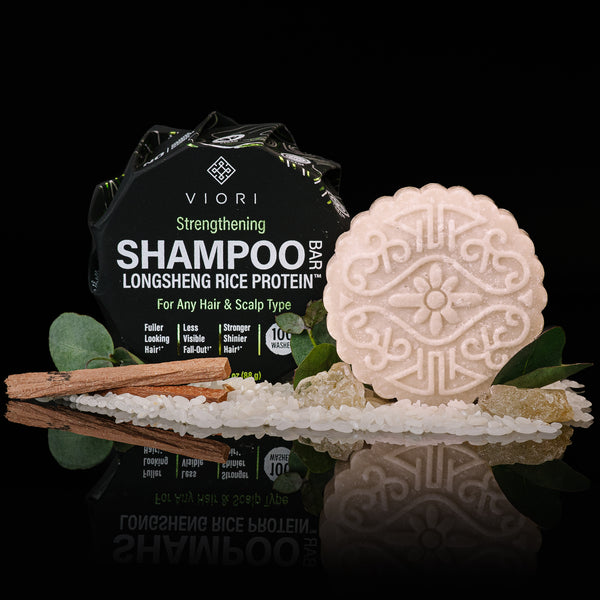
Fermentation creates incredibly valuable ingredients:
- B-vitamins (like panthenol and inositol) that strengthen hair structure
- Amino acids from protein breakdown that can actually penetrate the hair shaft
- Organic acids that help optimize pH for hair health
- Antioxidants from rice bran that protect against environmental damage
The problem? These compounds are shockingly vulnerable to destruction through:
- Oxidation when exposed to trace metals (even the tiny amounts in water)
- Heat damage during the bar formation process
- Light exposure during storage and use
Protecting these delicate bioactive compounds likely requires multiple strategies working simultaneously:
- Freeze-drying the fermented rice water before incorporating it into the formula
- Antioxidant systems (you'll notice Vitamin E Acetate in Viori's formulas-this serves double duty as both active ingredient and protector of other ingredients)
- Chelating agents that bind to trace minerals that would otherwise trigger degradation cascades
- Light-protective packaging to prevent photodegradation before you even open the bar
When a bar successfully delivers fermentation benefits without them degrading into useless compounds within weeks, you're seeing the result of carefully orchestrated protection systems working at the molecular level. It's chemistry, it's engineering, and honestly, it's a bit beautiful when done right.
The Uncomfortable Truth About Conditioning Bars
Let me share something that might surprise you, and that might contradict marketing claims you've seen elsewhere: No solid shampoo bar can truly replicate the conditioning performance of a traditional liquid conditioner.
I can already hear the objections, but stay with me. This isn't a failure of formulation-it's a matter of physics that no amount of wishful thinking can overcome.
Traditional conditioners work through several mechanisms:
- Film formation: High molecular weight ingredients that coat each hair strand in a protective layer
- Friction reduction: Ingredients that make hair slippery and easy to detangle
- Cuticle sealing: Molecules that hydrogen-bond to the outer layers of hair, smoothing them down
Solid bars with conditioning components face what I call the dissolution rate limitation. Even when formulated with excellent conditioning agents like Behentrimonium Methosulfate, their effectiveness is constrained by:
- How quickly they can dissolve during the brief time they're in contact with your hair (usually seconds)
- Competition for space: Cleansing ingredients occupy the same binding sites on hair that conditioning ingredients need
- Concentration challenges: Achieving enough conditioning agent in the short application window
This is why Viori correctly recommends using a separate conditioning bar after shampooing. Any brand claiming their shampoo bar eliminates the need for conditioning is either oversimplifying the science or overpromising to make a sale. True multi-functionality requires carefully balanced expectations and, often, a thoughtful two-step process.
I know this isn't the sexy answer everyone wants to hear. We all want the magic single product. But after twenty years in this industry, I'd rather give you truth than marketing fairy tales.
When Fragrance Becomes Functional
Here's an aspect of "hair plus" formulation that deserves more attention than it typically gets: fragrance isn't just about making your hair smell like citrus groves or flower gardens-it can actually be a functional ingredient with genuine benefits.
Take Viori's Citrus Yao bar, which contains citrus-derived ingredients. This isn't purely aesthetic, and it's not just about the sensory experience. Citrus essential oil components (particularly limonene) have mild cleansing properties that can:
- Enhance the removal of excess sebum without stripping
- Provide additional antimicrobial activity on the scalp
- Create a lower perceived pH through aromatic compounds
However-and this is important-citrus ingredients also present formulation challenges:
- They oxidize rapidly when exposed to air, potentially forming irritating compounds
- They can react with proteins and alter their structure in unpredictable ways
- They may destabilize certain vitamins through pro-oxidant activity
This is likely why Viori offers an unscented option (Native Essence) for sensitive scalps-removing fragrance eliminates an entire category of potential reactions. It's a smart formulation choice that recognizes not everyone's scalp chemistry responds well to essential oils, no matter how natural they are.
The Porosity Connection Most Brands Miss
You may have seen guidance about choosing products based on your hair's porosity-how easily it absorbs moisture. But here's the connection I rarely see made, even by professionals who should know better: solid bar format fundamentally changes how products interact with different porosity levels.
Let me break this down:
WHAT CUSTOMERS ARE SAYING
Real reviews for Hidden Waterfall Barra de Champú
Low Porosity Hair (Cuticles Tightly Sealed)
- Needs lighter molecular weight ingredients that can actually penetrate those sealed cuticles
- Benefits from the physical rubbing action of bar application, which creates temporary openings
- Risk: Heavy butters may sit on the surface rather than absorb, causing buildup that makes hair look dull and feel waxy
High Porosity Hair (Damaged, Raised Cuticles)
- Absorbs everything rapidly-sometimes too rapidly
- Risk: Over-absorption of cleansing agents leading to protein loss and further damage
- Requires heavier conditioning agents to seal and protect those vulnerable cuticles
Viori's recommendation of Citrus Yao for low porosity hair makes perfect chemical sense: the lower molecular weight citrus compounds and lighter butter content prevent buildup while still providing benefits. The mild citric acid content may also provide gentle cuticle-opening properties when needed.
For high porosity hair, bars with fuller butter content (like Terrace Garden or Native Essence) provide the occlusive barrier needed to lock in moisture and prevent protein loss. This isn't arbitrary product differentiation-it's matching formulation chemistry to hair structure.
The pH Challenge Nobody Talks About
One of the most technically sophisticated aspects of quality bar formulation is pH management-yet it's almost never explained to consumers. I think that's a shame, because understanding this reveals just how complex good formulation really is.
The problem: Healthy hair exists at pH 4.5-5.5, slightly acidic. Most solid cleansing ingredients naturally create alkaline solutions (pH 8-10) when dissolved in water. This is catastrophic for hair:
- Cuticle layers swell and lift, becoming vulnerable to mechanical damage
- Color molecules leach out faster (if you have colored hair, you've noticed this)
- Protein structures begin to degrade and break down
- Hair becomes rough, tangled, and prone to breakage
When Viori states their bars are pH balanced, they've accomplished something technically impressive: incorporating buffering systems within the solid matrix that remain stable during storage but activate perfectly when water is added. This likely involves:
- Organic acids like citric or lactic acid (you'll notice Sodium Lactate in the formula-the sodium salt of lactic acid)
- Strategic ratios of fatty acids like stearic acid to create buffering capacity throughout the wash
- The fermented rice water itself, which has a naturally acidic pH around 5.5-6.0
The technical achievement here is creating a bar that:
- Remains solid and stable during months of storage (which typically requires higher pH)
- Generates acidic pH when dissolved in water (optimal for hair)
- Maintains that pH throughout the entire washing process, not just initially
This requires sophisticated buffering calculations that most bar manufacturers simply skip, either because they don't understand the chemistry or because it's cheaper and easier to ignore it. Your hair pays the price for that shortcut.
The Shelf Life Secret
When you see claims of 3+ year shelf life for a shampoo bar containing proteins, vitamins, butters, and fermented extracts, you should actually be impressed. This longevity is only possible through multiple protection strategies:
Water activity control: Solid bars have extremely low water content, which inhibits:
- Microbial growth (bacteria and fungi need water to thrive)
- Hydrolytic degradation (breakdown in presence of water)
- Chemical browning reactions that signal ingredient degradation
Antioxidant systems: Vitamin E Acetate serves as both a beneficial ingredient for your hair and a preservative for the formula itself, preventing the chain reactions that lead to rancidity and that characteristic "off" smell of degraded oils.
Crystalline protection: Ingredients locked in crystalline structures have reduced molecular movement, dramatically slowing degradation reactions that would happen rapidly in liquid form.


