
I remember the first time a longtime client came into the salon, practically glowing with pride about her new "zero-waste" hair care routine. She'd been driving twenty minutes each way to refill her shampoo bottle at a trendy eco-boutique downtown. "I'm finally doing something good for the environment," she told me.
I didn't have the heart to tell her right then, but the math wasn't adding up the way she thought.
After twenty years in the beauty industry, I've watched countless green trends sweep through-some genuinely revolutionary, others brilliantly marketed but environmentally questionable when you dig into the actual numbers. The refill station movement falls somewhere in the middle, and it's time we had an honest conversation about what's really sustainable and what just feels sustainable.
The Water Weight Problem Nobody Talks About
Here's what shocked me when I first started researching this: traditional liquid shampoo is 70-80% water. Let me repeat that-when you're driving to refill your bottle, you're essentially transporting water. Water that comes right out of your tap at home.
Let's look at the actual carbon footprint:
Your refill station trip:
- Average round trip: 3-5 miles
- Weight of a 16 oz bottle of liquid shampoo: approximately 14 oz of water
- Carbon emissions from driving: about 404 grams CO2 per mile
- Total emissions for one refill run: 1,212-2,020 grams CO2
Compare that to centralized distribution:
- Bulk shipping efficiency: roughly 100 grams CO2 per pound of product over 1,000 miles
- Multiple products shipped together on optimized routes
The uncomfortable truth? Unless you're walking or biking to a refill station within half a mile, or combining it with errands you're already running, you might actually be creating more carbon emissions than having products delivered directly to your door-especially when we're talking about concentrated formulas.
I know that stings a little. It stung me too when I first crunched these numbers.
NOT SURE WHICH PRODUCT IS RIGHT FOR YOU?
TAKE THE QUIZTakes 30 seconds · 134,000+ customers matched
Why Concentration Changes Everything
This is where we need to completely rethink the problem. What if the issue isn't finding a better way to package liquid shampoo, but questioning why we're transporting all that water in the first place?
Enter concentrated, waterless formats-specifically, shampoo bars.
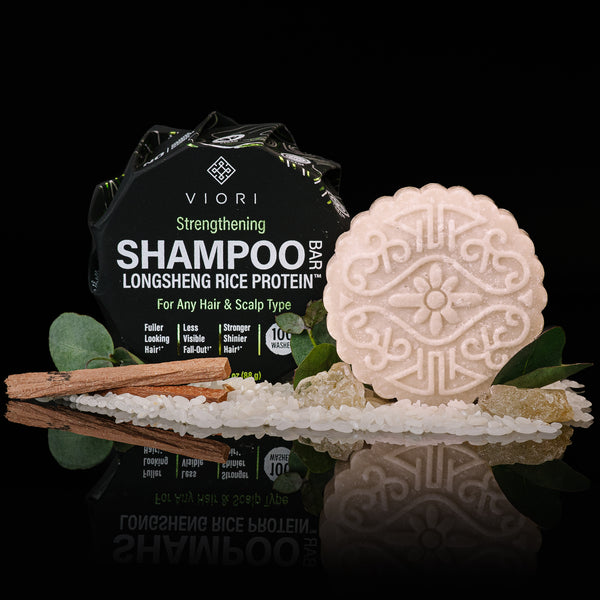
One Viori shampoo bar (3.2 oz) equals approximately three 10-ounce liquid shampoo bottles in washing power. That's a 90% reduction in transportation weight, which means a proportional reduction in shipping emissions.
The lifecycle math is compelling:
From ingredient sourcing through manufacturing, distribution, and use, concentrated bars outperform liquid refills across almost every environmental metric. There's really only one scenario where refill stations win: when you can walk to a station that sources its bulk products locally.
Based on current refill station distribution, that describes less than 2% of consumers.
The Contamination Risk Your Refill Station Isn't Mentioning
Here's something that makes me cringe from a professional standpoint: product stability in refill systems.
I've formulated products in my career, and I can tell you that maintaining a stable liquid shampoo requires:
- Carefully controlled pH levels (ideally 3.5-6.5)
- Specific preservative systems designed for sealed containers
- Protection from airborne contaminants and bacteria
Refill stations introduce multiple vulnerability points:
- Repeated opening exposes product to airborne contaminants
- Customer containers may harbor bacteria or old product residue
- Incomplete rinsing between refills can destabilize the pH
- Temperature fluctuations affect preservative effectiveness
Even with good cleaning protocols, refill systems inherently have more contamination vectors than sealed products. This often requires higher preservative concentrations-ironic, considering many people choose refills to avoid "chemicals."
I've had clients come to me with sudden scalp irritation, convinced they'd developed a sensitivity, when the real culprit was compromised product from improper storage in their reused containers. The water introduction from shower steam alone can dilute and destabilize your shampoo in ways most people never consider.
The Manufacturing Story That's Never Told
Let's go upstream for a moment, to where these products are actually made.
Producing liquid shampoo requires:
- Heating massive volumes of water to 160-180°F for emulsification
- Extended mixing times (2-4 hours for proper blending)
- Cooling systems to bring everything back down to bottling temperature
- Water purification systems
- Wastewater management from cleaning equipment
Compare that to waterless bar production:
- No water heating needed
- Minimal mixing time with concentrated ingredients
- Lower processing temperatures (typically under 150°F)
- Dramatically reduced cleaning water
- 60-70% less manufacturing energy per wash equivalent
The energy intensity of heating water at industrial scale is enormous. Facilities producing liquid products typically consume 3-5 times more energy per finished unit than those making concentrated bars.
At Viori, our manufacturing process in Utah reflects this efficiency-we're working with concentrated ingredients from the start, including Longsheng rice sourced directly from the Red Yao women, without the energy burden of heating and moving water around.
The Plastic Problem Isn't Really Solved
I know the main appeal of refill stations is plastic reduction. But let's be completely honest about what's actually happening.
Reality check on container reuse:
- Plastic degrades from repeated cleaning (typically good for 5-10 cycles maximum)
- Consumer behavior data shows average reuse is only 3-4 times before disposal
- Some refill systems require specialty containers (which defeats the whole purpose)
- Pump mechanisms are rarely recyclable and frequently need replacing
Meanwhile, true plastic-free alternatives exist:
- Bar formats eliminate plastic entirely when packaged in paper or cardboard
- No pump mechanisms, caps, or secondary plastic components
- Shipping materials are proportionally reduced due to product concentration
The psychological satisfaction of "refilling" often masks the reality that most of us still cycle through plastic containers-just slightly more slowly.
Viori's packaging is completely biodegradable and recyclable. Not "technically recyclable if you take it to a special facility" recyclable-actually recyclable in your home bin. No plastic. Period.
What You're Really Paying For
Here's an industry insight most consumers never see: refill economics often drive ingredient dilution.
Running a refill station is expensive. You need:
- Retail space ($$$$)
- Staff for customer service
- Bulk product storage
- Equipment maintenance and constant cleaning
To keep prices competitive, some refill products contain:
- Higher water content (because water is cheaper than active ingredients)
- Lower concentrations of beneficial ingredients
- More affordable preservative systems
- Generic fragrance oils instead of therapeutic-grade essential oils
Let's talk cost-per-wash, not cost-per-ounce:
- Refill liquid shampoo: $0.25-0.45 per wash
- Concentrated bar (like Viori): $0.18-0.22 per wash
- Traditional bottled premium shampoo: $0.30-0.50 per wash
Concentrated formats often deliver better value AND superior ingredients because more of your money goes to active components instead of water and packaging overhead.
The "Local" Myth
Refill stations love to market themselves as supporting local sustainability. Let's trace the actual supply chain:
Typical refill product journey:
- Base ingredients manufactured (often overseas)
- Shipped to bulk formulation facility
- Transported to regional distribution centers
- Delivered to individual refill stations
- You drive to the refill station
- You drive home
Compare that to optimized bar distribution:
- Concentrated ingredients sourced (Viori sources rice directly from Red Yao women in Longsheng)
- Manufactured in a centralized facility (for us, that's Utah)
- Shipped directly to your door via optimized postal routes
- You receive it at home-no additional transportation
The refill model actually adds transportation steps, including the least efficient type: individual consumer car trips.
The Bathroom Science Problem
Let me get a little technical for a moment, because this affects your hair health directly.
Liquid products stored in consumer-controlled containers face:
- Humidity exposure in your bathroom (affecting preservatives)
- Temperature swings from showers (destabilizing the formula)
- Shower steam getting inside (diluting the product)
- Wet hands introducing water during use
These factors typically reduce effective product lifespan by 20-30% compared to sealed products.
Bar formats are inherently more stable:
- Self-preserving when kept dry (3-5 year shelf life)
- No emulsion to destabilize
- Resistant to humidity when properly stored
- No dilution from environmental moisture
I've watched clients unknowingly waste 1-2 ounces per bottle due to water contamination and degradation-completely negating the supposed efficiency of refills.
The pH Balance Issue
Hair and scalp health depends on maintaining pH levels between 3.5-6.5. Every time you:
- Rinse your refill container with tap water (pH 6.5-8.5)
- Clean it with soap residue
- Don't completely dry it before refilling
You risk disrupting the pH of your shampoo, even if the refill source maintains perfect pH.
This can cause:
- Cuticle swelling and damage
- Faster color fading in treated hair
- Scalp irritation and dryness
- Reduced effectiveness of active ingredients
Viori's bars maintain consistent pH (5.0-6.0) throughout their entire lifespan because the concentrated format is far less susceptible to environmental pH shifts.
WHAT CUSTOMERS ARE SAYING
Real reviews for Hidden Waterfall Barra de Champú
My Professional Recommendations
Here's what I actually tell clients who want both great hair and genuine environmental responsibility:
For oily hair:
- Use concentrated bars with natural cleansing agents (Viori's Citrus Yao has citric acid for oil control)
- Wash every 1-2 days
- The higher concentration means better cleansing with less product
For dry or normal hair:
- Choose moisturizing concentrated bars (like Viori's Terrace Garden or Native Essence)
- Wash every 2-4 days
- You'll need to wash less frequently due to superior ingredient concentration
For sensitive scalps:
- Stick with unscented, naturally-derived concentrated formulas (Viori's Native Essence is perfect)
- Benefit from consistent pH without contamination risk
- Avoid the preservatives required for water-based systems
The Honest Bottom Line
The refill movement came from a genuinely good place-real environmental concern. But good intentions don't automatically create optimal outcomes.
When you follow the complete lifecycle analysis-raw materials, manufacturing, distribution, use, and disposal-concentrated waterless formats outperform refills in virtually every category.
I'm not saying refill stations serve no purpose. For certain product types and specific situations, they make sense. But for daily hair care, they're an intermediate solution to a problem that already has a better answer.
Eliminate the water.
It's that simple, and that revolutionary.
After two decades in this industry, I've learned that the most sustainable choice often requires us to completely rethink what we thought we knew. The most eco-friendly shampoo isn't in a refillable bottle.
It's the one that never needed the water in the first place.
Making the Switch
If you're ready to move beyond greenwashing to genuinely sustainable hair care, here's my advice:
Start now:
- Switch to concentrated bars for your daily routine
- If you must use refill stations, only visit them when combined with other errands you're already making
- Calculate your actual cost-per-wash, not just cost-per-ounce
Within 3-6 months:
- Evaluate how your hair actually feels and looks
- Track your real usage patterns
- Calculate your personal carbon footprint including transportation
Long-term:
- Invest in truly concentrated, waterless products from transparent brands
- Support companies with complete lifecycle data
- Choose direct-to-consumer models with optimized shipping
The beauty industry has a greenwashing problem. As professionals, we need to guide people beyond marketing claims to genuinely sustainable practices backed by science and honest analysis.
That means sometimes admitting when our initial assumptions-like refill stations being automatically better-don't hold up under scrutiny.
Your hair deserves better. The planet deserves better. And the solution has been here all along.
Viori's shampoo and conditioner bars are handcrafted with Longsheng Rice Water™ and natural ingredients, following ancient beauty rituals used by the Red Yao women for centuries. Our bars are sulfate-free, paraben-free, pH balanced, 100% vegan, plastic-free, sustainable, cruelty-free, and ethically sourced. One bar provides 60+ washes-equivalent to three 10oz liquid shampoo bottles-with completely


