
I'll never forget the moment I realized everything I thought I knew about natural hair care was wrong.
It was about five years into my career as a stylist, and a client came in frustrated after switching to natural shampoo. "It's supposed to be better for my hair," she said, running her fingers through limp, slightly waxy strands. "But it feels worse. What am I doing wrong?"
Here's what I've learned in my 20 years behind the chair: she wasn't doing anything wrong. The problem was that no one had explained the actual chemistry happening on her head.
Walk into any natural foods store today, and you'll find shelves of shampoos promising "simple," "clean," "back to basics" hair care. But here's the paradox that most people-and even some formulators-don't talk about: creating an effective natural shampoo is exponentially more difficult than making a conventional one.
This isn't the story you typically hear. Most articles about natural shampoos focus on what's not in them-no sulfates, no parabens, no silicones. But I want to pull back the curtain on something rarely discussed: what happens when you remove the chemical workhorses that have powered hair care for decades? And what's the real science behind what replaces them?
The Chemistry Problem Nobody Talks About
Let's start with the elephant in the room: sulfates.
Sodium Lauryl Sulfate (SLS) and Sodium Laureth Sulfate (SLES) are remarkably efficient molecules. They're what chemists call "amphipathic"-one end loves water while the other loves oil. This makes them phenomenal at grabbing sebum and dirt from your hair and suspending it in water for easy rinsing. They're also incredibly cheap to produce and stable across various temperatures and pH levels.
When you remove these ingredients, formulators face a genuine chemical puzzle.
The alternatives-typically decyl glucoside, coco-glucoside, or Sodium Cocoyl Isethionate (SCI)-are gentler, yes. But they're also finicky in ways that most consumers never see.
Three Technical Challenges Hidden in Your Natural Shampoo Bottle
1. The Viscosity Problem
NOT SURE WHICH PRODUCT IS RIGHT FOR YOU?
TAKE THE QUIZTakes 30 seconds · 134,000+ customers matched
Natural surfactants don't naturally thicken products the way sulfates do. That pleasantly thick texture you expect from shampoo? Formulators have to add natural thickeners like xanthan gum, guar gum, or starches to achieve it.
The catch? These create texture inconsistencies if the product gets too cold or too warm during shipping. Ever bought a natural shampoo that seemed watery at first, then thick and gloopy a week later? Now you know why.
2. The pH Balancing Act
Many natural cleansers work optimally within a narrow pH range (typically 5-6), while sulfates remain effective across a broader spectrum. This means natural formulations require more careful pH balancing-and more buffering ingredients.
It's like comparing a plant that thrives in any soil to an orchid that needs precisely calibrated conditions. Both can be beautiful, but one requires significantly more expertise.
3. The Preservation Challenge
Without synthetic preservatives, natural shampoos are more susceptible to bacterial and fungal growth. This is why many natural products contain multiple plant-based preservatives (like radish root ferment or leuconostoc ferment) working in combination-a far more complex approach than using a single synthetic preservative.
The Protein Paradox: When More Natural Means More Problems
Here's something I've observed countless times in my salon: protein overload from natural formulations.
Many natural shampoos contain hydrolyzed proteins-wheat protein, rice protein, quinoa protein, or silk protein. These sound luxurious and beneficial. And they can be! Proteins temporarily fill gaps in damaged hair cuticles, creating the appearance of smoother, stronger hair.
But here's where it gets technical.
Not All Proteins Are Created Equal
Hydrolyzed proteins come in different molecular weights, which determines how deeply they penetrate your hair:
- Low molecular weight (under 1,000 Daltons): Penetrates into the inner cortex
- Medium molecular weight (1,000-5,000 Daltons): Sits in the middle cuticle layers
- High molecular weight (over 5,000 Daltons): Coats the hair surface
Most natural shampoo brands don't disclose the molecular weight of their protein ingredients. This creates a guessing game for consumers.
I've seen clients with fine, porous hair become stiff and brittle from using rice protein shampoos daily-the protein was binding so effectively that the hair lost its elasticity. Think of it like adding too much starch to fabric. At first it's crisp and smooth, but eventually it becomes rigid and prone to breaking.
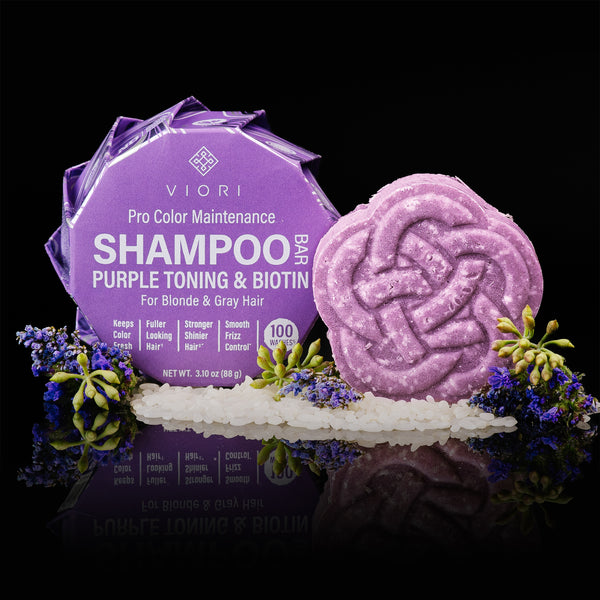
For rice protein specifically (which you'll find in products like Viori), there's an interesting characteristic: rice protein typically has a smaller molecular size than wheat or soy proteins, allowing better penetration. This can be transformative for some hair types but overwhelming for others, particularly those with low-porosity hair that doesn't easily allow moisture or proteins to enter.
Fermentation: Ancient Tradition Meets Modern Biochemistry
One of the most scientifically intriguing developments in natural hair care is the incorporation of fermented ingredients-something that brands like Viori have built their entire philosophy around.
What Fermentation Actually Does to Your Hair
Fermentation isn't just ancient tradition; it's sophisticated biochemistry. When rice (or other botanicals) undergoes controlled fermentation, several chemical transformations occur:
1. Molecular breakdown: Complex carbohydrates and proteins break down into smaller components. For rice specifically, fermentation increases the concentration of inositol (vitamin B8) and panthenol (vitamin B5).
2. Enhanced bioavailability: Smaller molecules penetrate hair more effectively. Fermented rice water contains amino acids in forms more readily absorbed by hair protein structures.
3. Creation of new compounds: The fermentation process creates entirely new beneficial substances that weren't present in the original ingredient-including peptides, organic acids, and even some antimicrobial compounds that can act as natural preservatives.
Sounds perfect, right? Here's the complication.
Fermentation is harder to control and standardize than synthetic ingredient production. Batch-to-batch variations are more common. Temperature, fermentation time, and the specific bacterial or yeast strains used all impact the final product's chemistry.
This is why fermented ingredient products can perform differently for the same user over time-they're dealing with natural variation that synthetic products avoid through standardization. It's the difference between wine from the same vineyard each year (slightly different despite identical processes) versus a soft drink that tastes identical every single time.
The Water Hardness Factor Nobody Warns You About
Here's an angle I've rarely seen discussed, but it's caused more client frustration than almost anything else: natural shampoos perform radically differently based on your water hardness.
And most consumers have absolutely no idea this is affecting their results.
Synthetic surfactants like sulfates are relatively unaffected by hard water minerals (calcium and magnesium). But natural surfactants-especially soap-based ones and some plant-derived cleansers-react with these minerals to form insoluble compounds.
What This Means for Your Hair
If you live in an area with hard water and switch to a natural shampoo, you might experience:
- Reduced lather: Natural surfactants lose cleansing efficiency as they bind with minerals instead of oils
- Waxy buildup: The mineral-surfactant complexes can deposit on hair, creating that coating feeling
- Increased product usage: You'll need more product to achieve the same cleansing effect
I had a client in Denver (notoriously hard water) who swore natural shampoo made her hair "disgusting and greasy." When she visited family in Seattle (soft water), she used the same shampoo and loved it. Same product, same hair, different water-completely different result.
The solution nobody mentions: If you're using natural shampoos, you may need to use a chelating treatment periodically-something containing citric acid or natural alternatives like phytic acid-to remove mineral buildup.
Ironically, this means natural product users might need an additional product that conventional shampoo users don't require.
The Preservation Paradox: A Sustainability Question
This is controversial, but it's grounded in chemistry: natural preservative systems can actually result in more waste than synthetic ones.
Natural shampoos typically use combinations of preservatives like potassium sorbate, sodium benzoate, leuconostoc ferment, antimicrobial essential oils, and tocopherol (Vitamin E).
These work, but they have limitations:
- Narrower effectiveness: They might prevent bacterial growth but be less effective against fungi, or vice versa
- Sensitivity to conditions: Natural preservatives often lose effectiveness outside specific temperature and pH ranges
- Shorter shelf life: Many natural products have 12-18 month shelf lives compared to 3+ years for conventional products
Here's the sustainability question nobody asks: If consumers buy a natural shampoo that goes bad before they finish it and must throw it away, is that actually more sustainable than using a synthetic product that remains stable for years?
The answer isn't as clear-cut as marketing suggests.
This is where bar formulations shine. Without water, microbial growth is nearly impossible-bars are essentially self-preserving when stored dry. This is one area where natural bar formulations (like those from Viori) are genuinely superior from both a formulation and sustainability standpoint. No water means no bacterial growth, which means minimal preservatives needed.
The "Transition Period": What's Actually Happening to Your Hair
Perhaps the most frustrating aspect of switching to natural shampoos is what's commonly called the "transition period" or "adjustment phase."
Let me be clear: this isn't psychological-it's chemistry.
When switching from conventional to natural products, many people experience greasier hair, more tangles, dullness, and a residue feeling. Here's why:
The Silicone Removal Effect
Conventional products often contain dimethicone and other silicones that coat the hair shaft. These aren't water-soluble, so they build up over multiple washes. Natural shampoos won't add more silicone, but they're also not formulated to remove existing buildup efficiently.
Think of it like removing wallpaper. The hair underneath might have damage, dryness, or porosity-problems that were masked by the silicone coating. Once that coating starts coming off in patches, your hair feels worse even though it's actually getting healthier.
The Sebum Regulation Shift
Harsh sulfate shampoos can strip so much oil from the scalp that sebaceous glands compensate by producing more oil. This is called reactive seborrhea.
WHAT CUSTOMERS ARE SAYING
Real reviews for Purple Shampoo Bar with Biotin – Blonde & Gray | VIORI
When you switch to gentler natural cleansers, your scalp initially continues producing excess sebum because the regulatory feedback loop takes time to recalibrate-typically 2-4 weeks. Your glands are still in overdrive mode, but now you're using a gentler cleanser that removes less oil.
Result? Greasy hair during the transition.
The Honest Truth
For some hair types-particularly those with significant damage or certain structural characteristics (very porous, chemically treated, very fine)-natural shampoos may never perform as "smoothly" as silicone-heavy conventional products.
The question becomes: is that artificially smooth feeling worth the ingredient trade-offs? That's a personal decision, but it should be an informed one.
Natural Fragrances: Not Always Gentler
Here's something that surprises people: natural fragrances are often more allergenic than synthetic ones.
Essential oils contain hundreds of compounds, many of which are known sensitizers:
- Limonene (in citrus oils): Can oxidize when exposed to air, becoming more allergenic over time
- Linalool (in lavender): A known contact allergen for some individuals
- Eugenol (in clove): Can cause sensitivity with repeated exposure
Synthetic fragrances, while often demonized, can be formulated to exclude specific problematic molecules.
Some brands like Viori use a hybrid approach-fragrance oils that are mixtures of essential oils and natural equivalent fragrances (synthetic molecules that are chemically identical to natural ones). This allows the sensory experience of natural scents while avoiding some of the more allergenic natural compounds.
The challenge? The term "fragrance" on ingredient lists-even when naturally derived-remains opaque to consumers trying to avoid specific allergens.
Bar Formulation: More Complex Than You Think
Creating a solid shampoo bar isn't simply removing the water from liquid shampoo. It requires entirely different chemistry.
The Technical Challenge
Making a bar requires:
- Binding agents: Ingredients like cetyl alcohol or stearic acid hold the bar together-these are the same fatty alcohols that condition hair, but in bar format they serve a structural purpose
- Compatible melting points: All ingredients are typically melted together and pressed into molds, meaning they must have compatible melting points and solidification properties
- pH concentration: Solid bars can have more concentrated pH levels that shift when they interact with water during use
The unique challenge is making a bar that's hard enough to maintain its shape in humid shower conditions but soft enough to create lather quickly. This requires precise ratios of hard and soft ingredients.
This is why some natural bars feel like soap (too hard, slow to lather, stripping) while others become mushy quickly (too soft, fall apart, wasteful).
Viori's formulations use behentrimonium methosulfate (BTMS) as a conditioning agent, which is interesting from a formulation perspective because this ingredient helps create both the structural integrity of the bar and the conditioning effect on hair-it's doing double duty.
The Natural Conditioning Question
Let's talk about conditioners for a moment, because the chemistry here reveals a lot about the "natural vs. synthetic" debate.
How Conditioning Actually Works
Hair is negatively charged, especially when damaged. Conditioners work by depositing positively charged (cationic) molecules that are attracted to these negative sites, like magnets.
Natural conditioning options include:
- Behentrimonium methosulfate (BTMS)
- Cetyl alcohol combined with cationic guar
- Hydrolyz


