
In my twenty years as a beauty professional, I've watched countless trends sweep through the wellness world like waves-each one promising to be the answer to health, beauty, and that elusive "effortless" aesthetic we're all supposedly chasing. But the "king girl white rice" phenomenon? This one's different. It's not just another food trend or beauty hack. It's a fascinating collision of culture, class, and chemistry that reveals some uncomfortable truths about how we perform wellness in digital spaces.
While social media floods us with "that girl" aesthetics and clean-eating mantras, the "king girl" eating her simple bowl of white rice represents something more nuanced-and, frankly, more interesting from a technical standpoint. Let's dive deep into what's really happening here.
The Carbohydrate Paradox: When "Bad" Becomes Aspirational
Here's something I find technically fascinating: white rice has been simultaneously demonized and elevated in wellness culture, sometimes within the same breath.
From a purely nutritional standpoint, white rice sits at a glycemic index of 73-solidly in the "high" category that clean-eating culture has taught us to avoid. It's processed, stripped of its bran and germ, leaving primarily starch. By conventional wellness standards, it should be replaced with cauliflower rice, ancient grains, or some other expensive alternative.
Yet white rice has become aspirational when framed through specific cultural lenses-Asian longevity traditions, minimalist eating, or the "rice girl" who maintains her figure despite carb intake. How did we get here?
The shift exists in a liminal space between three forces:
- Clean-eating rejection - Rice as a "processed" white carb to avoid
- Ancestral wellness adoption - Rice water traditions and cultural practices
- Accessible luxury signaling - The poverty chic of simple, humble foods
What makes this particularly interesting to me as a hair professional is how these same tensions play out in the beauty world. We see it constantly: expensive products positioned as "clean" versus traditional methods that have worked for millennia.
Where Food Meets Hair Care: A Professional Analysis
Here's where my expertise intersects with this cultural moment in a way most people don't consider: rice water as a beauty ritual operates on completely different chemistry than rice as food.
Let me break down the biochemical distinction:
NOT SURE WHICH PRODUCT IS RIGHT FOR YOU?
TAKE THE QUIZTakes 30 seconds · 134,000+ customers matched
Fermented rice water for hair creates a compound rich in inositol (vitamin B8) and panthenol (B5) through fermentation. This process increases B-vitamins by 300-400% and creates protein-strengthening compounds that can penetrate the hair shaft when applied topically.
Consumed white rice, on the other hand, has been stripped of those outer layers, leaving primarily amylose and amylopectin-the starch components that provide energy but little else nutritionally.
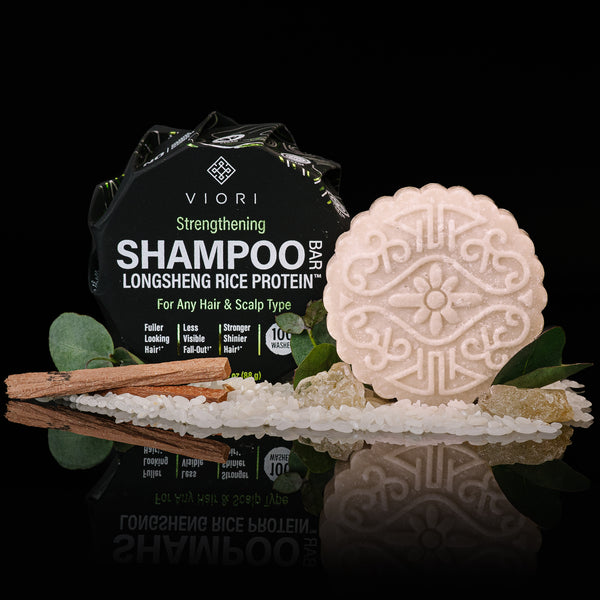
The Red Yao women of Longsheng village in China-whose nearly 2,000-year rice cultivation tradition inspired Viori's hair care formulations-understood this intuitively. They never consumed their hair rice water. They recognized that rice transforms through process, and that specialized applications serve different purposes.
The modern "king girl" who uses rice water for her hair while eating white rice is unconsciously tapping into this ancient wisdom: rice's value changes based on application method, concentration, and purpose.
Rice as Class Performance Technology
Let's address something rarely discussed openly: white rice consumption has become a coded class signal that operates differently across digital subcultures.
The Technical Breakdown
The Wellness Elite Rejection:
The "clean girl" aesthetic rejects white rice in favor of:
- Cauliflower rice ($4.99/lb versus white rice at $0.50/lb)
- Ancient grains like quinoa and farro
- Complex carbs with "intact nutrients"
- Exotic alternatives that signal both knowledge and disposable income
The King Girl Reclamation:
Embracing white rice signals:
- Rejection of expensive wellness theater
- Cultural authenticity (particularly powerful for Asian diaspora creators)
- Post-diet culture "permission" eating
- Effortless metabolism ("I eat carbs and stay thin")
- A return to simplicity over performance
As someone who's spent two decades in an industry obsessed with expensive solutions, I appreciate the impulse behind this reclamation. Sometimes the simple approach really is better-not because it's trendy, but because it's sustainable.
The pH Balance of Identity: A Professional Metaphor
In hair care, pH balance is everything. Products need to stay between 3.5-6.5 pH to avoid damage. Too alkaline, and you're opening the cuticle too much, causing breakage. Too acidic, and you're causing irritation and brittleness.
The "king girl white rice" identity operates on a similar principle of balance:
- Too far one direction: Orthorexic clean eating, expensive wellness signaling, performative restriction
- Too far the other: Complete rejection of health consciousness, reactive eating, oppositional consumption
- The balance point: White rice as a permission structure-simple, ancestral, "good enough," satisfying
This mirrors how Viori products use pH-balanced formulations. We're not chasing extremes or trends. We're optimizing for actual, sustainable results over performance theater.
The Fermentation Factor: Why Process Matters More Than Product
Understanding Transformation Through Time
The Red Yao's fermentation process takes 7-10 days at optimal temperature. This isn't arbitrary-it's chemistry. This timeline maximizes inositol production, panthenol concentration, and protein hydrolyzation.
Here's the cultural tension: Modern "rice girl" content compresses transformation to instant moments:
- Quick rice recipes
- "What I eat in a day" snapshots
- Before/after photos with no process shown
- The aesthetic without the timeline
This reveals a fundamental misunderstanding that I see constantly in my work: transformation requires time and process, whether you're fermenting rice water or building sustainable eating patterns.
In twenty years of hair care, I've watched countless clients expect overnight results from products designed for 2-3 month transformation. At Viori, we're explicit about this: we highly recommend using our products for 2-3 months before evaluating their effectiveness. Your hair grows in cycles. Change happens at the follicle level, which means you need time to see new growth reflect the improvements.
The "king girl white rice" trend often skips this crucial element-showing the end result (thin girl eating rice, healthy hair) without the timeline (consistent practice, genetic factors, overall lifestyle context).
The Split-Self Rice Ritual
Contemporary "king girls" unknowingly recreate the Red Yao's wisdom through a modern split:
- Eating white rice: Accessible carbs, cultural connection, psychological satisfaction
- Using rice-based beauty products: Leveraging fermentation's biochemical transformation for topical benefits
This represents an intuitive grasp of bioavailability-that nutrients absorbed topically through the scalp (which is rich in blood vessels and active follicles) operate differently than those processed through the digestive system.
The Conditioning Paradox: Why You Need Both
At Viori, we explain to every new customer that shampoo and conditioner serve different, non-negotiable functions. Shampoo opens the hair cuticle for cleansing and removing oils. Conditioner closes it for sealing and protection. This isn't optional-it's chemistry. Skip one, and you're missing half the equation.
The metaphorical parallel:
- White rice consumption = Opening the cuticle (permission, satisfaction, cultural grounding, psychological release from restriction)
- Rice water beauty rituals = Closing the cuticle (optimization, enhancement, visible results from fermented compounds)
You need both. The "king girl" who eats white rice guilt-free while using rice water for her hair has unconsciously understood this balance:
- Internal satisfaction - The psychological "cuticle-opening" that comes from release from dietary restriction
- External optimization - The biochemical "cuticle-closing" that creates visible enhancement
The Protein Loading Question
Here's where my professional experience adds technical nuance: rice protein works optimally at low concentrations. Viori uses controlled amounts in our formulations because too much protein makes hair brittle, not stronger.
Translation to food culture: The "king girl" eating moderate white rice (not restrictive, not excessive) mirrors this principle. It's about:
- Safe daily use (like pH-balanced shampoo that won't damage with regular application)
- Sustainable practice (not damaging long-term through extremes)
- Visible results (satisfaction without guilt, energy without crash)
The dose makes the medicine-or the poison. This is true whether we're talking about protein treatments or carbohydrate consumption.
The Sustainability Question: Aesthetic Versus Authentic
The Untreated Bamboo Lesson
Viori offers bamboo holders for our shampoo bars, and they come with specific care instructions:
- Keep away from direct water
- Place low in the shower (heat rises)
- Wipe down regularly
- Cure with oil treatment to prevent mold
The untreated bamboo choice is genuinely eco-friendly, but it demands more knowledge and labor than plastic alternatives. This is authentic sustainability-not just the aesthetic of it.
White rice operates similarly:
- Cheaper than trendy alternatives
- Less processed than cauliflower rice or grain blends
- But requires proper preparation knowledge
- Needs thoughtful pairing for complete nutrition
This represents authentic sustainability versus aesthetic sustainability:
Aesthetic sustainability: Buying expensive "clean" alternatives that come in plastic packaging, shipped across the globe, marketed with wellness buzzwords
Authentic sustainability: Using simple, accessible ingredients that require knowledge, care, and cultural context
The Longsheng Rice Cultivation Model
The Red Yao's 2,000-year rice terrace system in the mountains of Longsheng represents sustainability in its truest form:
- Zero synthetic inputs (naturally grown in mineral-rich mountain soil)
- Gravity-fed irrigation (using natural mountain water flow)
- Generational knowledge transfer (not commodified until very recently)
- Specialized varieties (short-grain, high-starch, region-specific cultivars)
Modern "king girls" eating conventional white rice aren't accessing this system-but they're rejecting the industrial wellness complex that insists they must buy expensive alternatives to be valid or healthy.
There's value in that rejection, even if the execution is imperfect.
The Porosity Factor: Who Can Absorb This Identity?
Let me share a professional insight that has a surprising parallel to the "king girl" phenomenon.
WHAT CUSTOMERS ARE SAYING
Real reviews for Hidden Waterfall Barra de Champú
Hair Porosity Determines Everything
In hair care, porosity-the hair's ability to absorb and retain moisture-determines which products will work for you.
Low porosity hair:
- Cuticles tightly closed
- Repels moisture and protein
- Needs lighter, cleansing products (like Viori's Citrus Yao for oily scalp)
- Prone to product buildup
High porosity hair:
- Cuticles damaged or naturally open
- Absorbs products easily but struggles to retain benefits
- Needs heavier moisture (like Viori's Terrace Garden for dry hair)
- Prone to dryness despite frequent treatment
Now, here's the identity parallel:
Low porosity "king girl":
- Naturally thin or fast metabolism
- White rice doesn't significantly affect weight
- Can "absorb" the identity without metabolic consequences
- Often faces criticism for thin privilege
High porosity "king girl":
- Struggles with weight or complex food relationships
- White rice carries greater metabolic impact
- Absorbs the permission messaging but can't retain the same results
- Often experiences disappointment despite sincere effort
This is the rarely discussed truth that makes me uncomfortable about how this trend spreads: The "king girl white rice" aesthetic is only effortlessly sustainable for certain body types, just as certain products only work for certain hair types.
The content rarely includes this disclosure.
The Ethics Question: Accountability in Aspirational Content
As a beauty professional who works with Viori-a B-Corp certified company that pays Red Yao women a 2X markup for their rice and donates 5% of profits back to the tribe-I think a lot about ethical standards in the beauty and wellness industry.
Viori's certifications include:
- B-Corp certified
- Leaping Bunny cruelty-free
- RSPO palm oil sourced
- Transparent supply chain with verified impact
These aren't just marketing claims-they're verified, third-party certified standards that carry accountability.
"King girl" wellness content has no equivalent certification:
- No disclosure of genetic factors or metabolic privilege
- No discussion of actual portion sizes or meal context
- No mention of overall diet composition
- No accountability for impact on "high-porosity" viewers (those who absorb the messaging but can't retain the same results)
The Cultural Compensation Question
Viori pays Red Yao women 2X markup for rice, explicitly acknowledging:
- Specialized generational knowledge
- Environmental stewardship of ancient terraces
- Cultural intellectual property
- The labor of maintaining traditional cultivation
The "king girl" economy sometimes operates invers


