
Rice shampoo bars get talked about like they’re one simple idea: rice is “good for hair,” bars are “better for the planet,” and that’s that. But after two decades behind the chair, I can tell you the results people love (and the disappointments they complain about) usually come down to details no one headlines.
The most overlooked detail is what I call origin-growth: not just that a bar contains rice-based ingredients, but which rice it uses, where it’s grown, and how it’s processed before it ever touches your scalp. When those pieces are engineered well, the payoff often isn’t some dramatic overnight “new hair” story-it’s something more realistic and more valuable: better length retention.
What “origin-growth” actually means (beyond the buzzwords)
When a product points to a specific growing region, it can sound like marketing. Technically, though, origin is shorthand for a whole set of variables that can change the chemistry of the rice itself-and that can change how the “rice water” portion behaves in a haircare formula.
Here are the big origin variables most people never connect to hair performance:
NOT SURE WHICH PRODUCT IS RIGHT FOR YOU?
TAKE THE QUIZTakes 30 seconds · 134,000+ customers matched
- Cultivar genetics (the rice type and how it stores starch and protein)
- Climate and altitude (which can influence how the grain develops and extracts)
- Water and soil profile (which can shift trace components and fermentation behavior)
- Post-harvest handling (storage conditions affect freshness and stability)
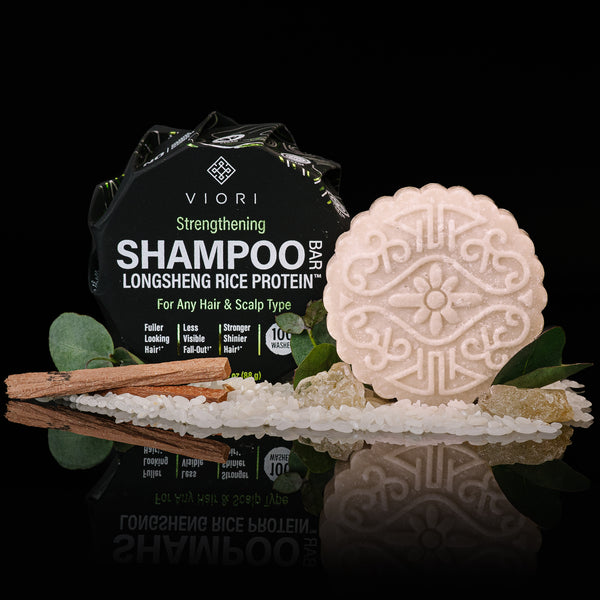
Viori is unusually transparent here: their bars use Longsheng rice sourced from the Longsheng mountains, described as a high-starch, short-grain rice specific to that region. In a bar format-where you’re using the product again and again-consistency matters. A repeat-use system rewards ingredients that behave predictably.
Fermentation: the part people romanticize (and rarely explain)
DIY rice-water rinses can feel amazing once and then suddenly make hair feel rough, coated, or odd the next time. That inconsistency isn’t mysterious-most at-home fermentation is uncontrolled, and the chemistry can swing from batch to batch.
Viori addresses a key point that’s easy to miss: high concentrations of rice water used too often can disrupt hair and scalp pH. That’s one reason they use a lower concentration of their fermented Longsheng rice water in a formula designed to be pH balanced and suitable for regular use.
Fermentation isn’t just a tradition-it’s a transformation step that can change what your hair “sees” during washing. Viori highlights components commonly associated with fermented rice systems, including vitamin B8 (inositol) and vitamin B5 (panthenol), alongside other nutrient-rich ingredients, to help deliver the kind of strengthening and cosmetic “health” benefits people are usually chasing.
The growth conversation no one wants to have: retention is the real win
In the salon, “my hair won’t grow” often translates to “my hair keeps breaking.” The average person is far more likely to struggle with length retention than true growth inability.
When hair won’t seem to get longer, these are the usual culprits:
- Friction during washing and detangling
- Raised, rough cuticles that snag and split
- Over-cleansing that leaves hair dry and reactive
- Scalp irritation that leads to scratching and inflammation cycles
A well-designed rice shampoo bar supports your “growth” goal by improving the conditions that help you keep what you grow: less breakage, smoother strands, calmer scalp.
A shampoo bar shouldn’t behave like soap (and this is where it gets technical)
Not all bars are created equal. A true shampoo bar relies on surfactants designed for hair cleansing, not the same chemistry as traditional soap. Viori uses Sodium Cocoyl Isethionate (SCI), a mild cleanser often nicknamed “baby foam.” In practical terms, that usually translates to effective cleansing without the overly stripped, squeaky feeling that can invite tangles and breakage.
And that matters because “hair growth” goals collapse quickly if the wash step creates a cycle of dryness, roughness, and snapping ends.
The slip factor: why conditioning technology can make hair “grow” better
If I could get every client to care about one thing for length retention, it would be this: slip. Lower friction during washing and detangling is one of the most reliable ways to protect the ends you already have.
Viori’s bars include Behentrimonium Methosulfate, a conditioning ingredient used to improve manageability and help reduce drag. Here’s the simple science: hair often carries a negative charge (especially when it’s porous or damaged), and conditioning agents with a positive charge are attracted to it-helping smooth, soften, and reduce tangling.
That’s not just “nice hair feel.” That’s mechanical protection-and mechanical protection is length retention.
Rice protein: helpful when it’s controlled, frustrating when it isn’t
Rice-based haircare gets a reputation for being “too much” for some people, and that usually comes down to protein overload. Too much protein can make hair feel stiff and more prone to snapping-especially if moisture and slip aren’t keeping pace.
Viori notes they use a low concentration of rice protein, intended to be safe for frequent use. That kind of controlled approach is important because protein is a tool, not a personality trait. Done well, it can support stronger-feeling hair. Done poorly, it can make hair feel like it’s fighting you.
The bar mistake that quietly wrecks ends: friction from direct application
This is one of those pro tips that sounds almost too basic-until you see the difference it makes. Rubbing a bar directly onto your hair can create unnecessary friction, especially on porous, color-treated, or easily tangled hair.
Viori specifically recommends building lather in your hands and applying with your palms rather than rubbing the bar directly on your head (they also mention this can help preserve color better). From a stylist’s point of view, it’s also a smart move for anyone focused on keeping their ends intact.
WHAT CUSTOMERS ARE SAYING
Real reviews for Hidden Waterfall Barra de Champú
A low-friction wash routine (simple, but precise)
- Soak hair thoroughly before you cleanse. Rushing this increases friction.
- Lather the shampoo in your hands, then apply to the scalp.
- Massage with fingertips (not nails) and focus on the scalp-not the ends.
- Let the rinse do the work on your lengths as the lather runs through.
- Condition mid-lengths to ends, then detangle gently while the hair is well-lubricated.
pH: the quiet backbone of hair that behaves
When pH is off, hair often feels off-more tangly, more frizzy, more brittle over time. Viori emphasizes that their bars are pH balanced, and they note a hair-friendly pH range (they cite 3.5-6.5). From a technical standpoint, this matters because pH influences how the cuticle sits-flatter cuticles generally mean less snagging and better shine.
If your goal is longer-looking hair, pH isn’t a trendy detail. It’s part of the foundation.
One last nuance: your scalp type should choose the bar, not your aesthetic
Viori’s guidance is refreshingly straightforward: match the bar to your scalp type. That matters because a scalp that’s too oily or too dry tends to drive over-washing, irritation, and inconsistent results-all of which show up as “my hair won’t grow.”
- Citrus Yao: often recommended for normal-to-oily scalp types (Viori notes the citrus components help break down oil)
- Terrace Garden, Hidden Waterfall, or Native Essence: commonly recommended for dry-to-normal scalp types
- Native Essence: the unscented option, often preferred for those who are fragrance-sensitive
And if you’re oily at the roots but dry on the ends, Viori even suggests a mix-and-match approach: use a more oil-controlling shampoo option on the scalp, then choose a more moisturizing conditioner option for the ends.
The takeaway: origin-growth is really about consistency and control
The most useful way to think about an “origin-growth rice shampoo bar” is not as a magical growth switch, but as a system. When the sourcing (origin), preparation (fermentation), and formulation (pH balance, mild cleansing, slip-focused conditioning) are aligned, you’re not just washing-you’re reducing the everyday damage that keeps hair from holding onto length.
That’s why Viori’s approach stands out: it treats rice tradition as a starting point, then backs it up with modern formulation choices designed to keep hair comfortable, manageable, and less breakage-prone-exactly what longer-looking hair needs.


