
After two decades behind the salon chair, I've noticed a frustrating pattern that keeps repeating itself: clients with chronically dry scalp who are unknowingly sabotaging their own progress by following what seems like perfectly logical advice. Today, I'm going to share some professional insights that might completely flip your understanding of treating dry hair and scalp. Here's the twist-the solution isn't always slathering on more moisture.
Your Scalp Isn't Broken-It's Just Misunderstood
Here's something that might genuinely surprise you: your scalp already produces a perfectly formulated moisturizer called sebum. When we talk about "dry scalp," we're usually not dealing with a straightforward lack of moisture. Instead, there are typically three underlying culprits disrupting your scalp's natural oil production:
Barrier Function Disruption
Think of your scalp like your facial skin-it has a protective moisture barrier that's essential for holding onto hydration. When harsh sulfates, high pH products, or over-washing compromise this barrier, your scalp loses its ability to retain the moisture it naturally creates. You're not necessarily lacking oil; you're losing it faster than you can produce it. It's like trying to fill a bathtub that's missing the drain plug.
Sebum Distribution Failure
Here's the paradox that confuses so many of my clients: you can have an oily scalp and dry, brittle ends at the same time. Your scalp produces sebum just fine, but damage, high porosity hair, or incorrect haircare techniques prevent this natural oil from traveling down the hair shaft where it's desperately needed.
Inflammation in Disguise
What looks like dry scalp is often low-grade inflammation. Conditions like psoriasis, seborrheic dermatitis, or product sensitivity create flaking and tightness that mimic dryness but require completely different treatment approaches. Throwing moisturizing products at an inflamed scalp is like putting a bandage on a splinter-you haven't addressed the actual problem.
The pH Factor: The Science Your Shampoo Probably Ignores
Let's talk science for a moment, because this is where things get genuinely fascinating. Your scalp's natural pH sits between 4.5 and 5.5-slightly acidic. This isn't some random quirk of biology; this acidity is absolutely essential for:
- Maintaining your scalp's protective acid mantle
- Controlling microbial growth (fungi and bacteria thrive in alkaline environments)
- Keeping hair cuticles sealed and smooth
- Supporting proper sebum production and flow
The problem? Many shampoos-even those boldly labeled "for dry, sensitive scalp"-have pH levels between 6 and 8. Every single time you wash with an alkaline product, you force your scalp to work overtime restoring its natural acidity. This restoration process can take hours or even days, during which your scalp remains vulnerable, dehydrated, and inflamed.
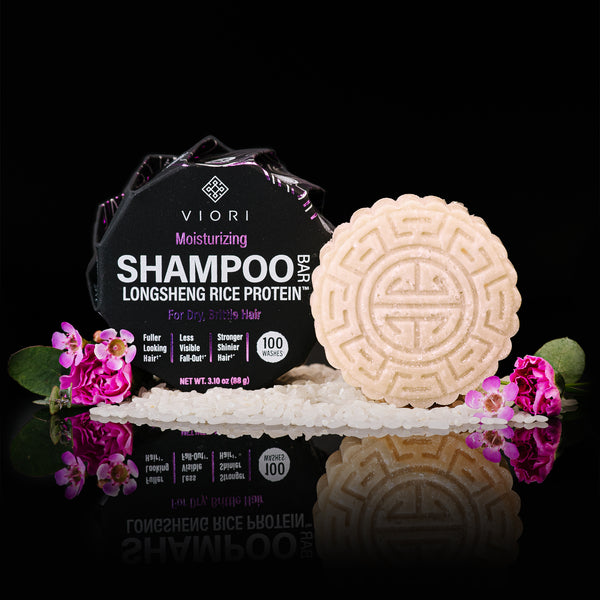
This is exactly why Viori formulates their bars to be pH balanced-to work with your scalp's natural chemistry rather than fighting against it. It's not just marketing fluff; pH balance is one of the primary factors determining whether a product genuinely helps or subtly harms dry scalp over time.
NOT SURE WHICH PRODUCT IS RIGHT FOR YOU?
TAKE THE QUIZTakes 30 seconds · 134,000+ customers matched
It's Not Just About Moisture-It's About Balance
Here's something I learned early in my career that fundamentally changed how I approach hair health: it's not just about moisture. It's about the delicate, sometimes finicky balance between protein and moisture. This becomes critically important when addressing dry hair and scalp.
If you have dry, damaged, or chemically treated hair (high porosity), you desperately need protein to rebuild your hair's structure before it can even hold onto moisture. Pouring hydrating products onto damaged hair without adequate protein is like filling a bucket riddled with holes-the moisture just escapes right back out.
If you have virgin, fine hair (low porosity), you might actually repel moisture due to tightly closed cuticles. Heavy oils and thick "moisturizing" products can sit on the surface, attract dirt and pollution, and eventually require harsh clarifying treatments that make the entire cycle worse.
The solution? Ingredients like hydrolyzed rice protein-found in Viori products-provide the structural support your hair needs to accept and retain moisture. Rice protein has a unique molecular structure that's small enough to penetrate the hair shaft while being strong enough to rebuild from within. It's precision engineering for your hair.
The Fermentation Secret: Why Ancient Wisdom Still Works
This is where the science gets genuinely exciting, at least for hair nerds like me. The Red Yao women have used fermented rice water for nearly 2,000 years, but modern research is only now revealing why it works so remarkably well.
During fermentation, rice undergoes enzymatic changes that dramatically increase its beneficial compounds:
Inositol (Vitamin B8)
Fermentation significantly increases inositol levels. This compound penetrates the hair shaft and stays there even after rinsing, providing lasting strength and resilience. For dry scalp, inositol improves cellular signaling that supports healthy sebum production. It's working at the cellular level, not just coating the surface.
Panthenol (Vitamin B5)
Fermentation makes this vitamin more bioavailable-more easily absorbed by hair and scalp. Panthenol attracts moisture from the environment and binds it to your hair shaft-but unlike heavy oils, it doesn't create buildup or weigh hair down.
Amino Acids
Fermented rice water contains a complex profile of amino acids that serve as literal building blocks for keratin. For dry, damaged hair, these amino acids help rebuild your hair's protein structure from the inside out.
The difference between DIY rice water rinses (currently trending all over social media) and properly fermented Longsheng rice water is actually profound. Fermentation not only boosts nutrient availability but also creates a pH that's naturally compatible with your scalp's ideal state.
The Washing Frequency Myth
One of the most damaging pieces of advice for dry scalp? "Just wash less frequently." While over-washing is definitely problematic, the blanket recommendation to extend time between washes often backfires spectacularly.
Here's why: When you have a compromised scalp barrier, dead skin cells accumulate more rapidly than normal. These cells mix with whatever sebum you do produce, creating a paste-like substance that blocks follicles, prevents sebum distribution, and creates the perfect environment for Malassezia-the fungus responsible for dandruff.
For many people with dry scalp, the solution is actually washing more frequently-but with an extraordinarily gentle, pH-balanced, sulfate-free formula. This is where bar shampoos genuinely shine: they're concentrated yet gentle enough for frequent use without the harsh detergents found in most liquid shampoos.
The Hard Water Problem Nobody Talks About
Here's a technical factor that significantly affects dry scalp but rarely gets mentioned in beauty articles: water quality. If you live in an area with hard water (high mineral content), those minerals bind to your hair and scalp, creating a film that:
- Prevents moisture penetration
- Makes hair feel perpetually dry and rough
- Interferes with product performance
- Alters the pH of whatever you're using
Natural ingredients like bamboo extract and aloe vera-both found in Viori formulations-act as chelating agents, helping remove mineral buildup and restore your hair's ability to accept and retain moisture. This sophisticated approach goes beyond simply slathering on more oils and hoping for the best.
The Conditioner Mistake Everyone Makes
I see this constantly in the salon: people with dry scalp applying conditioner directly to their roots, thinking more coverage equals more moisture. This approach typically makes things worse, not better.
Traditional conditioners contain cationic surfactants (positively charged molecules) designed to stick to damaged hair. When applied to the scalp, these ingredients can:
- Block pores and hair follicles
- Prevent natural sebum from reaching your hair length
- Create an environment conducive to bacterial and fungal growth
- Cause buildup that mimics or worsens dry scalp symptoms
The professional approach? Apply conditioner from mid-shaft to ends-where hair is oldest and most damaged-while letting your scalp benefit from the nourishing ingredients in your shampoo. This is why your cleansing product formulation matters so much more than most people realize.
Viori's shampoo bars contain conditioning ingredients like cocoa butter, shea butter, and rice bran oil-components that support scalp health during the cleansing process rather than requiring a separate scalp-clogging conditioning step afterward.
The Water Temperature Technique Pros Use
Here's a salon technique that dramatically impacts dry scalp but rarely gets shared outside professional circles: strategic water temperature manipulation.
The science: Hot water opens the hair cuticle and increases scalp blood flow, aiding cleansing and nutrient delivery. Cold water closes the cuticle and constricts blood vessels, sealing in treatments and adding shine.
The technique for dry scalp:
- Start with warm (not hot) water to gently open the cuticle
- Apply shampoo with lukewarm water, massaging to stimulate circulation
- Rinse thoroughly with progressively cooler water
- Apply conditioner to hair length (not scalp) with cool water
- Final rinse with the coolest water you can comfortably tolerate
This thermal manipulation optimizes product performance while supporting your scalp's natural oil production. Yes, cold rinses are uncomfortable. Yes, they're worth it.
The Microbiome Revolution You Need to Know About
Cutting-edge research reveals that scalp health-including chronic dryness-is intimately connected to your scalp microbiome: the ecosystem of beneficial bacteria, fungi, and microorganisms living on your skin.
Harsh, high-pH, sulfate-heavy shampoos don't just strip oil-they devastate your scalp's microbiome, eliminating beneficial organisms that:
- Compete with harmful fungi and bacteria
- Support barrier function
- Regulate inflammation
- Influence sebum composition and production
Natural, pH-balanced formulations support microbiome diversity rather than destroying it. Ingredients derived from fermentation-like those in Viori products-may even promote beneficial microbial populations because fermented ingredients contain postbiotics (beneficial compounds produced during fermentation) that nourish healthy scalp flora.
This represents a genuine paradigm shift from treating dry scalp as simple moisture deficiency to understanding it as an ecosystem imbalance requiring a holistic, respectful approach.
Understanding Your Hair's Porosity
Not all dry scalp and hair should be treated the same way. Understanding your hair's porosity-its ability to absorb and retain moisture-is absolutely essential for choosing the right approach.
Quick Porosity Test: Place a clean strand of hair in a glass of water.
- Floats: Low porosity-cuticles are tightly closed; struggles to absorb moisture
- Suspends mid-glass: Medium porosity-optimal balance
- Sinks: High porosity-cuticles are damaged/open; absorbs moisture but doesn't retain it
For Low Porosity + Dry Scalp
Focus on lightweight, penetrating ingredients that gently open the cuticle without damage. The citrus elements in Viori's Citrus Yao formulations can be particularly beneficial-citric acid gently lifts the cuticle, allowing nutrients to penetrate without harsh chemical processes.
For High Porosity + Dry Scalp
Protein reconstruction and cuticle sealing are your priorities. Rice protein, bamboo extract, and vitamin B5 provide the strengthening structure high-porosity hair desperately needs before it can maintain moisture. Think of it as repairing the foundation before decorating the house.
Seasonal Adjustments Matter
Professional stylists adjust client regimens seasonally-a practice you should absolutely adopt for managing dry scalp effectively.
WHAT CUSTOMERS ARE SAYING
Real reviews for Terrace Garden Barra de Champú
Winter dryness comes from low humidity (both outdoors and in heated indoor spaces) and requires more emollient-rich formulations. This is when the deeply moisturizing properties of Viori's Terrace Garden or Native Essence bars become essential tools in your arsenal.
Summer dryness is paradoxically often caused by over-production of sebum triggered by heat and humidity. This excess oil oxidizes, becomes thick and sticky, and fails to distribute properly down the hair shaft-mimicking dryness even though your scalp is producing plenty of oil. The oil-regulating properties of Hidden Waterfall's balanced formula excel in these conditions.
The advantage of bar-based systems? You can keep multiple bars on hand and switch as your scalp's needs change seasonally, without committing to large liquid bottles that go bad before you finish them.
The Anti-Inflammatory Ingredients That Actually Work
Chronic dry scalp almost always involves some degree of inflammation, even if it's not visibly obvious. Addressing this inflammatory component is essential for long-term relief rather than temporary symptom masking.
Key anti-inflammatory ingredients to look for:
Aloe Vera
Contains over 75 active compounds including anti-inflammatory enzymes, vitamins, and polysaccharides. It doesn't just moisturize-it actively soothes inflamed scalp tissue at the cellular level.
Bamboo Extract
Rich in silica and minerals that strengthen hair while providing antioxidant protection against environmental stressors that trigger inflammation. It's both protective and reparative.
Rice Bran Oil
Contains gamma-oryzanol, a compound with documented anti-inflammatory properties that also protects against UV damage. This is prevention and treatment in one elegant ingredient.
The sophisticated approach combines cleansing, moisture support, protein reinforcement, AND inflammation reduction-without heavy occlusives that create dependency or mask underlying problems.
Technique Matters: How You Use Your Products
Here's something purely practical that makes a real difference: how you physically use bar products significantly impacts your results.
Create a lather in your palms first, then apply to hair (rather than rubbing the bar directly on your scalp) to reduce mechanical irritation while ensuring even distribution. This technique is especially important for dry, sensitive scalps that are already compromised.
The gentle, circular massage while applying product isn't just about cleansing-it's scalp stimulation that promotes blood flow, supports lymphatic drainage, and encourages healthy sebum production and distribution. You're giving yourself a mini spa treatment every time you wash your hair.
The Complete Picture: A Holistic Framework
Effectively addressing dry hair and scalp requires moving beyond the simplistic "add more moisture" mentality to a sophisticated understanding of:
- pH balance and its impact on scalp barrier function
- Protein-moisture equilibrium based on your specific porosity


