
Ayurvedic hair soap is having a moment-and I get why. The idea of cleansing your hair with time-honored botanicals feels grounded, intentional, and refreshingly simple. But here’s the part that rarely gets discussed: whether Ayurvedic-style cleansing makes your hair look incredible or makes it feel coated and stubborn has less to do with “natural vs. not,” and far more to do with pH, mineral interaction, and friction.
After two decades doing hair, I’ve learned that most “miracle routines” succeed for very specific, very predictable reasons. If you understand what’s actually happening at the scalp and cuticle level, you can keep the ritual and the benefits-without stumbling into the common problems people blame on a “detox phase.”
What people usually mean by “Ayurvedic hair soap”
The term gets used loosely online, but it typically points to one of three things. Each behaves differently on the hair fiber and scalp.
NOT SURE WHICH PRODUCT IS RIGHT FOR YOU?
TAKE THE QUIZTakes 30 seconds · 134,000+ customers matched
- Traditional soap-based bars (made by saponifying oils)
- Botanical cleansers (powders/pastes using plants that naturally cleanse)
- Ayurvedic-inspired routines (cleansing paired with scalp oiling, masks, and rinses)
The tricky part is that two products can look similar on the surface-both “herbal,” both “bar format”-while behaving completely differently once water, pH, and your hair type enter the chat.
The hidden variable that decides everything: pH drift
If I could put one concept on a billboard for anyone exploring Ayurvedic hair soap, it would be this: hair and scalp are pH-sensitive. When the pH is out of range, the cuticle doesn’t lay the way you want it to, and the scalp barrier tends to get cranky.
Many traditional soap-style bars skew alkaline. That matters because alkalinity can lift the cuticle, which can show up as:
- more tangling and roughness
- frizz that feels “new” or sudden
- dullness (light doesn’t reflect smoothly off a raised cuticle)
- faster color fade over time
On the scalp side, frequent high-alkaline cleansing can contribute to tightness, irritation, or even rebound oiliness for some people. It’s not that Ayurveda “doesn’t work”-it’s that the chemistry can be working against the goal.
This is one reason a pH-balanced cleanser can be such a smart foundation. Viori’s shampoo and conditioner bars are formulated to be pH balanced, which is a big deal for maintaining cuticle smoothness and overall scalp comfort over the long haul.
“Foam” doesn’t equal “soap”: saponins vs. true soap chemistry
A lot of Ayurvedic cleansers rely on plants that contain saponins, which are natural cleansing compounds found in certain botanicals. They help lift oil and debris, but they are not the same thing as true soap created through saponification.
Why does that distinction matter? Because true soap is much more likely to create stubborn issues in certain water conditions-especially if you have hard water.
The “detox phase” people talk about is often just mineral film
Let’s talk about the infamous waxy, coated feeling. I’ve heard people describe it as detox, purging, or your scalp “adjusting.” In real life, what I most often see is a chemistry problem you can actually troubleshoot.
The most common culprit is hard water. Minerals like calcium and magnesium can interact with certain cleansers and leave behind a film that clings to the cuticle. That film can create:
- a draggy, sticky feel
- hair that seems heavier but also oddly dry
- loss of shine
- more tangles and breakage during detangling
If you’re dealing with that, it’s not a moral failing and it’s not your hair “rejecting natural care.” It’s residue. And residue can be addressed with a better-balanced cleansing approach.
The rarely discussed benefit: scalp ecosystem support
Ayurveda has always treated the scalp as living tissue, not just a surface you degrease. Modern hair and skin science would agree with that mindset. Your routine can influence the scalp’s barrier comfort, oil balance, and long-term feel.
But here’s the nuance: you don’t get those benefits if your cleanser constantly pushes the scalp out of its comfort zone. This is another reason pH balance matters so much. A formula that supports scalp comfort is often what allows the “botanical” part of the routine to actually shine.
“Stronger” hair isn’t supposed to feel stiff
One of the biggest misconceptions I see is people equating stiffness with strength. Some botanical compounds can create a firmer, more structured feel on the outside of the hair. That can be useful in moderation, but too much can leave hair less flexible-and more prone to snapping when you detangle.
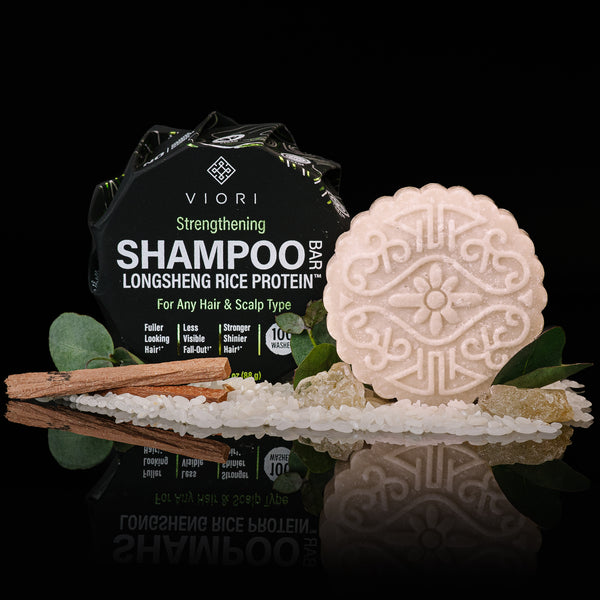
Viori addresses a related issue in a very practical way: they use a lower concentration of fermented Longsheng rice water because highly concentrated rice water can disrupt hair and scalp pH when overused. Their bars are designed to deliver similar benefits in a safe, pH-balanced amount that can be used regularly if desired.
Who tends to love Ayurvedic hair soap (and who tends to struggle)
Hair type and porosity matter more than most people realize. If you want to predict your results, start here.
WHAT CUSTOMERS ARE SAYING
Real reviews for Hidden Waterfall Barra de Champú
More likely to love it
- Medium-to-high porosity hair that benefits from conditioning and smoothing
- Wavy/curly hair that wants softer definition and less frizz (when buildup is managed)
- Normal-to-dry scalps that don’t tolerate harsh cleansing well
More likely to struggle
- Low porosity hair that is prone to buildup (products sit on the surface)
- Fine hair that gets weighed down quickly
- Hard water households where mineral film shows up fast
- Color-treated hair that can be sensitive to extra friction and cuticle disruption
The friction factor: the bar technique that protects your hair
Even with an excellent bar, technique matters. Too much rubbing directly on the hair can create unnecessary friction, which can rough up the cuticle over time. This is especially important for color-treated hair.
Viori specifically recommends building lather in your palms and applying it with your hands rather than rubbing the bar directly on your head. It’s a small change that can make a big difference in softness and longevity-especially if your hair is fragile, lightened, or color-treated.
A modern Ayurvedic-inspired routine that stays consistent
If you love the ritual of Ayurveda but you want results you can count on, I recommend building your routine like a system. Keep cleansing predictable, then use botanicals strategically.
- Cleanse with a pH-balanced bar as your foundation. Viori’s shampoo bars are designed to be pH balanced and can be used as often as you prefer based on your scalp needs.
- Condition every time you wash. Viori highly recommends following shampoo with their conditioner bar to protect the hair after cleansing and improve slip, softness, and resilience.
- Use botanicals as occasional treatments instead of relying on them to do all the cleansing heavy lifting. This helps you avoid chronic buildup while still enjoying the Ayurvedic benefits.
- Match the bar to your scalp type. Viori’s guidance is straightforward: options like Citrus Yao are often preferred for oilier scalps, while Terrace Garden, Hidden Waterfall, or the unscented Native Essence are commonly chosen for normal-to-dry or more sensitive scalps.
Quick troubleshooting (so you don’t waste months guessing)
If something feels “off,” you can usually pinpoint it quickly.
- Waxy/draggy hair: often mineral film or buildup; consider water hardness and cleansing balance.
- Squeaky then frizzy: cuticle is likely lifted; prioritize pH-balanced cleansing and thorough conditioning.
- Greasy roots + dry ends: cleanse the scalp effectively, condition only mid-lengths to ends.
- Itchy/tight scalp: simplify and consider an unscented option like Native Essence if fragrance sensitivity is a factor.
Final thoughts
Ayurvedic hair soap can be beautiful when it’s approached with the right lens. The win isn’t complexity-it’s control. When you manage pH, minimize friction, and avoid unwanted mineral and oil deposition, you get the best of both worlds: the ritual and the results.
If you want to keep things simple while staying aligned with that Ayurvedic spirit, start with a reliable, pH-balanced cleansing and conditioning base-then layer in treatments as needed. That’s where Viori fits naturally: consistent performance, scalp-conscious formulation, and an easy routine you can actually stick with.


