
People talk about the “one-two punch” in hair like it’s all about what you do with heat tools. In the salon, I’ve found the opposite is usually true: the styling step is only as good as the wash routine that came before it. If your hair goes frizzy, puffy, or flat right after you “did everything right,” it’s often because your hair wasn’t prepped to behave well under heat.
Here’s the more technical truth-without the jargon overload: you’re not styling “dry hair.” You’re styling a mix of moisture levels within the strand, plus surface friction, plus static charge. When those are balanced, the finish looks smoother, shinier, and holds longer. When they’re not, you end up chasing the result with extra heat and extra passes, which only makes things worse over time.
The rarely discussed angle: you’re managing friction and charge, not just shape
Most styling advice focuses on shape: round brush direction, airflow angle, tension, and timing. All important. But the piece that’s rarely spelled out is that hair is a fiber with a surface. That surface can be low-friction and cooperative-or high-friction and chaotic.
NOT SURE WHICH PRODUCT IS RIGHT FOR YOU?
TAKE THE QUIZTakes 30 seconds · 134,000+ customers matched
When friction and charge are off, you’ll notice telltale signs:
- “Squeaky” hair that tangles easily and feels rough while drying
- Static and flyaways that show up the second you start brushing
- Halo frizz that returns even after you smooth it down
- Styles that collapse because the root area gets oily fast or the cuticle won’t lie flat
A great “one-two punch” routine is really a two-step system: step one sets the hair’s surface behavior; step two shapes it.
Punch #2 is hydrogen bonds… but hydrogen bonds aren’t the whole story
Heat styling works largely by rearranging hydrogen bonds in the hair. Water plays a big role here because it makes hair more moldable. That’s why hair can be reshaped while damp and “set” as it dries.
But here’s where many routines fall apart: hair doesn’t dry evenly. After washing, it’s common to have a moisture gradient-more water inside the strand, while the outside feels rougher than it should. That roughness creates drag, snagging, and frizz. So even if you’re shaping the hair correctly, the surface is fighting you.
Punch #1: the wash routine that “programs” your blowout
If you want styling to look polished and stay that way, the first step is getting your wash routine to create a smoother, more consistent surface. With Viori, there are a few technical details that matter a lot in real-life use.
1) pH balance controls how the cuticle behaves
Hair products should sit in a hair-friendly pH range (generally about 3.5-6.5). When a product is too alkaline, hair swells, the cuticle lifts, friction increases, and hair becomes harder to smooth without damage.
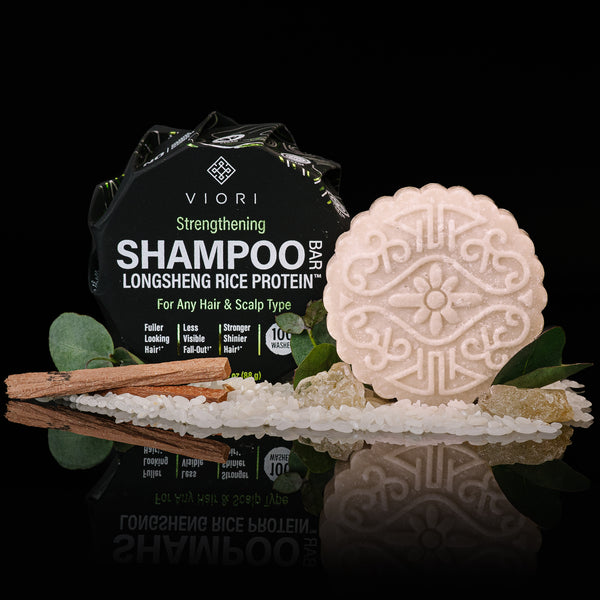
Viori bars are pH balanced, which is a big reason many people notice their hair feels less “rough” and more workable over time. When the cuticle lies flatter, light reflects better (shine) and the brush glides instead of catching (less frizz and breakage).
2) Cleansing power isn’t the same as “clean behavior”
A common trap is chasing that ultra-squeaky feeling, assuming it equals better volume. Technically, squeaky often means high friction. High friction can masquerade as volume at first, then show up as tangling and flyaways as you dry.
Viori shampoo bars use Sodium Cocoyl Isethionate (SCI), a mild cleanser often nicknamed “baby foam” in formulation circles because it’s effective without feeling harsh. The win for styling is simple: clean hair that still has a cooperative surface.
3) Conditioning is partly about charge (and it’s why slip matters)
After cleansing, hair often carries more negative charge. Conditioners are typically built with positively charged ingredients that are attracted to the hair surface, improving slip and reducing static.
Viori conditioner bars include Behentrimonium Methosulfate (BTMS), a conditioning ingredient used to increase glide and manageability. That slip is not just “nice”-it reduces the amount of tension and heat you need to get a smooth finish.
The “crispy” fail-state: protein, porosity, and heat
Let’s talk about a problem I see constantly: hair that feels dry or stiff even though the person is conditioning faithfully. A big contributor is what I call micro-stiffening-when the hair gets too rigid for its current level of damage and heat exposure.
This tends to show up most in:
- High-porosity hair (often from lightening, frequent heat, or chemical services)
- Hair that’s using protein-heavy routines very often
- Hair that’s also being heat styled multiple times per week
Viori notes they use a low concentration of rice protein, designed to be safe for frequent use. That’s a meaningful detail if you style regularly and want strength without that brittle edge that can make hair feel “dry” even when it isn’t.
The bar-format mistake that can sabotage your results
Bars are fantastic-but technique matters. If you repeatedly rub a bar directly on the hair, you can increase mechanical friction along the cuticle. That can show up as more frizz and more tangling during the blow-dry.
Viori recommends a method I also prefer professionally: build lather in your hands and apply with your palms.
WHAT CUSTOMERS ARE SAYING
Real reviews for Hidden Waterfall Barra de Champú
A styling-friendly way to use a Viori shampoo bar
- Wet hair thoroughly (rushing this step leads to uneven cleansing and more rubbing)
- Create lather in your hands rather than scrubbing the bar on your head
- Cleanse the scalp with fingertips; let the suds rinse through the lengths
- Rinse fully so the hair surface starts off consistent
Why scalp oil changes the whole “one-two punch” outcome
Scalp oil isn’t just a cosmetic issue-it changes how the root area behaves under heat. Too much oil at the base can make hair separate into stringy sections, lose lift quickly, and look flat sooner.
Viori recommends Citrus Yao for normal-to-oily scalp types, in part because it contains citric acid, which helps break down oil. That often translates to a cleaner root feel and more reliable volume.
Build your Viori “one-two punch” by scalp type
If your scalp gets oily fast (flat roots, greasy by day 1-2)
- Punch #1: Viori Citrus Yao shampoo; keep conditioner mostly mids-to-ends
- Punch #2: prioritize lift at the root and avoid heavy application near the scalp
If your hair runs dry or frizzy (rough ends, halo frizz)
- Punch #1: Viori Terrace Garden or Native Essence for a more moisturizing approach
- Punch #2: aim for smoothness with less heat by improving slip and reducing friction first
Viori also recommends cool/cold water and conditioning thoroughly from mid-length to ends to help reduce frizz. In practice, that’s about encouraging a smoother cuticle lay and more even surface behavior.
If you’re oily at the scalp but dry on the ends (very common)
- Punch #1: Viori Citrus Yao shampoo at the scalp
- Conditioner strategy: use Hidden Waterfall, Terrace Garden, or Native Essence on the ends
- Punch #2: you get a cleaner root for lift and cushioned ends for polish
How soon should you expect results?
Some people feel a difference quickly, but hair and scalp patterns can take time to normalize-especially if you’re coming off buildup, dryness, irritation, or inconsistent porosity. Viori often recommends giving a routine 2-3 months before deciding, which lines up with what I see clinically with many clients: consistency is what makes the results predictable.
Final thought: the best blowouts are engineered, not forced
The strongest “one-two punch” isn’t about overpowering your hair with heat. It’s about creating a foundation where hair is already smoother, less staticky, and more cooperative-so styling takes fewer passes and holds longer.
When Punch #1 gives you balanced pH, controlled friction, and better slip, Punch #2 becomes the easy part-and your hair looks like it was done on purpose, not wrestled into submission.


