
There's a conversation happening in every salon chair across America, whispered between frustrated clients and their stylists, but it rarely makes it into the glossy pages of beauty magazines. After twenty years of working with thousands of heads of hair-examining scalps, diagnosing damage, and yes, listening to the same frustrations over and over-I've discovered something that changed everything about how I approach hair care.
Most hair care frustration doesn't come from using the "wrong" products. It comes from the psychological war between who we want to be and what our biology actually is.
I call this tension "mynaturesego," and once you understand it, you'll never look at your bathroom shelf the same way again.
The Contradiction We All Live With
Picture this: A client sits in my chair, showing me photos on her phone. Beach waves. Effortless texture. That perfectly imperfect, "I woke up like this" look that probably took three hours and a professional styling team to achieve.
"I want this," she says. "But I want to use all-natural products. Nothing synthetic. I'm trying to get back to nature with my hair."
Her hair? Naturally pin-straight. Fine texture. Oily scalp. The complete opposite of the photos she's showing me.
This is the paradox I see play out every single day: We want products that are "natural" and "authentic"-appealing to our desire for biological truth-but we simultaneously want to fundamentally transform our natural state to match some idealized version of ourselves.
We want to "return to nature" while looking nothing like what nature actually gave us.
When's the last time you saw a hair care advertisement showing someone embracing their truly natural hair? I mean the real deal-frizz, inconsistent texture, gray roots showing, whatever their scalp naturally produces without intervention. Instead, we see "natural beauty" that requires thousands of dollars in products, professional treatments, and strategic lighting to achieve.
NOT SURE WHICH PRODUCT IS RIGHT FOR YOU?
TAKE THE QUIZTakes 30 seconds · 134,000+ customers matched
This is mynaturesego in action: the clash between biological reality and identity aspiration. And understanding this conflict is the first step toward actually having hair you love.
Your Scalp Doesn't Read Your Vision Board
Here's something I've learned from examining thousands of scalps under magnification: Your hair and scalp operate on evolutionary timescales, while your ego operates on social timescales.
Let me explain what I mean.
Your scalp's sebum production, pH balance, and microbial ecosystem developed over millions of years of human evolution. These sophisticated biological systems are designed to maintain homeostasis-to keep everything in balance regardless of external circumstances.
These systems don't recognize:
- Your career stress or relationship drama
- Your aesthetic preferences or style goals
- Your social media presence or follower count
- Your desire to look like that influencer you follow
- How much you paid for your products or how pretty the packaging is
Your scalp is running ancient programming. It's responding to hormones, environmental factors, and genetic instructions that have been fine-tuned over millennia. It has no concept of trends, no awareness of what's "in" this season.
When someone comes to me wanting beachy, textured waves but has naturally straight, fine hair with an oily scalp, they're experiencing mynaturesego in real-time. And look-there's absolutely nothing wrong with wanting a different look than what you naturally have. The frustration comes from expecting your biology to cooperate with your identity goals without understanding how the two actually work together.
The Microbiome Reality Check
Let's talk about what's actually happening on your scalp right now, because this is where it gets fascinating.
Your scalp hosts approximately one million bacteria per square centimeter. One million. That's an ecosystem as complex as garden soil, with competing species, symbiotic relationships, and a delicate balance that determines whether you have a healthy, comfortable scalp or one that's constantly irritated, flaky, or oily.
This ecosystem responds to measurable, physical factors:
- pH levels (optimal range is 4.5-5.5, slightly acidic)
- Sebum composition, influenced by genetics, diet, and hormones
- Environmental factors like humidity, water hardness, and pollution
- Product chemistry-surfactants, preservatives, conditioning agents
Your scalp microbiome does NOT respond to:
- Your intentions or positive thinking
- Your budget or how much you invested
- Your aesthetic aspirations or style goals
- Your belief system about "natural" versus "synthetic" ingredients
Yet most product marketing-and honestly, most of our purchasing decisions-operates almost entirely in that second category. We buy based on identity, aspiration, and belief. Then we wonder why our biology doesn't cooperate.
This is mynaturesego in its purest form: the assumption that our identity choices should override our biological realities.
The Conversation I'm Not Supposed to Have
Here's something you rarely hear from beauty professionals, and there's a good reason for that silence: It's commercially dangerous to tell clients that most hair struggles stem from fighting their own biology rather than simply using the "wrong" products.
Think about it. The global hair care industry is worth over 87 billion dollars. That's billion with a B. And a significant portion of that revenue depends on maintaining the tension between who you are and who you want to be.
If people genuinely accepted their natural hair texture, growth rate, and scalp type as biological parameters to work with rather than against, they would:
- Buy fewer products overall
- Switch products less frequently
- Spend less money on corrective treatments
- Have more realistic expectations about results
From a pure business perspective, mynaturesego is incredibly profitable. The constant pursuit of transformation, the disappointment that drives new purchases, the hope that the next product will finally be "the one"-this cycle keeps the industry thriving.
From a professional and ethical perspective, though, it creates unnecessary suffering. And after two decades of watching this play out, I can't stay silent about it anymore.
When Ancient Wisdom Actually Works
Not all beauty traditions exploit this gap between biology and identity. Some actually resolve it beautifully, creating genuine harmony instead of manufactured tension.
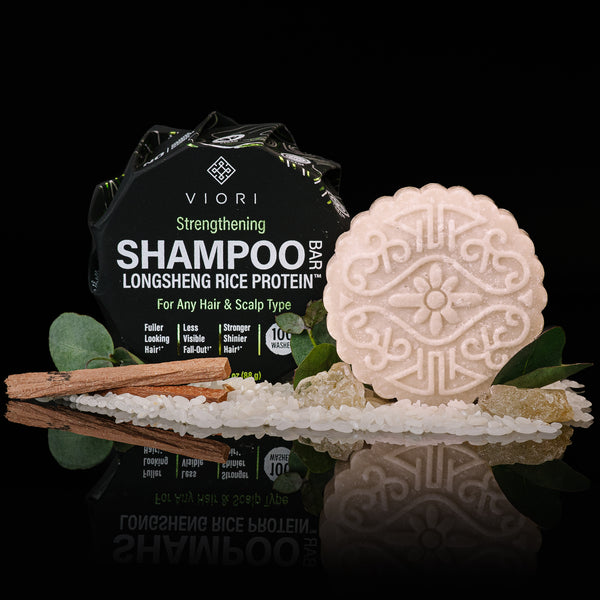
The Red Yao rice fermentation tradition is a perfect example of this, and it's why I was drawn to Viori's approach when I first encountered it.
This tradition works on the biological level in measurable ways:
- Fermentation increases the bioavailability of nutrients, making them more accessible to hair and scalp
- The fermentation process creates inositol (vitamin B8) and panthenol (B5) through natural bacterial action
- It produces a complex of proteins and vitamins that can actually bond with hair's keratin structure
- The pH naturally ranges from 3.5 to 4.5, which is compatible with your hair and scalp's optimal acidity level
But it also satisfies the ego and identity level:
- Ancient practice equals authenticity narrative-it's not some trend invented last year
- Visible cultural tradition provides borrowed credibility and meaning
- Time-tested approach builds trust and differentiation from synthetic formulas
- Connection to a real community and living tradition creates a story worth telling
Here's the critical difference, though: Unlike many "ancient beauty secrets" that are purely marketing fabrications with no actual effectiveness, fermented rice water actually works on a molecular level. The identity narrative aligns with biological reality.
This is what we should be looking for-not products that exploit the gap between our biology and our aspirations, but ones that genuinely bridge it with both story and science.
The Porosity Problem: When Biology Refuses to Cooperate
Hair porosity might be the clearest example of biology asserting absolute dominance over identity, and it's something I assess with every single client who sits in my chair.
Your hair's porosity-its ability to absorb and retain moisture-is determined by factors you cannot change through willpower or expensive products:
- Genetic cuticle structure (the arrangement of overlapping scale-like cells that form your hair's outer layer)
- Damage history from chemical treatments, heat styling, and environmental factors
- Natural aging and the inevitable cuticle degradation that occurs over time
Low porosity hair has cuticles that are tightly closed. This type of hair:
- Resists moisture absorption-water literally beads on the surface
- Repels most conditioning products
- Is notoriously difficult to chemically process
- Is prone to product buildup because nothing penetrates
High porosity hair has cuticles that are open or damaged. This hair:
- Absorbs products rapidly, almost too well
- Loses moisture equally fast, leading to constant dryness
- Requires protein to maintain structural integrity
- Feels dry and straw-like despite using moisturizing products
Here's the mynaturesego crisis: You cannot change your fundamental porosity through wishful thinking, expensive serums, or identity reformation. You can only work within its parameters.
Yet the beauty industry constantly sells hope that the right oil, treatment, or miracle product will "fix" porosity issues. This is like selling someone a product to permanently change their eye color-technically possible with temporary interventions, but fundamentally dishonest if presented as a permanent biological change.
The Honest Recommendation (That Doesn't Sell Products)
Here's the professional recommendation for dealing with porosity, the one that doesn't make beauty brands any money:
- Test your porosity (take a clean shed hair, place it in a glass of water-if it floats, you have low porosity; if it sinks, you have high porosity)
- Accept the result as a biological fact about your hair
- Select products specifically formulated for your porosity type
- Adjust your expectations accordingly
This approach prioritizes biological reality over ego satisfaction. It's professionally responsible but commercially unpopular because clients often reject accurate porosity-based recommendations in favor of products promising transformation beyond biological possibility.
But here's what I've learned over twenty years: Working with your biology instead of against it always-always-produces better results and less frustration.
The "Natural" Trap: When Good Intentions Create Real Damage
This is where mynaturesego can actually cause harm, and where I see the most well-intentioned mistakes destroying otherwise healthy hair.
Your scalp's natural pH ranges from 4.5 to 5.5-slightly acidic. This acidity isn't random; it serves crucial functions:
- Maintains your skin barrier function
- Supports beneficial microbial populations while discouraging harmful ones
- Keeps hair cuticles closed, which creates shine
- Prevents bacterial and fungal overgrowth
The problem? Many "natural" substances that people perceive as gentle actually have pH levels that are completely incompatible with scalp health.
I've seen clients damage their hair with:
- Baking soda (pH 9.0)-highly alkaline, damages the hair cuticle despite being "natural" and cheap
- Undiluted apple cider vinegar (pH 2.5-3.0)-too acidic, can erode hair structure over time
- Pure castile soap (pH 8.9-9.5)-strips the scalp, causes rebound oil production
- Straight rice water (pH 5.5-7.0, highly variable)-often too alkaline for regular use without proper formulation
The mynaturesego trap works like this: "Natural" satisfies our identity and beliefs about purity and safety, but it may violate our actual biological requirements for pH balance and gentle cleansing.
WHAT CUSTOMERS ARE SAYING
Real reviews for Hidden Waterfall Barra de Champú
This is why I appreciate how Viori approaches formulation. They acknowledge that fermented rice water-despite its traditional roots and cultural significance-needs proper formulation science to actually work safely and effectively.
They use a specific concentration of Longsheng rice water because they've found that at high concentrations, it can disrupt your hair and scalp's pH balance if used too frequently. Their formula balances rice protein with moisturizing ingredients like cocoa butter and rice bran oil to maintain that crucial equilibrium.
This demonstrates biology-first formulation rather than ego-first marketing. A purely ego-driven approach would maximize the "hero ingredient" to justify the cultural story and charge premium prices. A biology-respecting approach balances concentration with pH compatibility and actual hair needs.
The Protein Paradox: When "Strengthening" Becomes Brittle
Here's something I rarely see discussed outside professional education, but it's destroying more hair than people realize: protein overload.
The mynaturesego dimension of this problem looks like this:
Ego narrative: "Protein strengthens hair, therefore more protein equals stronger hair. I should use protein treatments constantly."
Biological reality: Hair needs protein-moisture balance; excess protein creates brittleness and breakage.
Rice protein, hydrolyzed wheat protein, keratin treatments, and protein-rich masks have become incredibly popular as "strengthening" treatments. The marketing is compelling-who doesn't want stronger hair?
But hair operates on a balance principle, not a "more is better" principle:
- Too much protein: Hair becomes rigid, brittle, breaks easily, loses elasticity, feels rough and straw-like
- Too little protein: Hair becomes mushy, stretches excessively, won't hold a style, lacks structure
- Balanced state: Hair has both structure AND flexibility, strength AND movement
The Professional Test You Can Do at Home
Take a single shed hair (one that's fallen out naturally, not one you've pulled). Wet it thoroughly, then gently stretch it between your fingers.
Healthy, balanced hair should:
- Stretch 30-50% of its original length
- Return to its original length when released
- Not break immediately under gentle tension
If your hair:
- Breaks immediately = protein overload (or extreme damage)
- Stretches excessively without returning = moisture overload or protein deficiency
Most people chase the "strength" narrative because it's ego-satisfying-we want to feel like we're fortifying and protecting our hair. But they don't understand that flexibility is equally important from a biological standpoint. Hair that's all structure and no give will snap. Hair that's all moisture and no structure will stretch and break.
The best formulations-like what I've seen in Viori's rice-based products-include both protein sources (rice protein, bamboo extract) and moisture sources (cocoa butter, rice bran oil, aloe vera) to maintain this crucial balance naturally.
The Sulfate Confusion: How Language Exploits Your Identity
The sulfate debate perfectly demonstrates how mynaturesego gets weaponized


