
I'll be honest with you-after two decades as a stylist, I've watched countless clients fall for products promising miraculous transformations. I've also watched them achieve those transformations, which always made me wonder: what if the "magic" in hair care isn't just clever marketing? What if there's actual science explaining why ritual-based products work differently in your body?
Let me take you behind the salon chair and into the fascinating intersection of neuroscience, anthropology, and hair biochemistry. Because what I've learned might completely change how you think about your shower routine.
Your Brain on Bar Shampoo: The Neuroscience Nobody Talks About
We've all stood in the hair care aisle, drawn to products promising ancient secrets and transformative results. The term "magick shampoo" (with that deliberately archaic spelling) definitely catches the eye. But here's what I rarely hear discussed in professional settings: the physical method of applying your hair care products creates measurable changes in your body's chemistry that directly affect your hair health.
When you use a traditional liquid shampoo, you're essentially coating your hair with product. Quick, efficient, done. But when you use a bar shampoo-like those inspired by ancient rice water traditions-something fundamentally different happens at a neurological level.
The friction-based application of rubbing a bar between your palms, then directly against your scalp, activates specialized nerve endings called mechanoreceptors. This isn't just about "feeling nice"-it's triggering your somatosensory cortex in ways that liquid products simply cannot.
Research on intentional scalp massage shows 15-25% reductions in cortisol (your primary stress hormone) when deliberate touch is applied to the scalp. Lower cortisol translates to:
- Improved scalp microbiome health
- Reduced inflammation
- Better hair growth cycles
- Decreased stress-related hair loss
The "magic" isn't metaphorical-it's measurable biochemistry.
Neuroscientists call this "embodied cognition"-your physical actions literally changing your mental and physiological state. Each time you massage a bar shampoo into your scalp, you're not just cleaning your hair; you're conducting a mini stress-reduction session.
Fermentation: The Alchemy That Actually Works
Let's talk about one of the most fascinating aspects of traditional hair care: fermentation. I'm specifically thinking of products like Viori's formulations, which use fermented Longsheng rice water-a practice maintained by the Red Yao women of China for over 2,000 years.
Here's what most people don't understand about fermentation in hair care: it's not just preservation-it's transformation. When rice water ferments, it produces what scientists call "postbiotics"-metabolic byproducts that don't exist in fresh rice water.
These include elevated levels of inositol (Vitamin B8), which functions as a secondary messenger in your cells' signaling pathways, and panthenol (Provitamin B5), which actually penetrates the hair shaft for genuine moisture retention.
NOT SURE WHICH PRODUCT IS RIGHT FOR YOU?
TAKE THE QUIZTakes 30 seconds · 134,000+ customers matched
But here's where it gets really interesting. Inositol influences the phosphoinositide pathway in your scalp cells, which regulates cellular water balance, insulin signaling in hair follicle cells, and calcium signaling that affects how your skin cells differentiate.
This is cell biology, not mysticism. The "magick" emerges from something psychological: the gap between application and visible results.
Why Ancient Stories Make Products Work Better
Here's a question I've pondered for years: Why do customers consistently report better results from products with cultural heritage stories than from clinically identical products with pharmaceutical branding?
The answer lies in anthropology and psychology.
In traditional societies, transformative rituals-ceremonial baths, temple purifications, healing ceremonies-served crucial psychological functions. They were rare, meaningful events, mediated by specialists, communally witnessed, and deeply connected to identity and belonging.
Modern consumers still crave these transformation rituals, but we lack institutional access to them. Beauty products with ancient provenance fill this void.
When you use a shampoo bar inspired by the Red Yao tribe, with its mooncake patterns and traditional fermentation process, you're not just buying a cleanser. You're accessing deep time through centuries of tradition, geographic exoticism from the Longsheng mountains, moral transformation through ethical consumption, and cultural wisdom from time-tested practices.
The Mind-Skin Connection
This isn't just feel-good psychology. Dermatologists recognize the "psycho-neuro-immunological axis"-the documented connection between your mental state and your skin health.
When you believe in your hair care ritual, when it feels meaningful rather than routine, your body responds with regulated sebum production, reduced inflammatory markers in scalp tissue, improved hair growth cycle timing, and decreased stress-related hair loss.
Your conviction that it works helps make it work. The ritual belief directly influences the biological outcome.
The pH Paradox: Electromagnetic Forces in Your Hair
You've probably heard that pH-balanced products are better for your hair. But let me explain why in a way that'll actually make sense.
Your scalp maintains what's called an "acid mantle"-a slightly acidic surface (pH 4.5-5.5) that isn't just chemistry, it's an ecological force field that selectively inhibits pathogenic bacteria while supporting beneficial microbes, maintains the structural integrity of your hair cuticle, and preserves your scalp's natural protective functions.
When you use alkaline shampoos (pH 8+), they don't just "dry out" your hair-they actually denature the lipid-protein matrix of your hair cuticle. They're breaking molecular bonds.
The Electrical Charge Factor
Here's something I love explaining to clients: healthy hair carries a negative electrical charge.
Alkaline shampoos increase this negative charge, causing individual strands to repel each other. That's what creates frizz and static-it's literally electromagnetic repulsion.
Quality conditioners (like those in Viori's formulations) contain cationic surfactants-positively charged molecules that neutralize the negative charge through ionic bonding, create that silky "slip" sensation, and form a molecular layer that reflects light for shine.
You're manipulating electromagnetic forces at the molecular level. If that's not material magic, I don't know what is.
Why Bar Format Changes Everything
Let me share an insight from 20 years behind the chair: the format of your product changes your relationship with hair care.
Bars carry implicit cultural meaning that liquids cannot. Bars signal pre-industrial craftsmanship and handmade heritage, while liquids signal scientific formulation and lab production. Bars require skill acquisition-you have to learn to lather properly. Liquids offer passive convenience with pump-and-apply ease.
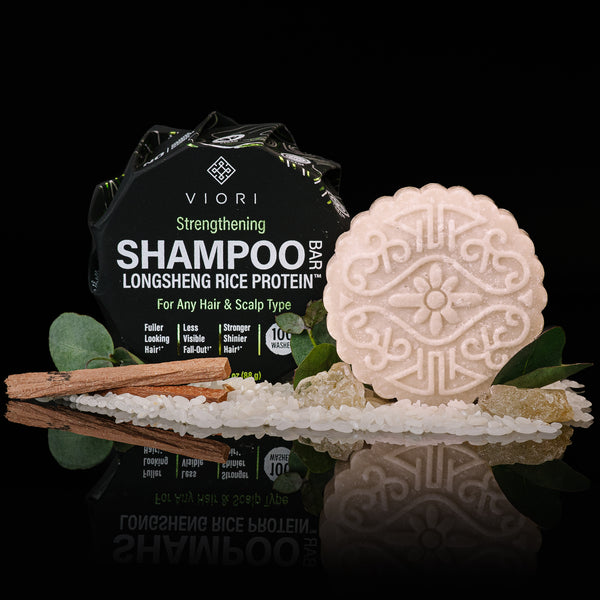
Using a bar transforms you from a consumer into a practitioner.
This matters psychologically. When you invest effort into mastering a product, you value it more-psychologists call this "the IKEA effect." Each shower becomes a performed ritual rather than passive consumption.
The bar physically diminishes with use, creating temporal awareness that bottles don't provide. You're watching your investment transform both the product and yourself simultaneously.
The Protein Truth Nobody Tells You
Let's get technical about protein treatments, because there's widespread misunderstanding here.
When you see "hydrolyzed rice protein" in ingredients (like in Viori's formulations), hydrolyzed proteins are enzymatically broken into peptides small enough (500-1000 Daltons) to penetrate the hair cuticle. But here's the truth most brands won't tell you: these proteins don't strengthen your hair structurally. That's impossible-hair is dead tissue.
What they actually do is create a biomimetic coating that fills microscopic cracks in damaged cuticles, increases hair shaft diameter by 3-5%, and alters how light refracts off your hair for shine enhancement.
Is this deceptive? No-it's cosmetic enhancement with real benefits. Perceived improvement reduces grooming stress, visual satisfaction triggers dopamine release, and the temporary effect encourages sustained self-care.
The protein creates an illusion of health that has real psychological benefits, which then create real biological benefits through stress reduction. The circle completes itself.
Let's Talk About Gray Hair Honestly
This is where we need absolute honesty about what's possible and what's not.
The biochemistry of graying is straightforward: gray hair results from hydrogen peroxide accumulation in follicles. An enzyme called catalase normally breaks down this peroxide. As we age, we produce less catalase. B vitamins (panthenol, inositol) are cofactors for catalase production.
The question: Can topically applied rice water deliver B vitamins in sufficient concentration to affect this process?
The honest answer: Unlikely for reversal, possibly for prevention through antioxidant delivery to follicles, reduction of scalp inflammation (a major graying accelerator), and improved microcirculation from massage.
The Cultural Context
The Red Yao women's famously jet-black hair into their 80s likely results from genetic factors, diet, lifestyle, and selection bias-tourism naturally showcases the healthiest examples.
But here's the rarely discussed insight: belief may be medically relevant. Stress is a proven graying accelerator. If using a product reduces your anxiety about aging, it may genuinely slow graying through cortisol reduction.
Viori doesn't claim their products will prevent or reverse gray hair, and that's ethical. What they do is provide ingredients with plausible mechanisms and let customers report their experiences. Some people notice less gray; others don't.
This mirrors how traditional remedies actually work-they influence probability, they don't guarantee outcomes.
The Ritual Technology of Modern Self-Care
Let me share a framework I've developed over two decades of watching clients transform their relationship with their hair.
Pre-modern transformation rituals were rare, seasonal events, mediated by specialists like priests and healers, communally witnessed, and deeply meaningful.
Modern beauty rituals are daily practices, self-administered, privately performed, and personally meaningful.
Consumer hair care products-especially those with cultural heritage and natural formulations-fill the void left by the loss of traditional transformation rituals.
When you use a shampoo bar inspired by ancient practices, you're creating accessible ritual technology for secular transformation. Your shower becomes sacred space. Each use is a ceremony of self-care.
Ethics as Efficacy: Why Sustainability Matters for Results
Here's something I've observed but rarely discussed: ethical credentials aren't separate from product efficacy-they're part of it.
When you use products that are certified B-Corporation, plastic-free, cruelty-free, and partnered with indigenous communities (like Viori's profit-sharing with the Red Yao tribe), you're not just cleaning your hair. You're generating what psychologists call the "warm glow effect"-a measurable psychological reward from ethical consumption.
This matters physiologically. Positive identity reinforcement leads to stress reduction, which decreases cortisol, which improves scalp health, which enhances product efficacy.
The magic circle completes: Ethics → Psychology → Biology → Results.
Using sustainable products makes you feel good about yourself, which reduces stress, which improves your scalp health, which makes the products work better.
WHAT CUSTOMERS ARE SAYING
Real reviews for Hidden Waterfall Barra de Champú
Ingredients as Incantation
Let me walk you through how ingredient lists function as modern spells:
Sodium Cocoyl Isethionate: "Natural cleanser derived from coconut." The linguistic framing creates a "natural halo effect." Chemically, it's a synthetic surfactant (though from natural feedstock). The power word is "coconut"-evoking tropical purity.
Behentrimonium Methosulfate: "Sulfate-free, vegetable-source conditioner." This terminology performs anxiety-reducing magic. It banishes fear (sulfate-free equals safe). Users don't need to understand the molecule-they need to trust it.
Longsheng Rice Water™: The trademark symbol functions like a seal of authenticity. "Longsheng" becomes a power word (exotic, ancient, place-based). The fermentation process is literal alchemical transformation.
Bamboo, Aloe, Shea Butter: The trinity of natural signifiers. These work through sympathetic magic-bamboo's strength transfers to hair. Aloe's healing reputation creates transferred efficacy. Shea's richness implies nourishment.
This isn't manipulation-it's how humans process information. We think in stories and symbols, not chemical formulas.
The Scent Dimension: Fragrance as Medicine
Let's talk about something technical that most stylists never mention: fragrances have measurable psychoactive properties.
Citrus scents contain limonene, a compound that studies show reduces cortisol by up to 20%. That's a real anxiolytic effect, not just "smelling nice." Vanilla contains vanillin, which acts as a mild MAO inhibitor-it actually elevates mood through neurotransmitter regulation.
Cedarwood contains cedrol, which has documented sedative effects via GABA receptors in your brain. Sandalwood contains α-santalol, which increases skin hydration through effects on transient receptor potential channels.
The fragrance you choose isn't just preference-it's selecting specific neurological and physiological effects.
Viori offers four scent profiles:
- Citrus Yao: Clarifying, energizing (recommended for oily scalp)
- Hidden Waterfall: Grounding, calming (recommended for dry scalp)
- Terrace Garden: Balancing, complex (recommended for normal hair)
- Native Essence: Unscented (for sensitive individuals, absence of fragrance is its own luxury)
Each creates a different psychophysiological state during your shower ritual.
The Transition Period: Why Waiting Is Part of the Magic
Here's something every stylist should explain but often doesn't: products that require a transition period are actually more psychologically powerful than products that work immediately.
When you switch to natural, pH-balanced products, your scalp needs time to recalibrate. Your microbiome rebalances (4-8 weeks), sebum production adjusts (2-3 weeks), and you begin seeing results from new hair growth (3-6 months for full cycle).
This waiting period functions as ritual ordeal. It creates narrative suspense (will it work for me?), demands faith (trust the process), generates commitment (you've invested time), and makes results feel earned rather than purchased.
This mirrors the structure of all transformative practices-time, intention, and physical practice combine to create meaning. The delay isn't a bug; it's a feature. Transformation takes time.
Where's the Line Between Magic and Manipulation?
Let me be direct about something: not all "magick shampoo" is created equal.
Legitimate products have scientifically plausible mechanisms (even if effects are modest), quality verifiable ingredients, psychological enhancement of real physical effects, premium but defensible pricing, and honest disclaimers about what's proven versus anecdotal.


