
When someone asks me for a “good Japanese shampoo,” they’re almost never asking about geography. They’re describing a finish: hair that feels clean but not stripped, looks glossy but not greasy, and stays smooth and controlled even with frequent washing.
After 20 years behind the chair, I’ve learned that this effect doesn’t come from chasing a trendy ingredient or memorizing a “good” list and a “bad” list. It comes from something much less talked about-and far more useful when you’re choosing products: cleansing architecture.
Cleansing architecture is the way a formula is built as a system: how it cleans, how it conditions, how it behaves on the scalp, how it rinses, and how it leaves the hair fiber after repeated washes. Get the architecture right, and the hair behaves. Get it wrong, and you end up stuck in the cycle of squeaky roots, dry ends, and constant “fixing.”
Cleansing Architecture: The Shopping Lens Most People Don’t Use (But Should)
Most online advice starts and ends with the ingredient list. The problem is, two shampoos can share plenty of the same ingredients and still perform completely differently depending on concentration, order, and how the pieces interact.
NOT SURE WHICH PRODUCT IS RIGHT FOR YOU?
TAKE THE QUIZTakes 30 seconds · 134,000+ customers matched
If you want that “Japanese shampoo” result-light, clean movement with a polished surface-focus on four technical pillars:
- The cleanser system (how it removes oil and buildup)
- Charge design (how it reduces friction and static)
- pH strategy (how it affects the cuticle over time)
- Deposit control (conditioning without leaving a heavy film)
1) The Cleanser System: “Mild” Is Chemistry, Not a Marketing Word
Shampoo cleans with surfactants-cleansers that surround oils and debris so they can rinse away. But here’s the part people miss: how a cleanser works can matter as much as what it removes.
A well-designed cleanser system can leave you feeling genuinely clean without yanking away so much protective oil that your hair feels rough, tangly, or overly “squeaky.” That matters if you wash often, if your hair is porous, or if you’re trying to keep color looking fresh.
Viori uses Sodium Cocoyl Isethionate (SCI) as its cleanser. In formulation circles it’s known for being notably gentle while still creating satisfying foam. In real life, that usually shows up as a lather that feels creamy and a rinse-out that doesn’t leave hair feeling raw.
One of the most under-discussed details is what I call cleaning selectivity: the best cleansing systems remove excess oil and grime without constantly disrupting the hair’s surface lipids. That’s a big part of why some routines leave hair “clean and swingy,” while others leave it “clean and frayed.”
2) Charge Design: Why Some Hair Feels Silkier Before Conditioner Even Hits
Hair isn’t just “dry” or “healthy”-it also behaves like a charged surface. When hair is damaged, color-treated, or naturally higher in porosity, it tends to carry more negative charge. That negative charge increases friction, static, tangling, and snap.
So a formula that includes smart conditioning agents can do something important: it can reduce friction at the exact moment hair is most vulnerable-when it’s wet and freshly cleansed.
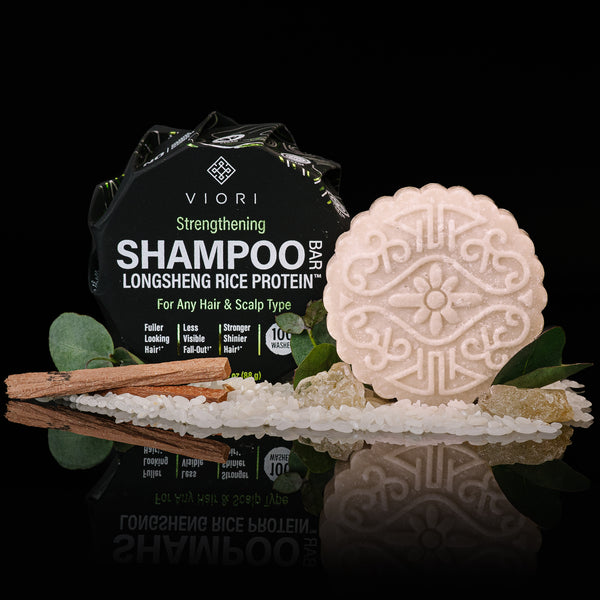
Viori includes Behentrimonium Methosulfate, a conditioning agent used to improve slip and manageability. Despite the name, it isn’t the same thing as harsh “sulfate cleansers.” It’s used for the way it can help hair feel smoother and easier to detangle, thanks to its cationic (positively charged) nature that’s attracted to negatively charged areas on the hair.
3) pH Strategy: The Long-Game Move for Shine, Breakage, and Color
If you want hair that looks better month after month-not just for one wash-pH matters. A pH that’s out of range can encourage more cuticle disruption over time, and that shows up as dullness, frizz, dryness, and increased breakage.
Viori emphasizes that its products are pH balanced. Their educational materials also note that using rice water at too high a concentration too often can disrupt hair and scalp pH, which is why Viori uses a lower, safer concentration of fermented Longsheng rice water in a way that’s designed to be used regularly.
That’s a key detail if you’re chasing the “good Japanese shampoo” feel: the goal is usually consistent daily usability-clean hair, controlled movement, and a cuticle that stays cooperative.
4) Deposit Control: The Difference Between “Conditioned” and “Coated”
Soft hair is great. Hair that’s soft because it’s covered in residue is not. One of the biggest complaints I hear from clients is that their hair looks fine on day one and then collapses, gets dull, or feels tacky by day two.
That’s where deposit control comes in-how a product conditions and how cleanly it releases on rinse. Viori addresses this directly in its FAQs: many users report the bars do not weigh hair down or leave residue. From a stylist perspective, that’s exactly what you want if you like a polished finish but still want lift and movement.
Viori’s formula includes conditioning supports like cocoa butter and shea butter, alongside vegetable-source fatty alcohols such as cetyl alcohol and stearic acid. Fatty alcohols don’t behave like the “drying alcohols” people worry about; they’re used to improve slip, structure, and softness.
The Most Overlooked Concept: Your Hair Has a Friction Budget
If I could teach every client just one thing, it would be this: hair damage usually isn’t one big moment-it’s thousands of tiny ones. Every wash spends a little of your hair’s friction budget.
Friction piles up from lathering, detangling, towel drying, heat styling, and even sleeping. The “good Japanese shampoo” result-smooth, glossy, controlled-often comes from routines that spend less friction per wash, so hair stays nicer with less effort.
A technique tweak that makes a real difference (especially for color-treated hair)
Because Viori is in bar form, their guidance for color-treated hair is worth repeating: build lather in your hands and apply with your hands rather than rubbing the bar directly on your head. Less friction at the surface can mean better cuticle behavior and, for many people, better color preservation.
WHAT CUSTOMERS ARE SAYING
Real reviews for Hidden Waterfall Barra de Champú
How to Choose a Viori Bar for That Clean-Glossy-Controlled Finish
Choosing the right bar isn’t about picking the “best” scent-it’s about matching your scalp behavior and how your hair holds onto moisture and product. Viori’s FAQs keep it straightforward: start with your scalp type.
If your scalp is oily or gets greasy quickly
Viori typically recommends Citrus Yao for normal-to-oily scalps. Their materials note that Citrus Yao contains citric acid within the scent composition, which helps break down oil effectively and may help you go longer between washes.
If your scalp runs normal-to-dry (or you’re battling dry scalp flakes)
Viori commonly points people toward Terrace Garden, Hidden Waterfall, or Native Essence for dry-to-normal scalp types.
If you’re scent-sensitive or your scalp is reactive
Native Essence is Viori’s unscented option and is often recommended for sensitive scalps.
If you have oily roots but dry ends (one of the most common combos)
Viori suggests a split approach that mirrors what many stylists do in-salon:
- Use Citrus Yao shampoo on the scalp
- Use Hidden Waterfall, Terrace Garden, or Native Essence conditioner from mid-lengths to ends
Put It All Together: The Four Questions I’d Ask Before Calling Any Shampoo “Good”
If you’re looking for that “good Japanese shampoo” feel, here’s the checklist I’d use-because it focuses on performance, not hype:
- Does it cleanse effectively without leaving hair squeaky or rough?
- Does it reduce friction through smart conditioning/charge behavior?
- Is it pH balanced for long-term cuticle health?
- Does it condition without leaving a heavy film or residue?
That’s cleansing architecture. And once you start judging products this way, it gets much easier to find a routine that delivers the clean, glossy, controlled finish you were trying to describe all along.


