
After two decades behind the chair, I've seen countless hair care trends come and go. Some deliver on their promises. Most don't. Onion shampoo? It sits somewhere in between-not because the concept is flawed, but because most formulations fundamentally misunderstand the chemistry they're working with.
Here's what almost no one is talking about: it doesn't matter how powerful an ingredient is if it can't actually reach your hair follicles in a usable form.
Let me explain what I mean.
The Onion Shampoo Promise vs. The Chemical Reality
When clients ask me about onion shampoo, they've usually read about two key benefits:
- Quercetin - an antioxidant that supposedly protects follicles from damage
- Sulfur compounds - particularly allicin, which may support hair's keratin structure
Both sound great on paper. The problem? These compounds face massive stability and delivery challenges that most products completely ignore.
The Sulfur Compound Dilemma
Here's something most people don't know: the beneficial sulfur compounds in onions are incredibly unstable.
When you cut into an onion, an enzyme called alliinase converts alliin (stable, odorless) into allicin (unstable, pungent). This allicin-the compound everyone wants-has a half-life measured in hours in water, not days or months.
Think about that. Your shampoo bottle has been sitting on a shelf for weeks, maybe months. In a water-based formula with a pH between 4.5-6.5, that allicin has likely already degraded into different compounds entirely.
The question no one asks: Are you buying onion extract that was processed months ago, or are you getting the active compounds that actually make a difference?
NOT SURE WHICH PRODUCT IS RIGHT FOR YOU?
TAKE THE QUIZTakes 30 seconds · 134,000+ customers matched
Most products use onion extract or onion oil that's been steam-distilled, cold-pressed, or ethanol-extracted. Each method creates a completely different chemical profile, but you'll rarely see this specified on the label.
The Molecular Weight Problem
This is where my inner chemistry nerd gets excited. Your scalp has a natural barrier-specifically, a molecular weight cutoff of about 500 Daltons for compounds trying to penetrate passively.
Let's look at the weights:
- Quercetin: 302 g/mol ✓ (small enough)
- Allicin: 162 g/mol ✓ (small enough)
- Larger polysulfides: Often over 500 Da ✗ (too big without special carriers)
But size isn't everything. These compounds also need to be fat-soluble enough to cross through your scalp's lipid barriers.
Here's the catch: quercetin has the right size but poor water solubility. In a shampoo's water base, it needs special technology-nanoemulsions or solubilizing agents-to stay bioavailable. Otherwise, it just rinses down the drain.
I've examined dozens of onion shampoo ingredient lists. Almost none show evidence of this sophisticated delivery technology.
The Timing Problem Nobody Discusses
This might be the most overlooked issue in onion shampoo formulation: when the beneficial compounds activate.
Ideally, you'd want that alliinase enzyme to convert alliin into allicin on your scalp, not months earlier in a processing facility. Smart formulations would use:
- Separated enzyme and substrate compartments
- pH-triggered release systems
- Stabilized precursors instead of degraded actives
In my professional experience reviewing formulations, I haven't seen onion shampoos using these approaches. Most list "onion extract" without specifying:
- Extraction method
- Whether enzymes are still active
- Concentration of active compounds
- How stability was tested
Without this information, you're buying on faith, not science.
The Keratin Synthesis Question
Let's tackle a common claim: that sulfur from onions directly strengthens your hair's keratin structure.
This needs context.
Yes, keratin contains sulfur-specifically in the amino acid cysteine, which forms the disulfide bonds that give hair its strength. But your body doesn't just incorporate random sulfur compounds into keratin. The process requires:
- Sulfur-containing amino acids (cysteine or methionine)
- Cellular machinery in the hair follicle bulb
- Active protein synthesis happening beneath the scalp surface
The critical question: Can volatile sulfur compounds from topical onion extract actually reach follicular cells deep in your scalp in a form that supports cysteine production?
The research here is surprisingly weak. Most studies on onion juice and hair growth measure visible outcomes-hair count, thickness-without proving the biological mechanism. They don't demonstrate that sulfur compounds from onions are actually being incorporated into keratin synthesis.
A Different Approach to Sulfur Delivery
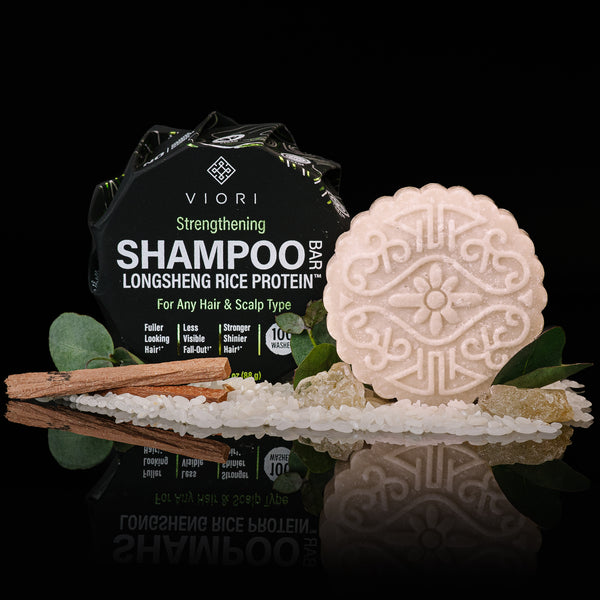
This is where I want to introduce a more stable, scientifically sound alternative: protein-bound sulfur from hydrolyzed rice protein.
Rice protein naturally contains cysteine. When properly hydrolyzed (broken into smaller peptides), these peptides:
- Stay under that 500 Dalton molecular weight threshold
- Keep cysteine in a stable, non-volatile form
- Don't require enzymatic activation
- Don't degrade in water-based formulations
- Strengthen existing hair through proven mechanisms
Viori's approach uses fermented Longsheng Rice Water™, which creates something particularly elegant: the fermentation process increases amino acid bioavailability through natural microbial breakdown of larger proteins.
This delivers sulfur through stable protein peptides, not volatile compounds that may have degraded before you even open the bottle.
Why Rice Water Chemistry Works
Unlike onion extracts with questionable shelf stability, rice water has a proven track record-nearly 2,000 years with the Red Yao women of China's Huangluo Village.
The fermentation process in Viori's formula creates:
- Inositol (Vitamin B8) - clinically shown to improve hair elasticity
- Panthenol (Vitamin B5) - proven moisture retention and conditioning
- Amino acids - including cysteine in stable, usable forms
- Trace minerals - supporting overall scalp health
All of these remain stable in Viori's pH-balanced solid bar format, avoiding the degradation issues that plague liquid formulations.
The pH Factor Everyone Overlooks
In 20 years of professional hair care, I've learned that scalp environment optimization matters more than miracle ingredients.
Healthy hair and scalp need a pH between 4.5-5.5. Onion juice is naturally acidic (around pH 5.5), which seems perfect-but many commercial formulations add strong alkaline agents to mask that onion smell.
This drives the pH up to 7-8, which:
- Raises the hair cuticle, increasing damage
- Causes protein loss from the hair shaft
- Eliminates natural shine
- Makes hair vulnerable to environmental stress
Viori's bars maintain the scalp's natural acid mantle while providing effective cleansing-preserving the environment your follicles need to thrive.
The Sulfate Problem
Here's something that frustrates me professionally: many onion shampoos contain harsh sulfates like sodium lauryl sulfate or ammonium laureth sulfate.
These strip your scalp's natural oils, causing:
- Reactive oil overproduction
- Inflammation and irritation
- Compromised scalp barrier function
This matters because a damaged scalp barrier cannot properly absorb even beneficial compounds. You could have the highest-quality onion extract available, but if your scalp is inflamed from harsh cleansers, penetration is severely compromised.
Viori uses sodium cocoyl isethionate-a gentle, coconut-derived cleanser that maintains scalp integrity while removing buildup.
What the Smell Tells You
Let's address the elephant in the room: onion shampoos have an odor challenge. How products handle this reveals formulation quality.
Poor approach: Heavy synthetic fragrances to mask onion smell
- Indicates crude onion extract
- High volatile compound content (unstable)
- Potential scalp irritation from fragrance chemicals
Slightly better: Processed extracts with volatiles removed
- But this often removes the very sulfur compounds being marketed
- Questions the product's authenticity
Viori's approach: Naturally pleasant ingredients that don't require masking
- Rice-based formula has a subtle, earthy scent
- Clean fragrance options free from toxins
- Unscented option available for sensitive scalps
The diagnostic truth: if your onion shampoo reeks, those volatile compounds are present but actively degrading. If it has no onion smell at all, question whether the active compounds are really there.
What the Clinical Evidence Actually Shows
Scientific rigor matters. The most-cited study on onion and hair is from 2002 by Sharquie and Al-Obaidi, showing that crude onion juice helped with alopecia areata (an autoimmune hair loss condition).
But critical limitations exist:
- Small sample size (38 patients)
- No analysis of which compounds caused the benefit
- No standardization of onion juice composition
- Application twice daily for hours-not minutes like shampoo
- Alopecia areata is very different from typical hair loss
The peer-reviewed evidence for onion shampoo specifically-used for minutes in the shower-is essentially nonexistent.
Compare this to rice-based ingredients:
- Rice protein: Multiple studies on strengthening and tensile improvement
- Inositol: Clinical evidence of reduced loss and improved thickness
- Panthenol: Extensive research on moisture and diameter increase
Professional Questions to Ask Before Buying
If you're considering onion shampoo for its sulfur content and growth potential, ask these technical questions:
WHAT CUSTOMERS ARE SAYING
Real reviews for Hidden Waterfall Barra de Champú
1. What extraction method was used?
If the company can't tell you how the onion extract was prepared and what the standardized concentration of active compounds is, they don't have real quality control.
2. What's the shelf life of active compounds?
How was stability validated? Unstable actives mean you're paying for expensive water.
3. What's the pH?
It should be 4.5-5.5 for scalp health. Higher pH means cuticle damage.
4. What delivery system enhances penetration?
Look for liposomes, nanoemulsions, or peptide carriers-technology that actually gets compounds into follicles.
5. What surfactants are used?
Sulfate-free options preserve your scalp barrier, which is essential for any active ingredient to work.
The Professional Verdict: Stability Beats Hype
After 20 years in professional hair care, here's what I know to be true: ingredient stability and smart delivery matter infinitely more than what's trending on social media.
Onion shampoo represents an interesting botanical concept, but the chemistry challenges are substantial:
- ✗ Volatile sulfur compounds that degrade quickly
- ✗ Quercetin solubility problems
- ✗ Unclear follicular penetration pathways
- ✗ Lack of clinical validation for shampoo formats
- ✗ pH and surfactant compatibility issues
Viori's rice-based approach offers:
- ✓ Stable protein-bound sulfur in the form of cysteine peptides
- ✓ Clinically-studied ingredients with proven benefits
- ✓ Proper pH balance that maintains scalp health
- ✓ 2,000 years of validation from the Red Yao tradition
- ✓ Gentle, sulfate-free cleansing that preserves your scalp barrier
- ✓ Solid bar format with no water dilution or harsh preservatives
The Red Yao women maintain vibrant, gray-free hair well into their 80s-not because of trendy ingredients, but because of consistent, gentle care with stable, bioavailable nutrients from their ancestral rice water ritual.
Sometimes ancient wisdom, refined through generations of real-world use, proves more effective than new trends that sound impressive but fail at the formulation level.
The Bottom Line
What matters isn't what looks good in a marketing email. It's what actually reaches your follicles in a form your body can use-without damaging the delicate scalp ecosystem in the process.
Chemistry doesn't care about trends. Your hair responds to what actually works.
After two decades of professional experience, I trust formulations with:
- Proven stability
- Transparent ingredient sourcing
- Proper pH balance
- Gentle, effective delivery systems
- Clinical or traditional evidence backing their claims
That's not flashy. But it's what keeps hair healthy, strong, and beautiful for the long term.
And honestly? That's what should matter most.
Have questions about your hair care routine or ingredient concerns? This is exactly the kind of detailed analysis I love diving into. The science of hair care is endlessly fascinating-and understanding it can completely transform your results.


