
When I'm consulting with clients who've tried shampoo bars with disappointing results, they usually tell me the same thing: "I love the eco-friendly concept, but my hair just feels... off." After twenty years in professional haircare, I can tell you this isn't about the idea of shampoo bars-it's about the incredibly complex chemistry that most brands simply don't get right.
Today, I'm pulling back the curtain on what's really happening at the molecular level when you switch from liquid to solid shampoo. This isn't your typical "5 Benefits of Shampoo Bars" fluff piece. We're diving deep into the science that separates bars that truly perform from those that leave you reaching back for the bottle.
The Waxy Residue Mystery: It's Not What You Think
Let's start with the most common complaint I hear: "My shampoo bar leaves a waxy, heavy feeling on my hair."
Here's what's really happening, and why it has nothing to do with how well you're rinsing.
When surfactants (the cleansing agents in shampoo) are compressed into solid form, their molecules arrange themselves into crystalline structures-think of them as microscopic sheets stacked like pages in a book. This is completely different from liquid shampoo, where surfactants already exist as tiny spherical clusters called micelles, perfectly configured to grab oil and dirt.
The problem? When you use a shampoo bar, you're asking those tightly-packed crystals to:
- Dissolve in water
- Reorganize into effective cleansing structures
- Clean your hair
- Rinse away completely
All in under a minute.
If that transition from crystal to micelle doesn't happen fast enough-and often it doesn't-you're essentially depositing partially-dissolved surfactant crystals onto your hair shafts. That's your "waxy buildup." Not product residue that needs more rinsing, but surfactant molecules that never fully activated in the first place.
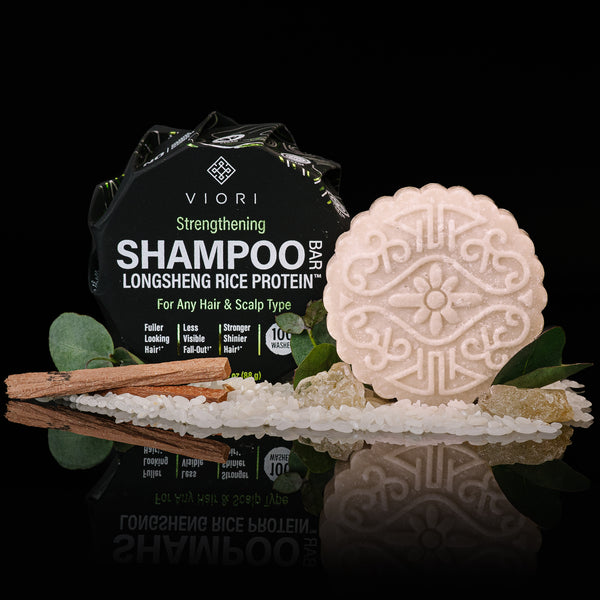
This is a formulation challenge, not a user error. And it's one reason why Viori has invested heavily in developing bars with sophisticated surfactant systems designed to transition quickly even in less-than-ideal conditions.
Your Water Temperature Is Changing Your Results (And Nobody's Talking About It)
Here's something that shocked even me when I first learned it: the same shampoo bar can perform completely differently depending on your shower temperature.
NOT SURE WHICH PRODUCT IS RIGHT FOR YOU?
TAKE THE QUIZTakes 30 seconds · 134,000+ customers matched
Sodium Cocoyl Isethionate (SCI)-the primary surfactant in quality shampoo bars-has what chemists call a "critical micelle temperature" of about 104-122°F (40-50°C). Below this temperature range, the surfactant molecules become sluggish. They don't organize into those efficient cleansing structures as readily.
Think about your own experience. Does your shampoo bar work beautifully in summer but feel heavy and difficult to rinse in winter? That's not in your head-it's thermodynamics.
A bar used with 95°F water is functionally a different product than the same bar used with 113°F water. Yet I've never seen a single brand provide temperature guidelines.
Liquid shampoos don't have this problem because their surfactants are already dissolved and active. The temperature matters less because the molecules are already in their working configuration.
If you've had inconsistent results with bars, try this: use noticeably warmer water (safely warm, not scalding). You might be surprised how much this simple change improves performance.
The Chemistry Challenge of Combining Cleansing and Conditioning
One thing I deeply appreciate about Viori's approach is their inclusion of Behentrimonium Methosulfate (BTMS) in their formulas-a sophisticated conditioning agent that actually binds to damaged areas of your hair.
But here's the technical challenge that makes formulating effective conditioning shampoo bars so difficult:
When you damage your hair through coloring, heat styling, or even just environmental exposure, it becomes negatively charged. Conditioning agents like BTMS are positively charged, so they're attracted to those damaged spots like magnets. Simple enough in liquid form.
In a solid bar, however, you're dealing with what I call the "sand and salt" problem.
Even when thoroughly mixed, BTMS and cleansing surfactants form separate microscopic phases-they don't blend into a homogeneous mixture at the molecular level. During application, you're depositing both phases somewhat randomly onto your hair. Sometimes you get more cleansing agents, sometimes more conditioning agents.
This is why you might have one wash that feels perfect and the next that feels stripped or heavy, even though you used the exact same product the exact same way. The formulation is consistent; the delivery is inherently variable.
It's a fundamental challenge of the bar format, and it requires extremely thoughtful formulation to minimize these inconsistencies.
The pH Problem Nobody Explains Correctly
I see "pH balanced" on nearly every shampoo bar package, and while I appreciate brands paying attention to this, there's a critical detail consumers never hear:
The pH of a solid bar and the pH of that bar during actual use are two different measurements.
When brands test pH, they typically dissolve the bar in water at a 10% concentration. But when you're rubbing that bar on wet hair, you're creating a much higher concentration at the point of contact-maybe 40-60% product.
At these higher concentrations, if the formulation doesn't include adequate buffering agents, the pH can rise to 7-8 at the hair surface, even though the bar "tests" at a hair-friendly 5.5. This higher pH causes your cuticle to swell and roughen-exactly what we're trying to avoid.
This is why some users experience tangles and roughness despite using supposedly pH-balanced bars. The measurement isn't wrong; it's just not representative of real-world use.
Quality formulations include substantial buffering systems-usually citric acid or lactic acid at 2-3% concentration-to maintain consistent pH even at high product concentrations. This is one of those invisible quality markers that dramatically affects performance but never makes it onto the marketing materials.
The Hard Water Factor That Changes Everything
If you live in an area with hard water, we need to talk.
Shampoo bars are dramatically more affected by water hardness than liquid shampoos, and this is rarely discussed honestly.
When the cleansing agents in bars encounter calcium and magnesium ions in hard water, they form insoluble complexes-essentially, soap scum that deposits directly onto your hair. Liquid shampoos combat this through:
- Chelating agents that bind hard water minerals before they cause problems
- High water content that keeps everything in solution
- Multiple surfactants, including types that work well in hard water
Bars have limited space for chelating agents (they'd compromise the bar's structure), minimal water to maintain solution dynamics, and often rely heavily on a single primary surfactant.
The result: In areas with moderately hard water (above 150 ppm), shampoo bars form significantly more mineral deposits than liquid alternatives.
This isn't a quality issue-it's a fundamental limitation of the format in certain water conditions.
If you're experiencing "waxy buildup" in a hard water area, you may actually be dealing with calcium-surfactant complexes, which require a different solution. Try:
- An acidic final rinse (diluted apple cider vinegar works beautifully)
- A chelating treatment before shampooing
- Installing a shower filter to reduce water hardness
The right shampoo bar can absolutely work in hard water-but you need to understand the chemistry you're working with.
Why Your Shampoo Bar Works Differently from Roots to Ends
My clients with long hair often tell me their shampoo bar works great near the scalp but leaves their mid-lengths and ends feeling dry or tangled. This isn't a conditioning problem-it's a concentration gradient issue.
When you lather at the scalp and work downward, the surfactant concentration decreases with distance from the application point. Your ends receive a much more dilute solution than your scalp, meaning:
- Less effective cleansing (though ends rarely need aggressive cleansing anyway)
- Different pH exposure
- Reduced conditioning agent deposition
With liquid shampoo, most of us apply multiple dollops and distribute them relatively evenly. With bars, we tend to focus application at the crown and rely on runoff for length.
This is one reason why I recommend the lather-in-hands method for anyone with hair past their shoulders: Create a rich lather in your palms, then apply it to your hair in sections rather than rubbing the bar directly from roots to ends. This ensures more even distribution of active ingredients throughout your hair.
The Friction Factor Nobody Mentions
Here's something from my years doing corrective color and damage repair: how you apply a shampoo bar matters as much as what's in it.
When you rub a solid bar directly on wet hair, you're creating significant friction between a relatively hard object and your delicate cuticle scales. Think of it like the difference between rubbing sandpaper directly on wood versus applying a polishing compound with a soft cloth.
Over time, repeated high-friction application can mechanically lift and roughen cuticle scales, even if the chemistry of the product is perfectly gentle. This is particularly problematic for:
- Fine hair (less mechanical strength to withstand friction)
- Chemically processed hair (already compromised cuticle structure)
- Longer hair (more cumulative friction exposure over time)
I recommend the lather-in-hands method not just for even distribution, but to minimize this mechanical stress on your hair. Yes, it takes slightly more time and uses a bit more product-but if you're investing in quality haircare, you want to maximize the benefits and minimize any potential damage.
The Ingredient Stability Question
One aspect of bar formulations that deserves more attention is how solid form affects ingredient stability over time.
Take fermented rice water-a signature ingredient in Viori's heritage formula. This traditional preparation contains beneficial vitamins, amino acids, and organic acids. But incorporating fermented ingredients into a heated, compressed solid bar raises interesting stability considerations:
Heat sensitivity: Some vitamins degrade when exposed to the heat necessary for bar manufacturing. The extent depends on time-temperature exposure, which can vary between batches.
Chemical interactions: Fermented rice water is naturally acidic. When incorporated into a bar with a pH around 5.5-6, some neutralization occurs. This doesn't eliminate benefits, but it does mean the ingredient in the final bar is chemically different from fresh fermented rice water.
Long-term oxidation: While the bar's low moisture content provides good stability, slow oxidation of active compounds is inevitable over a multi-year shelf life.
None of this means these ingredients are ineffective-just that their activity profile in solid form differs from liquid preparations. It's one reason why manufacturing expertise and quality control matter so much with bar formulations.
What Actually Makes a Superior Shampoo Bar
After analyzing the chemistry, here's what I look for in a truly well-formulated shampoo bar:
Dual surfactant systems: The best bars don't rely on a single cleansing agent. They combine primary surfactants with secondary options that dissolve at different rates, creating a two-phase cleansing system. This dramatically improves performance in varying water temperatures and reduces waxy feel.
Robust buffering: Beyond achieving the right pH in testing, quality bars include 2-3% buffering agents to maintain consistent pH during actual high-concentration application.
WHAT CUSTOMERS ARE SAYING
Real reviews for Hidden Waterfall Barra de Champú
Chelation for hard water: Look for citric acid, sodium citrate, or other chelating agents that can handle hard water minerals before they deposit on your hair.
Appropriate protein molecular weights: Not just "contains protein," but proteins selected for optimal film-forming ability and penetration into the hair shaft.
Thoughtful fatty alcohol ratios: These provide structure and slip, but the concentration needs to be carefully balanced. Too much creates buildup; too little compromises bar integrity.
Viori's formulations demonstrate attention to many of these technical details, which is why they've built such a loyal following among users who've been disappointed by other bars.
Making Shampoo Bars Work for Your Hair
Understanding the chemistry helps you optimize your technique:
Temperature matters: Use comfortably warm to hot water, especially in winter. The surfactants need heat to transition efficiently.
Lather first: Create rich lather in your hands before applying to hair. This ensures better distribution and reduces mechanical friction.
Section long hair: Apply lathered product in sections rather than relying on runoff from the crown.
Account for your water: If you have hard water, incorporate an acidic final rinse or use a shower filter.
Give it time: Your hair and scalp may need 2-4 weeks to adjust from liquid shampoos, especially if switching from products with silicones.
Evaluate honestly: Not every format works for every hair type and situation. Shampoo bars have real advantages, but also real limitations. If you've tried quality bars with proper technique and your hair isn't responding well, that's valuable information, not a personal failure.
The Bottom Line
Shampoo bars represent genuinely innovative chemistry, not just liquid shampoo with the water removed. The best bars-like those from Viori-demonstrate sophisticated understanding of surfactant phase behavior, pH buffering, hard water chemistry, and ingredient stability in solid matrices.
But the format also has inherent challenges: temperature sensitivity, concentration gradients, mechanical friction concerns, and hard water interactions that liquid formulas don't face.
Success with shampoo bars requires both excellent formulation and informed use. Understanding the science helps you make better product choices and optimize your technique for your specific hair type and water conditions.
After two decades in professional haircare, I'm genuinely excited about the technical innovation happening in solid haircare formulations. We're still in the early stages of this format's development, and brands willing to invest in sophisticated chemistry-rather than just jumping on a trend-are creating products that really can compete with traditional liquids.
Your hair deserves that level of thoughtfulness and expertise.
Have you experienced any of these chemistry challenges with shampoo bars? I'd love to hear about your experiences in the comments below.


