
People don’t usually shop for a “classic barbershop-style” shampoo and conditioner because they love reading ingredient decks. They want a specific result: a sharp, fresh scent, a satisfying cleanse, and hair that feels light, crisp, and genuinely clean.
What doesn’t get talked about enough is why that same style of routine can leave one person with bouncy, airy hair for days-and leave someone else with itch, flakes, tightness, or rough ends. The difference isn’t luck. It’s chemistry: fragrance behavior, surfactant performance, pH, cuticle friction, and scalp barrier health all colliding in one daily habit.
After 20 years behind the chair, I’ve learned this: if you understand what’s happening at the scalp and along the hair fiber, you can keep the “fresh-from-the-barber” vibe while still protecting long-term hair health. Let’s break it down in a way that’s technical where it counts, but still easy to use in real life.
NOT SURE WHICH PRODUCT IS RIGHT FOR YOU?
TAKE THE QUIZTakes 30 seconds · 134,000+ customers matched
That “clean scent” isn’t just a vibe-it can change how your scalp behaves
Most people treat fragrance like background music: nice to have, easy to ignore. In haircare, scent can be more influential than you’d think-especially if you’re dealing with sensitivity, oiliness, or recurring flakes.
1) Scent changes how clean your hair feels (even when cleansing is the same)
Fresh, bright notes-often in the citrus/aromatic family-create a powerful “clean” signal in the brain. Meanwhile, natural scalp oils have a heavier, fatty odor profile. When a shampoo’s scent contrasts that sebum smell strongly, your hair can feel cleaner longer, even if the actual oil level is similar.
2) Sensitive scalps often react to fragrance before they react to “dryness”
Here’s a nuance I don’t see discussed much: for some clients, the first domino isn’t dryness-it’s irritation. A fragrance-sensitive scalp can slip into a cycle that looks like dandruff but starts as reactivity.
- Step 1: mild irritation or stinging
- Step 2: scratching (even absent-mindedly)
- Step 3: barrier disruption
- Step 4: tightness, flakes, and ongoing itch
If you’re trying to troubleshoot a reactive scalp, one of the smartest moves is removing fragrance variables for a few weeks. That’s where an unscented option like Viori Native Essence can be genuinely helpful-not as a trend, but as a clean “baseline” for your scalp.
3) Fragrance can deposit on hair and subtly affect texture
Hair is a surface, and many aromatic compounds are hydrophobic (they like oil). In some routines, those scent components can cling to the cuticle-especially if you’re using a very substantive conditioner that binds well to hair. The result can be subtle but real: changes in slip, changes in “lightness,” and sometimes hair that holds onto environmental odors more than it used to.
Shampoo performance is surfactant science (and your scalp type decides what feels “right”)
At the technical level, shampoo is mostly about the behavior of surfactants-cleansing molecules that surround oil and lift it off the scalp and hair. The reason two shampoos can feel wildly different isn’t magic; it’s the way the cleanser system emulsifies sebum, rinses away, and influences the cuticle.
For oily scalps: the goal is clean, not stripped
If your scalp feels oily 1-2 days after washing, you generally need a routine that clears oil effectively while staying comfortable. In Viori’s lineup, Citrus Yao is commonly chosen for normal-to-oily scalps. Viori notes this scent profile contains citric acid, which helps break down oil-often translating to that “fresh scalp” feeling lasting longer.
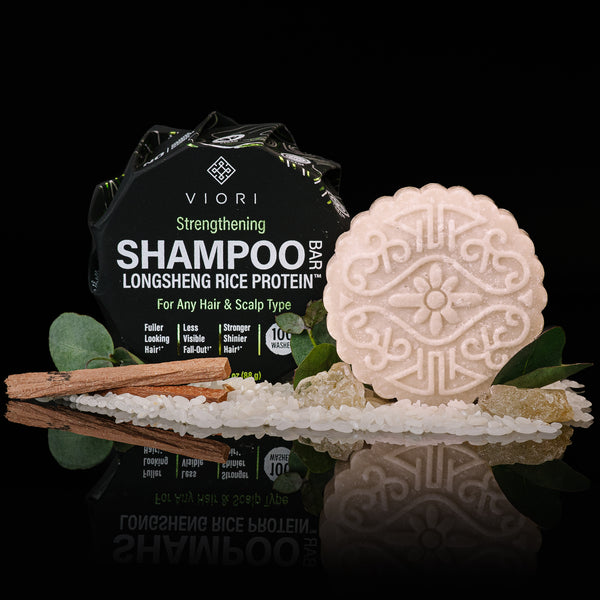
For dry or reactive scalps: aggressive cleansing can backfire
If your scalp feels oily only after 4+ days, or it tends to feel tight/itchy, overly strong cleansing can increase discomfort and make hair feel rougher over time. For dry-to-normal scalps, Viori typically points people toward Terrace Garden, Hidden Waterfall, or Native Essence, depending on how much hydration and how little scent your scalp prefers.
pH is the quiet king: it’s a big reason hair turns rough “all of a sudden”
If there’s one detail I wish everyone understood, it’s this: pH affects the cuticle. When products are too alkaline, the cuticle can sit more raised, which increases friction. And friction shows up as tangles, frizz, dullness, and breakage-especially if you brush hard or style with heat.
Viori emphasizes its bars are pH balanced, and that matters because hair products typically perform best in a mildly acidic range (often referenced around 3.5-6.5). You don’t need to memorize numbers-just know that balanced pH is one of the most practical long-game protections for both scalp comfort and cuticle smoothness.
Conditioner isn’t optional-it’s electrostatics and cuticle management
Conditioner isn’t just “for softness.” After cleansing, hair tends to carry more negative charge, especially on porous or damaged areas. Conditioners use positively charged ingredients to bind to the fiber, improving slip, reducing static, and helping the cuticle lie flatter.
One ingredient in Viori’s conditioner worth understanding is behentrimonium methosulfate. The name scares people because it contains the word “sulfate,” but it isn’t a harsh cleansing sulfate. In conditioning formulas, it’s widely used for its detangling and smoothing performance.
Viori also uses fatty alcohols like cetyl alcohol and stearic acid, which are not the drying alcohols people worry about. These support structure, glide, and a softer finish-especially helpful if your hair is prone to knots or frizz.
The factor most people ignore: friction (especially with bars)
You can have a beautiful formula, and still rough up your hair if your technique is aggressive. Hair is a keratin fiber with a cuticle layer like shingles on a roof. Repeated friction chips away at that layer over time, and once the cuticle is compromised, the hair can start feeling permanently frizzy or brittle.
With bars, technique matters a lot. Viori recommends building lather in your hands and applying with your hands rather than rubbing the bar directly on your head. That’s not just a “nice idea”-it’s a friction-control strategy, and it can be especially important for color-treated hair.
WHAT CUSTOMERS ARE SAYING
Real reviews for Hidden Waterfall Barra de Champú
How to troubleshoot like a stylist (simple fixes that actually work)
If your scalp is oily but your ends are dry
This is one of the most common situations I see. Treat the scalp and ends like two different zones.
- Scalp: choose a more oil-targeting cleanse (many people reach for Viori Citrus Yao shampoo here)
- Mids/ends: choose a more moisturizing conditioner option (often Terrace Garden, Hidden Waterfall, or Native Essence)
Viori even acknowledges this mix-and-match approach for oily scalp/dry ends, and in salon terms, it’s simply smart customization.
If you have flakes, identify the type before you treat it
“Dandruff” gets used as a catch-all, but not all flakes are the same. The right routine depends on what your scalp is doing.
- Oily scalp flaking: tends to cling more and shows up alongside faster oiliness; Viori commonly recommends Citrus Yao for this scenario
- Dry scalp flaking: usually feels tight/itchy and looks more powdery; Viori commonly suggests Hidden Waterfall, Terrace Garden, or Native Essence
If hair feels “clean but coated”
This usually comes down to placement and rinsing-not “bad hair.” Try these adjustments:
- Shampoo the scalp, not the ends (let the rinse cleanse the lengths).
- Condition mids-to-ends, not right at the root.
- Rinse longer than you think-especially at the nape and behind the ears.
Where Viori fits into the “classic clean” conversation
If you love that crisp, freshly washed feeling but you also care about hair health over months (not just the next 12 hours), Viori’s approach makes technical sense: pH balanced bars, gentle cleansing, a strong conditioning system for slip, and targeted options depending on scalp type-including an unscented collection when you need to keep things simple and calm.
Want a routine that feels barbershop-clean without the side effects?
If you tell me how quickly your scalp gets oily after washing (day 1-2, day 3, or day 4+), whether your hair is color-treated, and your texture (straight/wavy/curly/coily), I can point you toward the most sensible Viori pairing-and the exact application technique I’d use behind the chair to keep your scalp fresh and your cuticle smooth.


