
Shampoo bars can be a game-changer: less clutter, easy travel, and a simplified routine. But if you’ve ever had one wash leave your hair bouncy and glossy, then the very next wash feel flat, coated, or weirdly dry, you’re not imagining it.
After two decades behind the chair, I’ve noticed that most of the internet talks about shampoo bars in broad strokes-“natural,” “clean,” “lathers great.” What rarely gets discussed is the real reason results can swing so dramatically: a shampoo bar doesn’t dose product the way a liquid shampoo does. That one technical detail explains most of the love-it-or-hate-it reviews you’ll see.
The Two Types of Shampoo Bars (They’re Not Interchangeable)
Before we talk performance, we have to talk chemistry. Solid hair cleansers generally fall into two categories, and they behave completely differently on hair.
1) Soap-based bars (true soap)
True soap is made by saponifying oils and fats. That process naturally creates a cleanser that tends to run alkaline (often higher than hair really loves). When hair is repeatedly exposed to a higher pH environment, the cuticle can lift and swell-think more friction, more tangling, and less shine over time.
NOT SURE WHICH PRODUCT IS RIGHT FOR YOU?
TAKE THE QUIZTakes 30 seconds · 134,000+ customers matched
Another big factor: in hard water, soap can react with minerals and create an insoluble film that clings to hair. People describe it as waxy, draggy, or “my hair feels coated no matter how much I rinse.”
2) Syndet bars (gentle detergent-based bars)
“Syndet” means synthetic detergent, but in modern haircare this often includes cleansers derived from natural sources. These bars can be formulated to be pH balanced for hair, which is a major reason they tend to feel smoother and more predictable when they’re well made.
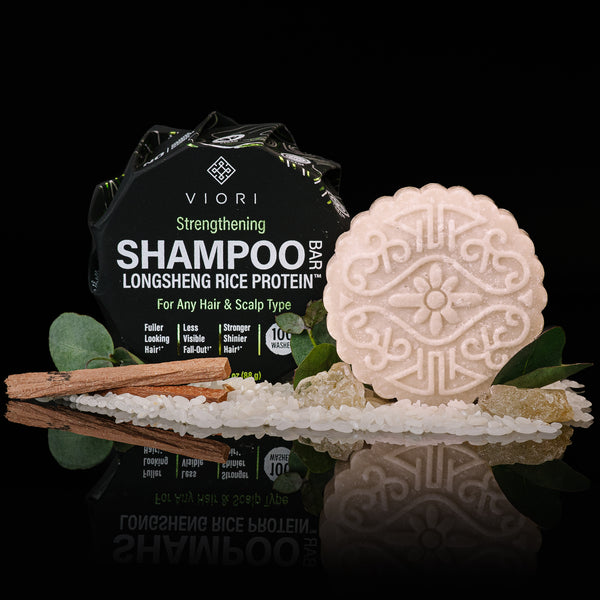
Viori uses a gentle cleanser called Sodium Cocoyl Isethionate (SCI) and formulates its bars to be pH balanced. From a technical standpoint, that’s a big part of why the hair feel is often described as clean without that rough, stripped sensation.
The Rarely Discussed Problem: “Micro-Dosing”
Here’s the concept I wish more people understood: liquid shampoo gives you a fairly consistent dose. A shampoo bar doesn’t. With a bar, your “dose” is controlled by friction, water, and time-so it changes constantly.
I call it the micro-dosing problem: the amount of cleanser released can fluctuate from wash to wash (and even from one section of your head to another).
What affects micro-dosing in real life?
- How long the bar touches your hair and scalp
- How wet your hair is when you start
- Water temperature (warm water softens and activates the bar faster)
- Whether you rub the bar directly on your head or lather in your hands
- Your hair density and length (more hair can “eat” more product)
- Your porosity (porous hair absorbs water and product quickly)
This is why one person says, “It’s too strong,” while another says, “It doesn’t clean enough.” They may be using the same bar, but they’re not getting the same dose.
Why Hair Can Feel Coated (Even When a Bar Isn’t Soap)
When someone tells me their hair feels coated after a shampoo bar, hard water is often part of the story-but not always. Another common culprit is something more subtle: deposition balance.
Hair (especially if it’s damaged or porous) tends to carry a negative charge. Many conditioning ingredients are positively charged, which helps them cling to hair and improve slip. That’s great when it’s controlled. But in bar formats, deposition can get inconsistent because the surface concentration of ingredients can spike (thanks again, micro-dosing), and friction can literally press product into the cuticle.
Viori includes a conditioning ingredient called Behentrimonium Methosulfate (BTMS). Despite the name, it isn’t the same thing as harsh cleansing sulfates. It’s widely used in haircare for its ability to boost slip and help hair feel smoother-especially important because shampooing creates friction, and friction is one of the fastest paths to tangles and breakage.
pH: The Quiet Reason Some Bars Create Frizz (and Faster Color Fade)
Most people don’t think about pH until something goes wrong. But pH affects how your cuticle behaves, which affects almost everything you see and feel day to day.
- Higher pH can lift the cuticle → more friction, frizz, tangling, and dullness.
- Hair-friendly pH supports a flatter cuticle → smoother feel and more shine.
This matters even more if your hair is color-treated. A lifted cuticle can allow color molecules to escape more easily, especially with less-permanent color services.
Viori emphasizes that its bars are pH balanced, because long-term hair quality often comes down to avoiding chronic cuticle stress-especially for color-treated hair, curls/coils, and high-porosity lengths.
Fermented Rice Water: Why “More” Isn’t Automatically Better
Rice water routines get a lot of attention online, and they can be helpful-but higher concentration isn’t always the win people think it is. Overdoing strong rice water too frequently can throw off the scalp/hair environment for some people.
Viori uses a lower concentration of fermented Longsheng rice water specifically because overly concentrated rice water used too often can disrupt hair and scalp pH balance. The goal is to support hair with rice-water-style benefits in a format designed for regular use.
Viori also formulates with supportive ingredients often associated with hair strength and shine, including hydrolyzed rice protein in a low concentration intended to be safe for frequent use, plus nutrients like Vitamin B8 (inositol) and Vitamin B5 (panthenol).
The Technique Shift That Makes Bars Work Better (Especially for Color)
If you want more consistent results, change the way you apply the bar. Bars invite friction, and friction is rough on the cuticle-especially if you’re rubbing the bar directly on your head.
WHAT CUSTOMERS ARE SAYING
Real reviews for Hidden Waterfall Barra de Champú
For color-treated hair in particular, Viori recommends a smarter method: build lather in your hands and apply with your fingers rather than scrubbing the bar on the scalp. It’s a small tweak that can make a noticeable difference in slip, tangling, and overall feel.
A simple, salon-style way to wash with a bar
- Thoroughly soak hair (water does half the work).
- Rub the bar between wet palms to create lather.
- Apply the lather to the scalp first; cleanse with fingertips.
- Let the suds rinse through the ends rather than aggressively scrubbing lengths.
- Follow with conditioner to restore slip and protection.
Picking the Right Viori Bar: Match Your Scalp First
When people choose hair products based only on hair length or curl pattern, they often end up disappointed. For shampoo, your scalp type is usually the better starting point.
- Oily scalp: Viori Citrus Yao is commonly recommended because citrus components (including citric acid in the scent composition) help break down excess oil more effectively.
- Dry scalp: Viori Terrace Garden, Hidden Waterfall, or Native Essence are often better matches for moisture support.
- Sensitive or fragrance-sensitive scalp: Viori Native Essence is the unscented option and is typically the gentlest choice.
- Oily scalp + dry ends: Many people do well using Citrus Yao shampoo on the scalp, then a more moisturizing Viori conditioner on mid-lengths and ends.
The Unsexy Secret: Storage Changes Performance
A bar that never dries between washes gets soft, melts faster, and releases product less predictably-micro-dosing gets worse, not better. Keeping your bar out of direct water and letting it dry fully helps it last longer and behave more consistently.
Viori’s bamboo holders are designed to help bars air out between washes. Because bamboo is untreated, it also needs practical placement: keep it away from direct spray and heavy steam so everything stays cleaner and drier.
What to Look For in a Truly Hair-Friendly Shampoo Bar
If you’re troubleshooting a bar-or trying to choose one that won’t leave you guessing-this checklist is the fastest way to assess whether it’s likely to perform well on real hair.
- Is it soap-based or a syndet bar?
- Is it formulated to be pH balanced for hair?
- Does it use a mild cleanser like SCI?
- Does it include controlled conditioning support for slip and detangling?
- Does it rinse cleanly on your hair in your water conditions?
- Do you get consistent results without having to over-rub or overuse product?
Bottom Line: Consistency Is the Real “Luxury” in a Shampoo Bar
The best shampoo bar isn’t the one with the loudest claims. It’s the one that behaves predictably: consistent cleansing, controlled conditioning, hair-friendly pH, and a formula that doesn’t force you into a constant cycle of buildup and stripping.
That’s why a system like Viori-with a gentle cleanser (SCI), pH-balanced formulation, and fermented Longsheng rice water used in a use-friendly concentration-tends to feel less like a gamble and more like a routine you can actually stick with.


