
After twenty years behind the chair, I've learned that the most beautiful-looking products aren't always the ones that deliver beautiful results. And nowhere is this more apparent than in today's shampoo bar market.
Let me share something most beauty articles won't tell you: there's a fascinating tension between creating Instagram-worthy shampoo bars and formulating products that actually improve your hair health. I call it the "performance-presentation paradox"-and understanding it might completely change how you choose your hair care.
The Chemistry They Don't Show in Those Pretty Photos
Shampoo bars aren't just solid versions of liquid shampoo. They operate on entirely different principles, and the concentration of ingredients in bar form requires serious scientific precision to get right.
Here's what's really happening when you wash your hair:
The Cuticle Opening Challenge
When water hits your hair, those overlapping cuticle scales naturally begin to lift-like shingles on a roof catching wind. A properly formulated shampoo bar needs to walk a delicate tightrope. It must:
- Maintain a pH between 3.5 and 6.5 (the optimal range for hair health)
- Create enough cleansing action to remove oil and buildup without stripping your scalp's natural protective barrier
- Rinse completely clean without leaving mineral deposits
- Avoid excessive alkalinity that damages the cuticle and causes long-term harm
Here's the problem: achieving certain trendy textures, vibrant colors, or intricate embossed patterns often requires additives that shift the pH or create residue issues. These problems won't show up in product photos, but they'll absolutely show up in your hair over weeks and months of use.
The difference between a bar that looks good and a bar that works well often comes down to this fundamental chemistry-chemistry that happens invisibly, at the molecular level.
The "Moisturizing" Myth That Keeps Circulating
One of the most common misconceptions about shampoo bars-especially aesthetically-marketed ones-is that they're inherently more "moisturizing" than liquid shampoos.
Let me be clear: this is scientifically misleading.
Shampoo, by definition, is designed to remove oil and buildup, not add moisture. When users report that certain bars feel more "moisturizing," what they're usually experiencing is one of three things:
NOT SURE WHICH PRODUCT IS RIGHT FOR YOU?
TAKE THE QUIZTakes 30 seconds · 134,000+ customers matched
1. Residue deposition - Waxy or fatty ingredients coating the hair shaft, creating a false sense of softness
2. Incomplete cleansing - Natural oils left behind (which sounds good but isn't ideal if you have scalp issues or fine hair)
3. Conditioning agents - Ingredients that technically shouldn't be in high concentrations in a cleansing product
True hair health comes from products that clean effectively while providing strengthening and protective benefits-without creating buildup or coating that masquerades as "moisture."
This is why formulations like Viori's are carefully balanced with rice protein and natural ingredients that genuinely strengthen hair structure without creating false slip from product buildup.
The Hard Water Problem No One Talks About
Here's something that rarely gets discussed in shampoo bar reviews: mineral interaction.
Solid bars interact with water minerals completely differently than liquid formulations. The surfactants in bars can bind with calcium and magnesium in hard water, creating:
- Soap scum buildup on your hair shaft
- Dulling of color-treated hair
- Progressive heaviness that mimics damaged hair texture
- Lather that gets worse over time
This is particularly problematic with bars containing saponified oils (true "soap" bars) versus syndet bars (synthetic detergent bars formulated specifically for hair). Most consumers don't know the difference, yet it dramatically affects how the product performs.
Professional insight: If you're using a shampoo bar and noticing your hair feels progressively heavier, more tangled, or duller, you're likely experiencing mineral buildup-not an "adjustment period."
A quick fix is an apple cider vinegar rinse (one part vinegar to four parts water) once weekly, but prevention through proper formulation is always the better solution.
The Application Method That Changes Everything
Watch any aesthetic product video on social media, and you'll see people rubbing solid bars directly onto their wet hair. It looks satisfying, creates great footage, but it's actually causing damage.
When you rub a solid bar directly on your hair-particularly if it's long, fine, or chemically treated-you're creating:
Cuticle abrasion - Physical friction that roughens the hair surface, like rubbing sandpaper on silk
Uneven product distribution - Some areas get over-cleansed while others barely get touched
Tangling and breakage - The drag of the solid bar catches and pulls hair, especially when wet and vulnerable
The professional technique-and what Viori correctly recommends-is creating lather between your palms first, then applying with your hands. This distributes cleansing agents evenly while minimizing physical stress on the hair shaft.
This technique becomes especially critical for color-treated hair. The friction of direct bar application physically opens the cuticle further, allowing color molecules to escape faster than they would from chemical factors alone. If you're spending money on color services, this application detail can make the difference between fade after three weeks versus six weeks.
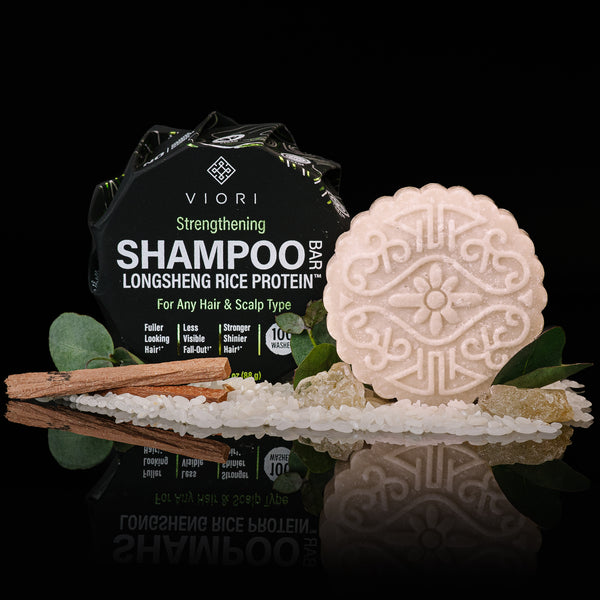
The Fermentation Factor: Real Science, Not Marketing Hype
While many bars rely on basic cleansing formulas with pretty additives, fermented ingredients offer a distinct biochemical advantage that deserves deeper explanation.
Fermentation isn't just a trendy buzzword-it's a process that fundamentally transforms ingredients at the molecular level.
What happens during fermentation:
Complex carbohydrates and proteins break down into smaller, more bioavailable compounds that your hair can actually absorb and use:
- Inositol (Vitamin B8) increases through fermentation, strengthening hair follicles and potentially slowing premature graying
- Panthenol (Vitamin B5) becomes enhanced, allowing it to penetrate the hair shaft for genuine internal hydration
- Amino acids become smaller protein fragments that can actually repair micro-damage in the hair's cortex (inner structure)
This is fundamentally different from simply adding rice extract or rice bran oil to a formula. The fermentation process creates beneficial compounds that don't naturally exist in high concentrations in raw ingredients.
Viori's use of fermented Longsheng rice water isn't just heritage storytelling-it's practical biochemistry that delivers measurable benefits. The Red Yao women's famously healthy hair isn't legend; it's the result of centuries of empirical evidence about what fermented rice water actually does.
The Preservation Issue Living in Your Shower
Here's something you've probably never considered: shampoo bars typically don't need synthetic preservatives because they're "self-preserving" through low water activity. But this creates unique challenges in the humid environment where they live-your shower.
What's actually happening:
- Constant water exposure begins breaking down the bar's surface integrity
- If bars don't dry properly between uses, bacterial colonization can occur
- Essential oils used for natural fragrance can oxidize over time, potentially changing pH and causing skin sensitization
Those wooden or bamboo bar holders aren't just aesthetic accessories-they're functional necessities for maintaining product integrity and hygiene. Proper airflow allows bars to dry completely between uses, dramatically extending their life and maintaining their formulation stability.
Leave your bar sitting in a puddle, and you're not just wasting product-you're potentially compromising its safety and effectiveness.
The Scalp Microbiome Connection
Here's an emerging area of research that rarely gets connected to shampoo bar discussions: the scalp microbiome-the complex ecosystem of bacteria, fungi, and other microorganisms living on your scalp.
Your scalp's natural pH (around 5.5) supports beneficial microbes while discouraging problematic ones. When you use a highly alkaline bar (pH above 7), you can:
- Disrupt this delicate balance
- Encourage overgrowth of Malassezia (the yeast associated with dandruff)
- Reduce populations of beneficial bacteria that protect against inflammation
This is why pH-balanced formulations aren't just marketing language-they're essential for long-term scalp health. Your scalp is skin, and like facial skin, it has an optimal pH range for healthy function.
Over time, using poorly formulated bars can lead to chronic scalp issues that seem unrelated to your shampoo choice-but the connection is direct.
When Good Ingredients Go Bad: The Protein Overload Problem
Many shampoo bars-especially those marketed as "strengthening"-pack their formulas with multiple protein sources: rice protein, wheat protein, silk protein, hydrolyzed keratin.
Protein is strengthening, yes. But too much creates a phenomenon I see regularly in my salon chair:
- Hair that feels stiff, straw-like, or brittle
- Increased breakage (counterintuitive but absolutely true)
- Loss of elasticity-hair snaps instead of stretching
- Dullness and lack of movement
Here's the professional reality: Hair needs a moisture-to-protein balance. High-porosity hair (damaged, chemically-treated, very porous) can tolerate more protein. Low-porosity hair (healthy, virgin, resistant to absorbing products) needs less protein and more hydration.
Using a protein-heavy bar on low-porosity hair is like adding more bricks to an already solid wall-you're creating rigidity, not strength.
Viori's formulation uses a controlled concentration of rice protein specifically calibrated to provide strengthening benefits without tipping into protein overload territory. The fermentation process also ensures the proteins are in smaller, more usable forms rather than sitting on the hair surface creating stiffness.
Color-Treated Hair: The Technical Reality
For my color-treated clients, shampoo bar selection becomes absolutely critical. Here's why:
Permanent color works by:
- An alkaline solution opening the cuticle layer
- Small color molecules entering the hair's cortex (inner structure)
- Oxidation making those molecules larger, essentially trapping them inside
Semi-permanent and demi-permanent color sits mainly in the cuticle layer, making it far more vulnerable to:
- Physical friction from bar application
- High pH cleansers that re-open the cuticle
- Strong surfactants that strip color molecules
This is why application method matters so much for color-treated hair. Creating lather in your palms first minimizes the physical disruption that accelerates color fade. It's a small technique change that can add weeks to your color vibrancy.
Additionally, formulation pH matters tremendously. Every wash with a high-pH product is essentially repeating the cuticle-opening step of the coloring process-but without adding new color. You're just opening the door for existing color to escape.
WHAT CUSTOMERS ARE SAYING
Real reviews for Hidden Waterfall Barra de Champú
The Temperature Variable That Affects Everything
Here's a technical factor that dramatically affects bar performance but rarely gets mentioned: water temperature.
Hot water:
- Makes bars dissolve faster, shortening product lifespan
- Opens the cuticle more (good for deep cleansing, harder on color)
- Can melt natural butters in the formula, affecting lather consistency
- Strips more natural oil from scalp
Cool or cold water:
- Preserves bar longevity significantly
- Seals the cuticle, adding natural shine
- May reduce lather perception (though it's still cleaning effectively)
- Better for color retention
- Less stripping on sensitive scalps
Professional technique: Shampoo with warm (not hot) water for comfortable cleansing, then do your final rinse with cool water. This seals the cuticle, locks in any treatment benefits, and adds significant shine. It works with any quality shampoo bar, but the better the formulation, the more dramatic the results.
The "Natural" Label That Means Almost Nothing
The term "natural" in shampoo bars is legally undefined in most countries and often strategically misleading.
Here's an uncomfortable truth: truly natural doesn't automatically mean effective or safe.
- Poison ivy is natural
- Natural ingredients can cause serious allergic reactions
- "Natural" preservatives are sometimes less effective, leading to contamination
- Natural doesn't address pH, formulation balance, or actual performance
What actually matters more than "natural" claims:
- Ingredient sourcing ethics-where and how ingredients are obtained
- Formulation pH-is it appropriate for hair and scalp health
- Clinical testing-are there actual studies supporting claims
- Sustainable practices-environmental and social responsibility
- Absence of known irritants, sensitizers, and endocrine disruptors
Viori's ingredients are natural or naturally-derived, but more importantly, they're formulated to work together at the correct pH, with proper cleansing and conditioning balance, and sourced through direct trade relationships with the Red Yao tribe. The "natural" aspect is a bonus-the formulation science is what makes them work.
The Complete Environmental Picture
Yes, bar shampoos eliminate plastic bottles, and that's significant. But the complete environmental analysis is more nuanced than "bar good, bottle bad."
Factors for a complete assessment:
Concentration efficiency: One quality bar typically replaces 2-3 bottles of liquid shampoo-but only if it works well enough that you're not going through bars quickly
Transportation weight: Bars require significantly less fuel to ship due to reduced weight and volume
Water usage: Some poorly-formulated bars require extensive rinsing to remove completely, negating some water savings
Actual longevity: Bars that don't perform well lead to more frequent replacement, more waste, and more resources used overall
Sourcing ethics: Where and how ingredients are obtained matters more than product format-sustainable sourcing of ingredients has enormous environmental impact
Viori's B-Corp certification and direct trade relationship with the Red Yao tribe represents a holistic approach to sustainability that goes far beyond simply eliminating plastic. It considers social equity, ingredient sourcing, community impact, and environmental responsibility as interconnected factors.
A bar packaged in recyclable cardboard but made with exploitatively-sourced ingredients isn't truly sustainable. Real environmental responsibility requires examining the entire supply chain and impact.


