
Shampoo bars are one of those haircare upgrades that can feel life-changing for one person and completely frustrating for the next. I’ve seen it happen countless times: one review raves about shine and softness, another complains about a “waxy” feel or flat roots. Both experiences can be real-because a shampoo bar isn’t just a product. It’s a system.
After 20 years as a stylist, I’ve learned that the most accurate way to “review” a shampoo bar isn’t by judging it after two washes. You have to look at the interaction between the cleanser, the conditioning/deposition ingredients, your water quality, your hair porosity, and how you apply it. Once you understand those variables, the confusing reviews start to make perfect sense.
First, a crucial distinction: not all shampoo bars behave the same
One of the biggest problems in the shampoo bar world is that people lump everything into one category. In reality, there are very different types of bars, and they don’t perform the same way on hair-especially across different water conditions.
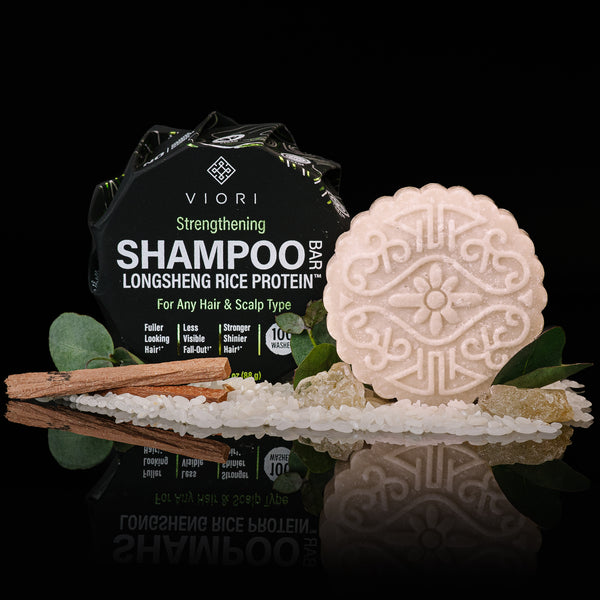
Viori’s shampoo bars are not lye-based soap bars (they contain no lye). Instead, they’re built like modern haircare: a solid format using a gentle cleansing system designed for hair and scalp.
NOT SURE WHICH PRODUCT IS RIGHT FOR YOU?
TAKE THE QUIZTakes 30 seconds · 134,000+ customers matched
The primary cleanser in Viori shampoo bars is Sodium Cocoyl Isethionate (SCI), a mild surfactant often called “baby foam” in formulating circles because it creates a creamy lather without the harsh, stripped feeling many people associate with older-school detergents.
The hidden variable that decides your results: deposition
If there’s one “review detail” I wish more people understood, it’s this: what you feel after rinsing is often less about what got removed and more about what got left behind.
Hair-especially damaged hair-can carry more negative charge. That matters because many conditioning ingredients are positively charged and are designed to bind to the hair surface. This process is called deposition, and it’s a major reason two people can use the same bar and walk away with totally different opinions.
Viori’s formula includes Behentrimonium Methosulfate, which is widely used for slip and manageability. Despite the word “methosulfate” in the name, it’s not the same thing as harsh cleansing sulfates (like SLS/SLES). In a hair formula, it functions as a conditioning agent that can help with:
- Improving detangling and combability
- Reducing friction (which means less mechanical wear on the cuticle)
- Smoothing the hair for a softer, shinier finish
Here’s the nuance: if your hair is fine and low-porosity, it may not need much deposited conditioning to feel good. If you apply too much-or rinse too quickly-your “review” can turn into, “It feels coated,” even though what’s happening is simply over-deposition for your hair type.
pH: the quiet hero most reviews never mention
When hair feels consistently frizzy, rough, or tangly, people blame moisture. Sometimes it is. But very often, it’s cuticle behavior-and cuticle behavior is heavily influenced by pH.
Hair and scalp generally do best in a mildly acidic range. Products that skew too alkaline can encourage the cuticle to lift, which leads to:
- More friction and tangling
- More frizz
- Dullness (because a raised cuticle scatters light)
- Greater risk of color fading over time
Viori specifically notes that its products are pH balanced, which is particularly important in bar format, where some formulas can otherwise run higher than ideal.
The most overlooked shampoo bar problem: friction
Let’s talk about something that almost never shows up in reviews, but I see it in real life all the time: mechanical damage.
When someone rubs a bar directly on their hair, they often create extra friction-especially at the crown and along the lengths. That friction can rough up the cuticle and contribute to tangling, breakage, and that “my hair feels worse after switching” complaint.
Viori’s guidance is the same advice I give in the salon: build lather in your hands first, then apply with your fingertips like you would a liquid shampoo. This approach is also a smarter move for color-treated hair because it reduces unnecessary abrasion.
The rice water conversation: the dose matters
Rice-water hair rituals are trendy, but the real conversation isn’t “rice water: yes or no.” The real conversation is how much and how often.
Viori points out an important detail: using rice water at very high concentrations too frequently can disrupt the hair and scalp’s pH balance. Their products use a lower concentration of fermented Longsheng rice water alongside other nutrient-rich ingredients to support similar benefits in a way that’s designed to stay comfortable for regular use.
Viori bars also include ingredients commonly associated with strength and conditioning support, such as hydrolyzed rice protein, plus nutrients connected with fermented rice systems like Vitamin B8 (inositol) and Vitamin B5 (panthenol).
One more professional note: if hair ever feels “stiff” with protein-containing routines, that doesn’t always mean the product is wrong. It can mean the routine needs more balance-often by improving conditioning on the ends, adjusting frequency, or changing application technique.
Why scent can be functional (not just personal preference)
Most people choose a bar scent the way they choose a candle. Totally understandable-but with some hair systems, the “scent family” can align with performance goals.
Viori notes that Citrus Yao contains citric acid, which helps break down oil and is why it’s often recommended for normal-to-oily scalps. Meanwhile, Viori’s more moisturizing options tend to be a better match for normal-to-dry scalps, and Native Essence is their unscented option for anyone who prefers fragrance-free routines.
Conditioner bars don’t foam-and that’s not a flaw
If you’ve ever read a conditioner bar review that says, “It didn’t lather so it didn’t work,” that’s simply an expectation mismatch. Conditioner isn’t meant to cleanse, so it isn’t meant to foam.
WHAT CUSTOMERS ARE SAYING
Real reviews for Hidden Waterfall Barra de Champú
Viori explains that conditioner bars create more of a paste-like slip. The goal is to coat and smooth the hair, not to bubble up. In practice, that means:
- Apply mainly from mid-lengths to ends
- Let it sit a few minutes before rinsing
- Rinse thoroughly (especially if your hair is fine)
How to review a shampoo bar like a pro (give it time)
A fair review takes longer than most people want to give it. Viori recommends using their products for 2-3 months before giving up, and that timeline tracks with what I see professionally-because hair needs time to settle into a new routine.
If you want a review that actually means something, track these five signals instead of judging the first wash:
- Day-2 scalp feel: Does oil rebound faster, slower, or stay the same?
- Wet detangling: Is there more slip and less snagging?
- End texture: Do the ends feel smoother or rougher?
- Breakage vs. shedding: Breakage looks like shorter fragments; shedding is full-length strands.
- Wash interval: Can you comfortably go longer between washes?
My troubleshooting checklist (what I’d tell you in my chair)
If someone tells me, “I tried a shampoo bar and it didn’t work,” I don’t assume the bar is the problem. I assume we need to adjust technique and match the bar to the scalp pattern.
Here are the changes that most often flip the experience:
- Palm-lather first instead of rubbing the bar directly on your hair
- Two quick shampoos rather than one long scrub (less friction, cleaner scalp)
- Condition mid-lengths to ends (keep heavier conditioning off the roots unless your scalp is truly dry)
- Rinse longer than you think-bars can feel “heavy” when they’re simply under-rinsed
- Finish cooler on the rinse to help the cuticle lie flatter
Final thoughts: the best “shampoo bar review” is really a system review
When you read shampoo bar reviews, don’t just look for “love it” or “hate it.” Look for context: water type, scalp oil timeline, porosity, technique, and how long they tested. Those details are what separate a useful review from noise.
If you’re choosing within Viori, keep it simple: match the bar to your scalp needs, use a low-friction technique, and give your hair enough time to show you what it really thinks.


