
After two decades working behind the salon chair, I've learned that the most powerful innovations in hair care often come from questioning the fundamentals. Today, I want to share something that's revolutionized not just my professional practice, but my entire understanding of how we should care for our hair: the science behind solid shampoo bars.
This isn't about jumping on a trendy bandwagon. This is about understanding a fundamental truth that the beauty industry has overlooked for decades-waterless formulations preserve ingredient potency in ways traditional liquid shampoos simply cannot match.
The Hidden Problem With Your Liquid Shampoo
Let me start with something that might surprise you: that bottle of shampoo in your shower is 70-80% water.
Think about that for a moment. You're paying premium prices to ship water from manufacturing facilities to your bathroom, when you already have perfectly good water coming out of your tap.
But the real issue goes far deeper than economics. Here's what I call the "preservation paradox."
All that water creates the perfect breeding ground for bacteria and fungi. To prevent your shampoo from turning into a science experiment, manufacturers must load it with synthetic preservatives-often the very ingredients causing your scalp irritation, stripping your natural oils, and ultimately undermining the health they're supposed to protect.
The technical brilliance of solid shampoo bars lies in what chemists call "self-preservation through low water activity." Without significant moisture content, microorganisms can't survive. No bacterial growth means no need for harsh preservatives.
This isn't just about removing bad ingredients. It's about what that absence allows-a formulation that can focus entirely on hair health rather than product preservation.
NOT SURE WHICH PRODUCT IS RIGHT FOR YOU?
TAKE THE QUIZTakes 30 seconds · 134,000+ customers matched
Ancient Wisdom Meets Modern Chemistry: The Rice Water Secret
For over 2,000 years, the Red Yao women of Longsheng, China, have used fermented rice water to maintain healthy, extraordinarily long hair well into old age. Viori has built their entire philosophy around this tradition, but there's fascinating science happening beneath the surface that rarely gets discussed.
Here's what most beauty blogs won't tell you: fermentation doesn't just preserve rice water-it fundamentally transforms its molecular structure.
The Vitamin Transformation You Can't See
When rice undergoes controlled fermentation, a remarkable chemical cascade occurs. Two particular compounds emerge that change everything:
Inositol (Vitamin B8) concentration increases dramatically during fermentation. This isn't just another vitamin-it's a molecule small enough to penetrate deep into your hair shaft and strengthen the internal protein structure. Clinical studies show that inositol actually remains in hair even after rinsing, providing benefits that last.
Here's the crucial part: in a solid bar format, inositol maintains far higher stability than in liquid formulations, where pH fluctuations and water-based degradation gradually reduce its effectiveness. Every time you use a bar, you're getting the full potency of these fermentation-derived nutrients.
Panthenol (Vitamin B5) emerges as a fermentation byproduct. This provitamin binds to your hair follicles and creates a protective film. In the low-moisture environment of a solid bar, panthenol maintains its molecular integrity far longer than when suspended in liquid.
The Protein Size Advantage
Fermented rice water also contains hydrolyzed rice protein-but here's where size matters in unexpected ways.
The molecular weight of these proteins determines whether they coat your hair externally or actually penetrate the cortex for genuine strengthening. In solid bar formulations, the absence of water prevents protein molecules from clustering together-a common problem in liquid shampoos where proteins aggregate and lose their small-molecule advantage.
The result? Real penetration and strengthening rather than just superficial coating.
pH Stability: The Advantage You Never Knew You Needed
Your hair's optimal pH sits between 4.5-5.5-slightly acidic. Maintaining this pH isn't just good practice; it's essential for cuticle health, color retention, and preventing damage.
Here's where solid bars demonstrate technical superiority that becomes obvious once you understand the chemistry:
Liquid shampoos experience constant pH drift. Even in sealed bottles, water activity allows gradual chemical reactions that shift pH over time-usually toward alkalinity. This is why that bottle of shampoo that worked beautifully when you first opened it often feels completely different a few months later. You're not imagining it; the formula is literally changing.
Solid bars maintain pH stability. The concentrated, low-moisture format creates what chemists call a "locked formulation." When you activate the bar with water during use, you're essentially creating a fresh solution each time at the intended pH.
Think of it this way: it's like having a brand new bottle of perfectly pH-balanced shampoo with every single wash.
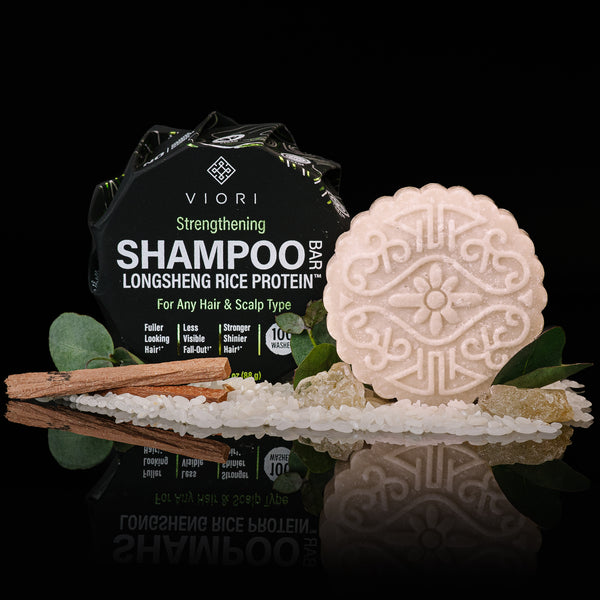
Viori's formulations maintain pH between 3.5-6.5, matching your hair's natural acidity. The technical achievement here is maintaining this precise range in a solid format that must dissolve predictably-not too slowly (or it won't clean effectively) and not too quickly (which wastes product).
Surfactant Science: Why "Sulfate-Free" Actually Matters
Most discussions about sulfate-free products stop at "no harsh chemicals." Let me take you deeper into the chemistry.
The primary cleanser in quality solid shampoo bars is Sodium Cocoyl Isethionate (SCI)-a gentle surfactant with a molecular structure that makes all the difference.
The Molecular Gentleness Factor
SCI belongs to a class called "anionic surfactants," but unlike Sodium Lauryl Sulfate (SLS) or Sodium Laureth Sulfate (SLES), its molecular structure includes a longer carbon chain with a different polar group attachment. This creates three critical advantages:
- Lower concentration needed: SCI forms cleansing micelles (tiny spheres that trap dirt and oil) at lower concentrations, meaning you need less to achieve the same cleaning action. Less surfactant contact means less potential for irritation and stripping.
- Larger micelle size: Counterintuitively, this is beneficial. Larger micelles cannot penetrate as deeply into the hair cuticle, preventing the protein loss and moisture depletion associated with aggressive sulfates.
- pH-neutral performance: SCI maintains stability across a broader pH range, allowing formulators to create truly balanced products without compromise.
The Bar Format Amplifies These Benefits
In liquid shampoos, even mild surfactants like SCI require stabilizers and thickening agents to maintain suspension. These additional ingredients often interfere with the surfactant's optimal performance.
In solid bar format, SCI exists in its pure, concentrated form-activated only when you want it, at full effectiveness, without the interference of suspension agents.
Understanding "Sulfate-Free": The Behentrimonium Methosulfate Truth
Here's where technical knowledge separates marketing hype from chemical reality.
Many people see "Behentrimonium Methosulfate" (BTMS) on ingredient lists and panic, assuming anything with "sulfate" in the name must be harsh. Let me clarify the chemistry once and for all:
Methosulfate ≠ Sulfate in the way sulfates are problematic.
BTMS is a quaternary ammonium compound. Yes, it contains a sulfate ester group chemically, but the preceding methyl chain and the cationic (positively charged) nature of the molecule completely changes its behavior:
- It's attracted to damaged hair, which carries a slight negative charge. This means BTMS actively seeks out damaged areas and deposits conditioning agents exactly where you need them most.
- The methyl group creates what chemists call "steric hindrance"-think of it as a molecular bumper that prevents the aggressive stripping action associated with SLS and SLES.
- It's derived from the colza plant (rapeseed), making it naturally sourced despite the chemical-sounding name.
The technical achievement of using BTMS in solid bars: it acts as both an emulsifier (helping incompatible ingredients blend) and a conditioning agent, reducing the need for multiple additives. This creates what formulators call an "elegant" formulation-maximum benefit from minimum ingredients.
Fatty Alcohols: The Misunderstood Moisturizers
Let's clear up another common misconception that keeps people from understanding their products.
Cetyl Alcohol and Stearic Acid are not the drying alcohols you fear.
These are long-chain fatty alcohols (16+ carbons) that behave completely differently from short-chain alcohols like ethanol or isopropyl alcohol. Instead of drying, they:
- Act as emollients, softening and smoothing hair cuticles
- Create a light moisture barrier without heavy buildup
- Derive from vegetable sources (often coconut or palm oil)
In solid bar formulations, these fatty alcohols serve dual purposes:
- Structural integrity: They're binding agents that hold the bar together
- Conditioning delivery: As the bar dissolves during use, these alcohols deposit evenly on hair, providing slip that reduces friction and breakage
The beauty of this design: ingredients serving multiple functions without requiring the additional processing aids or stabilizers that liquid formulations demand.
The Scalp Microbiome Revolution
Here's a perspective that's virtually unexplored in mainstream beauty content but absolutely crucial for understanding long-term hair health:
Your scalp hosts a complex microbiome-beneficial bacteria and fungi that maintain skin pH, prevent pathogen colonization, and even influence hair growth cycles. Recent research suggests that overcomplicated product formulations disrupt this delicate ecosystem.
Why Fewer Ingredients Mean Better Results
Solid bars, by their very nature, contain fewer ingredients than liquid counterparts. Viori's bars typically contain 15-20 ingredients versus the 30-40+ found in comparable liquid shampoos.
This isn't just about "clean beauty" buzzwords. It's about microbiome preservation.
WHAT CUSTOMERS ARE SAYING
Real reviews for Hidden Waterfall Barra de Champú
Each ingredient your scalp encounters is a potential disruptor to microbial balance. Preservatives, stabilizers, pH adjusters, and synthetic fragrances can all shift microbiome composition. By eliminating water (and thus the need for preservatives), solid bars dramatically reduce this disruptive burden.
Here's what this means for you: You might experience an adjustment period as your scalp microbiome rebalances-often misinterpreted as "the product doesn't work for me." In reality, this transition period (typically 2-6 weeks) represents microbiome restoration. After this rebalancing, hair health often improves dramatically.
The Science of Scent: More Than Just Fragrance
Most people assume scents are purely aesthetic choices. But here's something rarely discussed in the beauty industry: fragrance compounds have measurable effects on hair protein structure and sebum production.
Citrus Scents and Oil Control
Viori's Citrus Yao bars, recommended for oily hair types, contain citric acid and citrus-derived terpenes. This isn't marketing-it's biochemistry in action:
- Citric acid lowers the effective pH of the solution when the bar activates. This slightly more acidic environment causes hair cuticles to lay flatter and signals sebaceous glands to reduce oil production over time.
- Limonene and other citrus terpenes have mild astringent properties. They don't strip oil aggressively, but they do help break down sebum more effectively than surfactants alone.
- The molecular size of citrus compounds allows them to penetrate slightly into hair shaft spaces, where they subtly modify how hair retains moisture-making it feel less greasy without causing dryness.
Floral and Woody Scents for Dry Hair
Conversely, scents like those in Viori's Terrace Garden (florals) or Hidden Waterfall (amber, musk, sandalwood) contain larger, more hydrophobic molecules that:
- Deposit on the hair surface, creating microscopic moisture barriers
- Have lower volatility, meaning they evaporate more slowly and provide longer-lasting conditioning effects
- Contain natural esters that mimic sebum components, supplementing natural oils without causing buildup
The professional takeaway: Scent selection in quality bars isn't arbitrary-it's an additional delivery mechanism for hair-type-specific benefits.
The Hard Water Challenge: Why Your Water Matters
Here's a technical issue that frustrates many new bar users but is rarely explained properly: water hardness dramatically affects bar shampoo performance.
Understanding the Chemistry
Hard water contains dissolved calcium and magnesium ions. When these encounter the surfactants in your bar, they can form insoluble complexes (soap scum). This is why some users report:
- Difficulty creating lather
- Waxy residue feeling after washing
- Dull hair appearance despite regular washing
The solution is built into quality formulations: Premium bars include chelating agents (like citric acid or sodium lactate) that bind calcium and magnesium ions before they can react with surfactants.
Viori's inclusion of sodium lactate (derived from fermented corn or beet sugars) serves this technical purpose-it's not just a preservative, it's a water-conditioning agent that helps the bar perform optimally even in challenging water conditions.
Professional Tips for Hard Water Areas
If you have hard water, you might need to:
- Allow a slightly longer adjustment period (3-4 weeks instead of 2-3)
- Use a final rinse with diluted apple cider vinegar for additional chelating action
- Wash with slightly warmer water to enhance bar dissolution
- Do a clarifying wash every 2-3 weeks to remove any mineral buildup
The Protein-Moisture Balance: Natural Equilibrium
One of the most common mistakes I see in my salon is clients disrupting their hair's protein-moisture balance. Hair needs both structural protein and hydrating moisture in proper proportion-too much protein makes hair brittle and prone to breakage; too much moisture makes it mushy, weak, and limp.
How Solid Bars Naturally Maintain Balance
Liquid shampoos tend to lean heavily in one direction:
- Clarifying/volumizing formulas = high protein, low moisture (leads to dryness over time)
- Moisturizing/smoothing formulas = low protein, high moisture (leads to limpness and reduced body)
Solid bars with rice-based formulations offer simultaneous protein and moisture delivery because:
- Hydrolyzed rice protein provides structural reinforcement through small molecules that penetrate the hair shaft
- Rice bran oil delivers fatty acids for moisture through larger molecules that coat the surface


