
After two decades as a hair stylist, I've heard every scalp complaint imaginable. But here's what most people don't realize: your scalp isn't just skin with hair growing from it. It's one of the most neurologically complex areas of your entire body-and understanding this changes everything about treating scalp sensitivity.
Your Scalp Has More Nerve Endings Than Your Fingertips
When I finally dove deep into dermatological research, this fact stopped me cold: the human scalp contains approximately 200-300 nerve endings per square centimeter. That's more than most other areas of your body.
This isn't just interesting trivia-it fundamentally explains why scalp sensitivity is so complicated and why simply switching to a "gentle" shampoo often isn't enough.
The Three-Layered Problem Most People Miss
When clients sit in my chair complaining of scalp sensitivity, they're rarely dealing with a single issue. Through years of observation and consultation with dermatologists, I've identified what I call the "sensitivity triad":
1. Neurogenic Inflammation (The Hidden Culprit)
This is the angle almost nobody discusses, yet it's often the root cause of persistent sensitivity.
Your scalp contains neuropeptides-chemical messengers released by nerve endings that can trigger inflammation completely independent of external irritants. Substance P, CGRP (calcitonin gene-related peptide), and neurokinin A flood the area when scalp nerves become hypersensitive.
What does this mean for you?
Your scalp can feel burning, tingling, or painful even when there's no visible irritation and even when you're using the gentlest products. The nerves themselves have become reactive.
NOT SURE WHICH PRODUCT IS RIGHT FOR YOU?
TAKE THE QUIZTakes 30 seconds · 134,000+ customers matched
This explains why you might react to a shampoo one week but tolerate it fine the next-or why your scalp sensitivity gets worse during stressful periods. Your nervous system's state directly influences scalp reactivity.
It's not all in your head, but some of it actually is happening through your head-specifically, through those hypersensitive nerve networks.
2. Barrier Disruption (The Obvious Issue)
This is what most sensitive scalp shampoos target: the damaged moisture barrier. But here's what the marketing doesn't tell you-the scalp barrier functions very differently than facial skin.
Your scalp has:
- Higher sebum production (protective but also potentially problematic)
- Thicker stratum corneum in most areas
- Constant interaction with hair follicles, which create microchannels through the barrier
- Exposure to occlusive conditions (hair trapping heat and moisture)
A product designed for sensitive facial skin won't necessarily work for your sensitive scalp because the chemistry of restoration needs to account for these unique structural differences.
3. Microbiome Dysbiosis (The Emerging Science)
The scalp microbiome is finally getting attention in research, but most shampoo formulations are years behind the science.
Your scalp hosts a complex ecosystem of bacteria, fungi, and other microorganisms-primarily Cutibacterium and Malassezia species. These aren't invaders; they're supposed to be there.
When this delicate balance shifts-often from overly aggressive cleansing-your scalp becomes vulnerable to:
- Inflammatory responses from opportunistic organisms
- Reduced production of protective lipids
- Compromised pH regulation
- Increased sensitivity to previously tolerated ingredients
Think of your scalp microbiome like a garden. You don't want to torch it with harsh chemicals and expect healthy growth. You want to cultivate the right balance.
What Actually Works: The Technical Breakdown
After testing countless formulations on clients with genuinely sensitive scalps-people who've been to dermatologists, tried prescription shampoos, and still struggle-here's what I've learned about effective solutions:
The pH Precision Principle
Your scalp's optimal pH sits between 4.5-5.5, slightly more acidic than many people realize.
But here's the nuance that matters: immediately after shampooing, you want a pH closer to 4.5-5.0 to:
- Rapidly close the hair cuticle (reducing mechanical irritation from swollen hair shafts)
- Discourage overgrowth of pH-sensitive problem organisms
- Support the acid mantle's quick recovery
Many "gentle" shampoos actually sit at pH 6.0-7.0. They might not irritate during use, but they leave your scalp vulnerable during the critical post-wash recovery period.
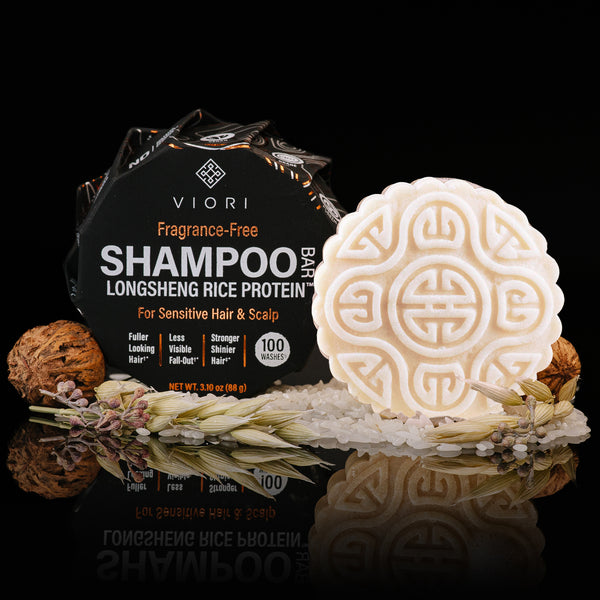
Products formulated with fermented rice water naturally tend toward this beneficial pH range. The fermentation process creates organic acids that buffer the formula into that sweet spot. As a bonus, the resulting inositol and panthenol (B vitamins concentrated during fermentation) actually support nerve health in scalp tissue.
This is one reason I've become such a proponent of Viori's rice-water bars-the biochemistry is working with your scalp's natural state, not against it.
The Cleansing Agent Paradox
Here's something I explain to every client with scalp sensitivity: the problem usually isn't cleansing too much-it's cleansing wrong.
Sensitive scalps still produce sebum, shed skin cells, and accumulate environmental debris. Under-cleansing leads to:
- Lipid oxidation (rancid oils that are highly inflammatory)
- Malassezia overgrowth (these yeasts feed on sebum)
- Buildup that physically irritates nerve endings
But traditional sulfates (SLS, SLES, ALS) create inflammation through a different mechanism: they're so efficient at removing lipids that they strip away the intercellular cement holding your barrier together.
It's like power-washing a brick wall-you'll get it clean, but you might dismantle it in the process.
The solution lies in surfactants that:
- Clean effectively at lower concentrations
- Have larger molecular structures (less penetration into the barrier)
- Don't denature the structural proteins of your scalp
Sodium Cocoyl Isethionate represents this new generation of cleansing agents. It's derived from coconut oil but structured differently than traditional soap-it foams beautifully and removes sebum and dirt, but its molecular architecture makes it far less disruptive to the lipid barrier.
This is the primary cleansing agent in Viori bars, and I've watched it work wonders on clients who thought they'd exhausted all options.
The Conditioning Controversy
Here's a controversial take from my chair: many people with sensitive scalps are making things worse with their conditioner, not their shampoo.
Traditional conditioning agents-especially silicones (ingredients ending in "-cone": dimethicone, cyclomethicone, amodimethicone)-create temporary smoothness by coating the hair shaft. On sensitive scalps, this creates problems:
- Buildup that requires more aggressive cleansing later
- Occlusion of follicular openings
- Potential for contact sensitivity with repeated exposure
- A cycle of dependency (hair feels terrible without them)
For genuinely sensitive scalps, I recommend conditioning systems that work with your hair's natural structure rather than just coating it.
Behentrimonium Methosulfate (BTMS) deserves special mention. Despite its intimidating name, it's not a sulfate in the irritating sense. It's a conditioning agent derived from rapeseed oil that:
- Carries a positive charge (attracts to negatively-charged damaged hair)
- Provides slip without heavy buildup
- Actually helps close the cuticle
- Has documented low irritation potential
Combined with natural emollients like cocoa butter and shea butter, plus plant-derived proteins such as hydrolyzed rice protein, you get conditioning that strengthens rather than just smooths-crucial for sensitive scalps where follicle health directly impacts nerve reactivity.
The Application Technique Nobody Teaches
Even with perfect formulation, application technique matters enormously for sensitive scalps. Here's my professional protocol:
For Shampoo:
- Wet thoroughly with lukewarm water - Hot water increases nerve reactivity and barrier permeability
- Create lather in hands first with bar shampoos-never scrub the bar directly on your scalp
- Apply to scalp with pads of fingers, not nails - You're cleansing, not scratching
- Use gentle circular motions for 60-90 seconds - Long enough for surfactants to work, not so long you're creating friction irritation
- Rinse with cool-to-lukewarm water until it runs completely clear - Residue is inflammatory
For Conditioner:
- Focus on mid-length to ends primarily-your scalp needs much less than you think
- If applying to scalp, use a lighter touch than with shampoo - Press and smooth rather than massage
- Leave for 2-3 minutes to allow conditioning agents to bind
- Rinse thoroughly with cool water - This closes the cuticle and reduces post-wash sensitivity
The Critical Post-Wash Window:
- Don't wrap in a towel turban immediately - This traps heat and moisture, prolonging cuticle swelling
- Gently squeeze excess water, then allow air exposure for 2-3 minutes
- Pat dry rather than rubbing - Friction on swollen hair cuticles creates mechanical irritation that sensitive scalp nerves amplify
These techniques might seem fussy, but I've seen them transform outcomes for chronically sensitive scalps when paired with the right products.
The Ingredient Nuances That Actually Matter
What to Seek:
Fermented Rice Water - Beyond the trendy appeal, fermentation increases bioavailability of:
- Inositol (supports nerve cell membrane health and reduces neurogenic inflammation)
- Ferulic acid (antioxidant that reduces lipid peroxidation in sebum)
- Amino acids in more absorbable forms
The traditional fermentation methods used by communities like the Red Yao women of Longsheng weren't just cultural practice-they were sophisticated biochemistry that creates exactly what sensitive scalps need.
Panthenol (Pro-Vitamin B5) - Rarely discussed benefit: it's a humectant that hydrates without occlusion, plus it has documented anti-inflammatory effects on keratinocytes (the primary cell type in your scalp's outer layer).
Plant Proteins - Hydrolyzed rice protein and bamboo extract don't just strengthen hair; they form a breathable protective film over the scalp that buffers against irritants without clogging.
Fatty Alcohols (Cetyl, Stearyl) - Despite the scary name, these plant-derived waxes provide structure to bar formulations while also supporting barrier repair. They're non-drying and actually help formulas spread more gently.
What to Avoid:
Fragrance (Listed as Parfum/Fragrance) - Even "natural" fragrances contain multiple compounds, many of which are known sensitizers. For truly reactive scalps, unscented is essential.
Essential Oils in High Concentrations - Controversial opinion: tea tree, peppermint, and eucalyptus oils are in almost every "sensitive scalp" formula, yet they're among the most common contact sensitizers. That tingle isn't therapeutic-it's mild irritation.
WHAT CUSTOMERS ARE SAYING
Real reviews for Native Essence Barra de Champú Sin Perfume
Methylisothiazolinone and Methylchloroisothiazolinone - These preservatives are in many "natural" shampoos and are documented contact allergens with a sensitization rate of up to 10% in some populations.
Cocamidopropyl Betaine - Often labeled "derived from coconut," this surfactant booster has increasing rates of allergic contact dermatitis. It's in almost every "gentle" liquid shampoo, which is ironic.
The Lifestyle Factors Nobody Connects
Your shampoo choice matters, but sensitive scalp is rarely just about the product. Through years of client observation, I've identified these often-overlooked contributors:
Water Quality
Hard water (high mineral content) interferes with:
- Surfactant effectiveness (requiring more product and more scrubbing)
- Rinse-ability (leaving irritating residue)
- Hair cuticle closure (minerals roughen the surface)
If you have hard water, consider a shower filter or a final rinse with filtered water. I've seen this single change transform results for clients who thought they'd "tried everything."
Washing Frequency
The "wash less" movement helps many people, but for sensitive, oily scalps, it can backfire spectacularly.
Oxidized sebum-old oil that's been exposed to air-contains inflammatory compounds including aldehydes and peroxides that directly irritate nerve endings.
For these individuals, more frequent, gentler washing beats infrequent harsh washing every single time.
Stress and Sleep
This brings us back to neurogenic inflammation. Chronic stress and poor sleep increase systemic inflammation and nerve hypersensitivity.
I can literally predict which clients are going through difficult periods by increased scalp reactivity-they haven't changed products; their nervous system has changed.
This is why even the best shampoo isn't a complete solution if other aspects of health aren't addressed.
Dietary Triggers
While controversial, I've observed patterns worth noting:
- High-sugar diets correlate with increased Malassezia activity (it feeds on sebum produced in response to insulin spikes)
- Inflammatory dietary patterns (high omega-6, low omega-3 ratios) may increase neurogenic inflammation
- Biotin supplementation helps some clients significantly-the mechanism might be supporting the structural proteins in the scalp barrier
Why Bar Shampoo Might Be Your Sensitive Scalp Solution
This deserves its own section because it's counterintuitive to many people raised on liquid shampoo. But bar formulations offer several technical advantages for sensitive scalps:
Concentration Control: Bars contain less water, meaning:


