
People talk about “conditioning shampoo” like it’s a magical unicorn: a cleanser that leaves hair as soft and glossy as a conditioner. In real life, that result is absolutely possible-but it isn’t magic. It’s chemistry, fiber science, and (surprisingly) how you use the product in the shower.
When someone searches for “natural visions conditioning shampoo,” I read that as a goal: clean roots, comfortable scalp, and lengths that don’t feel squeaky, tangled, or frizzy. The secret is understanding that shampoo and conditioner aren’t opposites-they’re two ends of a spectrum. The best routines live in the middle.
NOT SURE WHICH PRODUCT IS RIGHT FOR YOU?
TAKE THE QUIZTakes 30 seconds · 134,000+ customers matched
Shampoo vs. conditioner isn’t a binary-it’s a continuum
Most of the internet frames haircare like this: shampoo cleans, conditioner softens. But hair doesn’t experience products in neat categories. It experiences friction, electrical charge, cuticle movement, and pH. A truly conditioning shampoo aims to balance all of those at once.
In other words, a “conditioning shampoo” isn’t just a gentle cleanser. It’s a system designed to remove oil and buildup while leaving the hair fiber smooth enough to detangle easily and dry with less frizz.
The hidden enemy: friction (especially on wet hair)
Here’s a professional truth that doesn’t get enough airtime: a lot of hair damage happens in the shower, not from one “bad” ingredient, but from repeated mechanical stress. Wet hair is more elastic, more vulnerable, and more likely to snag-especially if the cuticle is lifted during cleansing.
A conditioning shampoo concept works best when it helps reduce that “wet hair Velcro” feeling. That means fewer tangles, easier comb-through, and less breakage from detangling.
- Less friction while washing helps prevent micro-damage that adds up over time.
- Smoother cuticles reflect light better, so hair looks shinier (not just “coated”).
- Lower snagging means you don’t lose as much hair to the brush or comb.
What makes a shampoo feel “conditioning”? It’s charge and deposition
The biggest misconception I see is that conditioning is just “adding oils.” Oils can be lovely, but they don’t always bind evenly to hair-especially once you rinse. What creates that unmistakable silky slip is often about electrostatics: hair (especially damaged hair) tends to carry more negative charge, and conditioning agents that are positively charged are drawn to it.
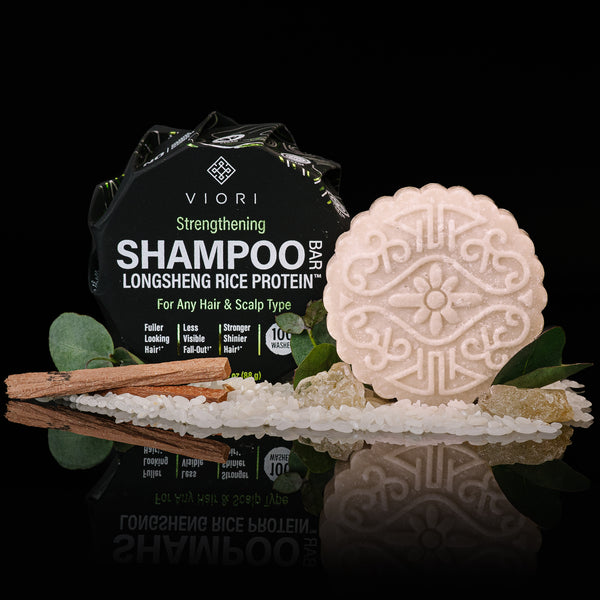
Viori leans into this approach by pairing a mild cleanser with ingredients known for conditioning support. For cleansing, Viori uses Sodium Cocoyl Isethionate (SCI), a gentle surfactant often praised for being effective without feeling harsh. For conditioning feel and slip, Viori uses Behentrimonium Methosulfate (BTMS), which is commonly accepted in haircare as a sulfate-free conditioning ingredient despite its name. The key is that it behaves very differently than cleansing sulfates and is used to increase slip and support a smoother hair surface.
Why pH belongs in the conversation
If you’ve ever used something that left your hair feeling rough even after conditioning, pH can be part of the story. Viori notes that hair products should generally land between pH 3.5-6.5, and that overly alkaline products can dry out and damage hair over time. A pH-respecting cleanser supports a smoother cuticle and a better overall feel wash after wash.
Fermented rice water: the nuance most people miss
Rice water gets discussed online as an old beauty ritual-and it is-but there’s a technical side that’s easy to overlook. Concentration and frequency matter. Viori specifically uses a lower concentration of fermented Longsheng rice water because high concentrations used too often can disrupt the hair and scalp’s pH.
Fermentation is also significant because it increases levels of nutrients commonly highlighted in performance discussions, including inositol (Vitamin B8) and panthenol (Vitamin B5), alongside supportive ingredients such as hydrolyzed rice protein. The goal is a balanced, repeatable benefit-something you can use consistently without turning your routine into a chemistry experiment.
The bar format changes the rules: “frictional dosing” is real
This is one of the most overlooked parts of conditioning shampoo conversations: with a liquid shampoo, you control dosage by how much you squeeze out. With a bar, many people accidentally control dosage by how much they rub-and that introduces friction, which can lift the cuticle and increase tangling.
Viori’s guidance here is spot on, especially for anyone with color-treated or easily tangled hair: build lather in your palms and work it through with your hands, rather than rubbing the bar directly on the hair and scalp. This gives you the cleansing benefits with less mechanical stress.
WHAT CUSTOMERS ARE SAYING
Real reviews for Hidden Waterfall Barra de Champú
Why different Viori scents can behave differently on the hair
Even when the base formula is similar, performance can shift depending on what’s included in the scent profile. Viori points out that Citrus Yao contains citric acid, which helps break down oil effectively-one reason it’s often recommended for normal-to-oily scalps. For dry or sensitive scalps, many people prefer the softer approach of Terrace Garden or the fragrance-free simplicity of Native Essence. Hidden Waterfall tends to sit comfortably in the middle for a lot of hair types.
- Citrus Yao: best suited for normal-to-oily scalps; supports oil control.
- Terrace Garden: often preferred for normal-to-dry scalps; moisturizing feel.
- Hidden Waterfall: a flexible option for many hair types, especially normal.
- Native Essence: unscented and typically the gentlest choice for fragrance sensitivity.
A stylist-approved routine for that “clean but conditioned” finish
If your goal is a conditioning shampoo result-clean scalp, soft lengths-your technique should match your formula. Here’s a practical, high-success routine using Viori.
- Start with the scalp. Cleanse where oil is produced. Let the suds rinse through the lengths rather than aggressively scrubbing the ends.
- Use low-friction application. Lather the shampoo in your hands first, then apply with your fingers to minimize cuticle stress.
- Condition like you mean it. Focus conditioner from mid-lengths to ends and give it time-letting it sit for a few minutes can noticeably reduce frizz and improve slip.
- Rinse thoroughly. A good rinse is what makes hair feel light, not coated.
How long until you can judge results?
Some people feel an immediate difference after one wash-especially in softness and detangling. But hair and scalp changes can also be gradual. Viori recommends giving the routine 2-3 months before deciding it’s “not working,” because consistency is what reveals the bigger improvements: less breakage, calmer frizz patterns, and better overall manageability.
The bottom line
A “natural” conditioning shampoo isn’t just about avoiding harsh ingredients. It’s about building a routine that respects the physics of hair: gentle cleansing, smart conditioning deposition, pH awareness, and low-friction technique. When those pieces line up, you get the result everyone wants-hair that feels clean at the roots and conditioned through the lengths, without the tradeoffs.


