
Every Sunday morning, millions of Americans sit down with their newspapers or smartphones, scissors in hand, ready to clip coupons for shampoo and conditioner. Browse any drugstore app, and you'll find an endless parade of promotions-$2 off here, buy-one-get-one there, "limited time" savings that somehow never actually end.
After two decades as a professional hairstylist, I've developed what some might call a controversial opinion about these ubiquitous discounts: that coupon you're so excited about might actually be costing you more than money-it could be compromising your hair health.
Let me explain what I've learned about the hidden economics of hair care coupons, and why the best deal might be no deal at all.
The Shampoo Bottle That's Never Full Price
Here's something that always puzzled me early in my career: Why are certain shampoo brands constantly on sale?
Not occasionally. Not seasonally. Constantly.
The answer, I discovered, has nothing to do with generosity and everything to do with a sophisticated business model that's been perfected over decades. These brands don't just use coupons to attract customers-the coupon is the business model.
Let me share some numbers that changed how I think about drugstore hair care:
The actual ingredient cost in a $6 bottle of conventional shampoo typically ranges from $0.40 to $0.85. That includes everything: water (the primary ingredient), cleansing agents, thickeners, preservatives, and fragrance.
When you use a $2 coupon on that bottle, the manufacturer isn't losing money. They're still operating at a 300-600% markup over formulation costs.
So why the perpetual promotions? Because the coupon isn't about the single bottle you're buying today-it's about training you into a cycle of consumption that's incredibly profitable over time.
NOT SURE WHICH PRODUCT IS RIGHT FOR YOU?
TAKE THE QUIZTakes 30 seconds · 134,000+ customers matched
The Cycle You Don't See (But Your Scalp Definitely Feels)
Let me get technical for a moment, because this is where the real story lives.
Your scalp naturally produces sebum-an oil that protects and conditions your hair shaft. Historically, before modern detergents became common in the 1930s, people washed their hair weekly or even monthly and maintained beautiful, healthy hair.
Most conventional shampoos use powerful sulfates-sodium lauryl sulfate, sodium laureth sulfate, or ammonium laureth sulfate-that strip this natural oil extremely effectively. So effectively, in fact, that your scalp goes into overdrive trying to replace what's been removed.
This creates what I call the "shampoo treadmill":
- Aggressive shampoo strips your natural oils completely
- Your scalp overproduces oil to compensate
- Your hair feels greasy faster
- You wash more frequently
- Your scalp produces even more oil
- Repeat
And here's where the coupon strategy becomes brilliant from a business perspective-and problematic from a hair health perspective.
By keeping these high-stripping formulations perpetually affordable through coupons, brands ensure you'll wash daily instead of every three or four days. That's three to four times more product consumed annually-from the same customer.
Let me show you the real math:
Premium, Gentle Approach (like Viori's shampoo bars):
- Cost per bar: $12-15
- Washes per bar: 60+
- Recommended frequency: Every 3-4 days
- Annual bars needed: 3-4
- Annual cost: $36-60
- Your scalp's oil production: Balanced and healthy
Coupon-Dependent Conventional Brand:
- "Regular" price: $6 (rarely paid)
- With perpetual coupons: $3-4
- Washes per bottle: 30-40
- Actual frequency: Daily (due to oil rebound)
- Annual bottles needed: 9-12
- Annual cost: $27-48
- Your scalp's oil production: Disrupted and overactive
The annual costs look similar, right? But look at what you're actually getting for that money:
With the coupon approach, you're locked into daily washing, your hair's natural protective oils are constantly stripped, and your scalp is in a perpetual state of imbalance.
With a quality formulation, your scalp rebalances, you wash less frequently, and your hair actually improves over time.
The Hidden Costs Your Coupon Doesn't Account For
In my practice, I've tracked clients who use different product strategies. The differences aren't just about hair quality-they're about total cost of ownership.
Clients using coupon-based products typically need:
- Deep conditioning treatments every 2-3 weeks
- Clarifying shampoos monthly (to remove buildup from silicones)
- More styling products (to manage damage and frizz)
- More frequent trims (due to increased breakage)
When I calculate the true annual cost including all these corrective products and services, the "savings" from coupons evaporate.
Meanwhile, clients who invest in premium formulations like Viori's often reduce their overall product needs. Their hair becomes healthier, requires less intervention, and grows longer between necessary trims.
One client told me something that stuck with me: "I thought I was saving money with coupons. Then I added up what I spent on leave-in conditioners, serums, and damage treatments. I was spending more and my hair looked worse."
The Formulation Compromises Behind Every Coupon
Let me pull back the curtain on what's actually in that bottle you're buying.
To support constant discounting while maintaining profitability, manufacturers make specific formulation choices:
They prioritize:
- Thick, dramatic lather (achieved through harsh sulfates and foam boosters)
- Immediate smoothness (from silicones that coat hair but prevent moisture penetration)
- Long shelf life (heavy preservative systems that let products sit in warehouses for years)
- Strong synthetic fragrance (to mask the smell of cheap base ingredients)
They sacrifice:
- Gentle, conditioning cleansers (like sodium cocoyl isethionate) that cost 3-8x more than harsh sulfates
- Nutrient-rich botanical extracts that degrade faster
- Natural preservation systems that are more complex and expensive
- pH optimization that requires additional ingredients and quality control
Here's the thing: when a brand's entire business model depends on selling high volumes at perpetually discounted prices, these premium formulation choices become economically impossible.
The coupon necessitates the compromise.
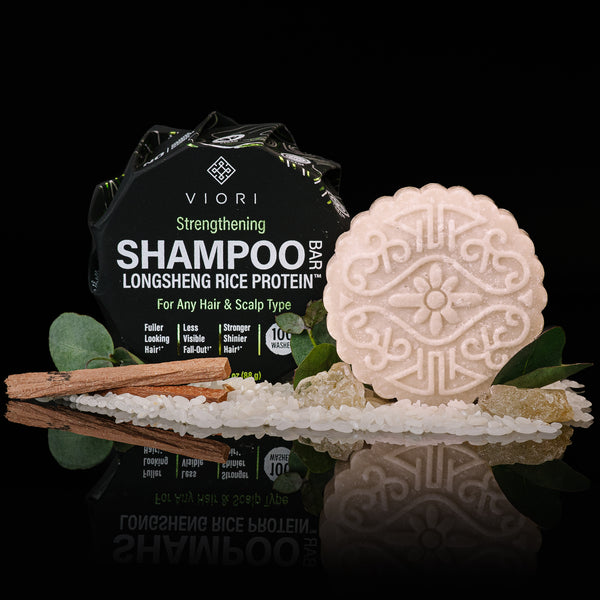
Viori takes a completely different approach. Their shampoo and conditioner bars are formulated with Longsheng rice water, pH-balanced to match your hair's natural acidity (4.5-5.5), and free from sulfates, parabens, and synthetic fragrances. This formulation is possible because they're not built around a coupon-dependent model. They charge what the product actually costs to make well.
How Coupons Train You to Value the Wrong Things
Here's a psychological pattern I've observed over twenty years:
Clients who primarily buy hair care based on coupons switch brands constantly-whatever's on sale that week becomes their product. I call this "product promiscuity," and it's terrible for hair health.
Why? Because hair improvement requires consistency over six to twelve weeks minimum.
The hair you see today began its growth cycle months ago. Real changes-whether you're repairing damage, training your scalp to produce less oil, or supporting growth-take time to become visible.
When you switch products every week chasing deals, you never give any system long enough to work. You're optimizing for the wrong metric: price per transaction instead of results over time.
Behavioral economists have documented what they call the "coupon high"-the dopamine release from feeling you've gotten a deal. This psychological reward can override rational decision-making.
I've watched clients accumulate bathroom cabinets full of half-used bottles, each purchased because it was "such a good deal," each abandoned when the next deal came along. The savings were an illusion. They spent more and got worse results.
The Professional Protocol: How to Actually Improve Your Hair
When clients come to me wanting to transform their hair, here's what I recommend:
Step 1: Break the Coupon Cycle
Choose one high-quality, gentle formulation and commit to it for 90 days. No switching. No "trying" whatever's on sale. Consistency is essential.
Step 2: Train Your Scalp
Gradually extend the time between washes:
- Weeks 1-2: If you wash daily, go to every other day. Yes, you'll feel oily. Push through.
- Weeks 3-4: Extend another day if possible. You'll notice your hair looks better slightly longer.
- Weeks 5-8: Stabilize at every 3-4 days for most people. Oil production has recalibrated.
- Week 8+: Maintain this healthier cycle. Your hair looks better, grows faster, and needs less product.
This process requires a gentle, pH-balanced formulation. Harsh sulfates will sabotage your progress. This is exactly why I recommend Viori to clients serious about scalp training-the rice water formula and balanced pH support your scalp's adjustment rather than fighting against it.
Step 3: Measure Results, Not Transactions
Track actual outcomes:
- How does your hair feel after 4 weeks? 8 weeks? 12 weeks?
- How long can you go between washes comfortably?
- Do you need fewer styling products?
- Is your hair growing longer without breakage?
These metrics matter infinitely more than whether you saved $2 on a bottle.
The Environmental Cost of "Saving" Money
Here's an angle almost no one discusses: the environmental impact of consumption patterns created by coupon dependency.
If coupons encourage three to four times more frequent washing (which my analysis suggests they do), consider the aggregate impact:
A typical household using coupon-based products might consume:
- 24-36 plastic bottles annually
- 520-730 gallons of water just for hair washing
- 12-18 pounds of synthetic chemicals entering water systems
Compare this to a household using gentle formulations that enable less frequent washing:
- 9-12 bottles or bars annually
- 180-240 gallons of water
- 4-6 pounds of largely natural ingredients
Your $2 coupon created an environmental debt no one's calculating.
This is particularly relevant with plastic-free alternatives. Viori's shampoo and conditioner bars eliminate plastic packaging entirely. A single bar replaces approximately three 10-ounce liquid bottles.
WHAT CUSTOMERS ARE SAYING
Real reviews for Hidden Waterfall Barra de Champú
They're also concentrated-no water weight being shipped across the country, which dramatically reduces carbon emissions from transportation.
The "savings" from coupons look very different when you account for what you're spending environmentally.
What I Wish Every Client Understood
After twenty years of working with hair-cutting it, coloring it, treating it, and watching what makes it truly healthy-here's what I want you to know:
The relationship between price-per-bottle and cost-per-result is inverse to what most people assume.
I've tracked client outcomes over 18+ months comparing different approaches:
Coupon users (frequent brand switching):
- Average hair quality improvement: 15-20%
- Time to visible improvement: 8-12 weeks
- Still seeing results after 6 months: ~30%
- Additional treatments needed: Frequent
Consistent premium users:
- Average hair quality improvement: 60-75%
- Time to visible improvement: 4-6 weeks
- Still seeing results after 6 months: ~80%
- Additional treatments needed: Minimal to none
The clients who achieve transformative results-hair that grows longer, looks healthier, and requires less styling intervention-almost exclusively invest in quality formulations and use them consistently.
And when I calculate their true annual costs including styling products and corrective treatments, they often spend less overall than the coupon chasers.
The Viori Difference: An Economic Model Aligned With Hair Health
What drew me to recommend Viori to clients wasn't just their formulation (though the Longsheng rice water and pH-balanced approach is excellent). It was their business model.
Viori doesn't operate on perpetual promotions. They charge a fair, consistent price that reflects their formulation quality. They offer subscriptions that match healthy usage patterns-delivering every two to three months when you actually need to restock, not encouraging overconsumption.
This economic model aligns with hair health rather than working against it:
- No incentive to formulate products that create dependency
- Profitability comes from customer retention based on results, not transaction volume
- Bar format reduces packaging waste and shipping emissions
- B-Corp certification ensures verified social and environmental responsibility
When a brand's success depends on you getting real results and staying satisfied long-term, they formulate differently. They invest in ingredients that actually improve hair health, not just create the temporary sensation of cleanliness.
The Question I Ask Every Client
The next time you're about to clip a shampoo coupon, I want you to ask yourself one question:
Am I saving money, or am I subscribing to a system designed to keep me dependent on frequent purchases?
Because here's what I've learned: the most expensive hair care isn't the product with the highest price tag. It's the one that keeps you locked in a cycle of:
- Daily washing you don't actually need
- Damage that requires corrective treatments
- Constant repurchasing
- Hair that never quite reaches its potential
True value isn't measured in dollars saved per transaction. It's measured in how


