
Let's be honest. We've all fallen down the rabbit hole of a beautiful DIY tutorial. The promise is alluring: a perfect, natural shampoo bar made with your own two hands. It feels like the ultimate act of self-care and sustainability. But after twenty years as a hairstylist, I've seen the fallout from these well-intentioned kitchen experiments. The truth is, what you're often making isn't a shampoo bar at all-and it could be throwing your scalp's health into chaos.
NOT SURE WHICH PRODUCT IS RIGHT FOR YOU?
TAKE THE QUIZTakes 30 seconds · 134,000+ customers matched
The Big Lie: Soap is NOT Shampoo
This is the most critical point that gets glossed over. Most DIY recipes guide you to create a soap bar using oils and lye. Soap has a high, alkaline pH (around 9-10). Your scalp, however, thrives in a slightly acidic environment (pH 4.5-5.5). This acidic "mantle" is a protective barrier.
Using a high-pH soap on your scalp is like stripping the sealant off wood. It disrupts everything, leading to a cascade of problems:
- Dryness & Irritation: That tight, itchy feeling after "washing."
- The Frizz Bomb: The alkaline environment forces your hair cuticle to lift and stay open, creating permanent frizz and dullness.
- Long-Term Damage: A compromised scalp barrier is more vulnerable to issues.
A real shampoo bar is a feat of cosmetic engineering, formulated to cleanse effectively within a hair-safe, acidic pH range. Guessing this balance in your kitchen is nearly impossible.
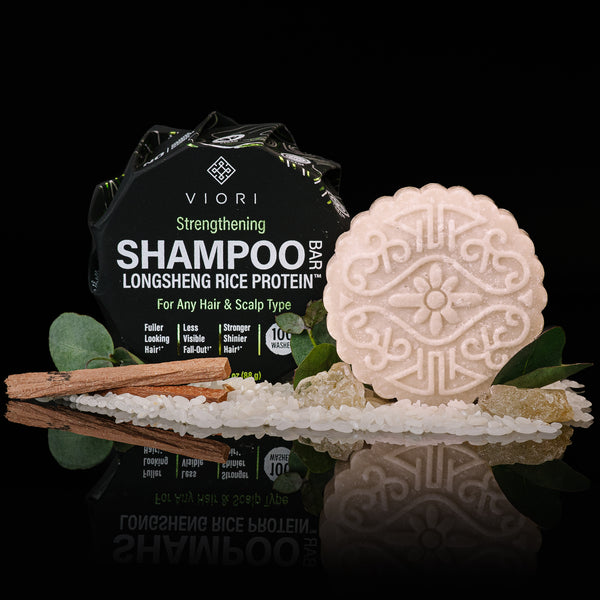
Why "Natural" Ingredients Aren't Enough
It's not just about tossing in "good" oils and butters. Professional formulation is about synergy-how ingredients interact to create something greater than the sum of their parts.
At home, you might combine olive oil, coconut oil, and essential oils. In a lab, chemists select ingredients for specific, complementary functions: surfactants that cleanse without stripping, emollients that seal in moisture, and proteins that are small enough to actually repair the hair shaft. Your homemade blend likely can't achieve this. Instead, you often get:
- A bar that crumbles or turns into a slimy mess.
- Ingredients that go rancid because the formula isn't stabilized.
- A one-note product that either leaves a waxy residue or fails to cleanse.
The Fermentation Fallacy
You've seen the hype about fermented rice water for hair growth. A DIY version might involve soaking rice for a day. True, beneficial fermentation is a precise, days-long biochemical process. It transforms raw ingredients, boosting levels of nutrients like inositol and panthenol that are proven to strengthen hair. Capturing and stabilizing these active compounds in a solid bar is complex science, not simple soaking.
The Invisible Essentials You Can't Skip
Those pretty online tutorials quietly ignore the boring-but-critical pillars of product safety.
- Preservation: Add any water or aloe vera? You've created a potential petri dish for mold and bacteria. Proper bars use safe, effective preservative systems or are engineered to be self-preserving.
- Consistent Sourcing: Is your shea butter from a reputable, ethical supplier this month? What about next? Potency and purity vary wildly.
- Real-World Testing: A professional formula is tested for stability in heat and humidity and tried on diverse hair types long before it reaches a customer. Your homemade bar's first test is on your own head-a risky gamble.
So, Should You Ever DIY?
If you're crafting for the joy of it and have extremely resilient hair, proceed with immense caution and deep research. Understand you're likely making a soap, not a shampoo.
WHAT CUSTOMERS ARE SAYING
Real reviews for Hidden Waterfall Barra de Champú
But if you're drawn to shampoo bars for their true benefits-dramatically less plastic waste, concentrated formulas that last for months, and genuinely healthier hair-then your goal isn't a craft project. Your goal is a scientifically sound product.
Seek out brands that prioritize transparent, pH-balanced formulas and can explain the *why* behind their ingredients. Your hair is a complex, living part of you. It deserves intelligent care, not just a hopeful experiment.


