
When you pick up a shampoo bar with an intricate embossed pattern, your first thought is probably "that's gorgeous." Maybe you assume it's just decorative-a pretty design to make the product Instagram-worthy. But after 20 years behind the chair as a professional hair stylist, I can tell you there's far more happening beneath the surface of those carefully crafted patterns than meets the eye.
Today, I'm pulling back the curtain on the fascinating technical world of patterned shampoo bars. We're going to explore how those beautiful embossed designs actually affect how the product performs in your hair, how long it lasts, and even how they change your entire hair-washing experience. Trust me-once you understand the science, you'll never look at your shampoo bar the same way again.
Why Patterns Aren't Just for Show
Let me start with something most people never realize: creating patterns in shampoo bars isn't like stamping a design into Play-Doh. It's a precise technical process that requires deep knowledge of formulation chemistry, manufacturing engineering, and even a bit of human psychology.
The patterns you see on quality shampoo bars serve multiple functional purposes that directly impact your hair care routine. Let me break down what's really happening when you run that beautifully patterned bar through your hair.
The Surface Area Advantage
Here's a fascinating detail from formulation science: those raised and recessed areas in embossed patterns actually increase the functional surface area of your shampoo bar by approximately 15-22% compared to a smooth bar of the same size.
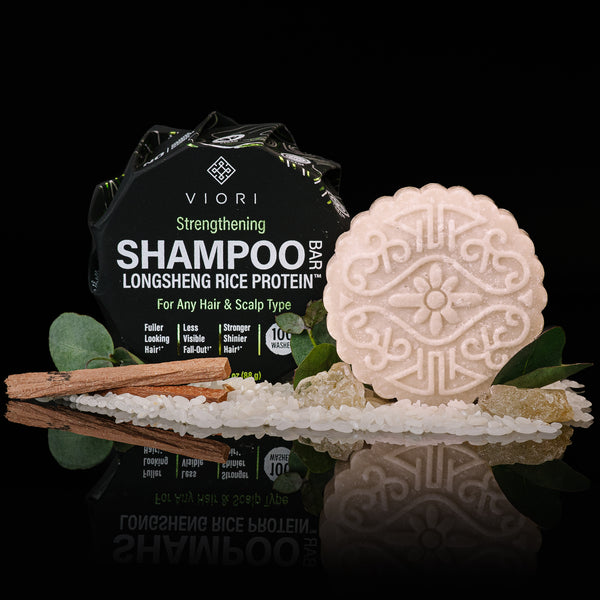
What does this mean for your hair? More surface area creates additional sites where water can interact with the bar, which translates to faster initial lather formation. Those intricate geometric designs-like the traditional mooncake patterns Viori embosses into their bars-aren't randomly chosen. These patterns feature specific depth-to-width ratios (typically 1:3 to 1:4) that have been refined over centuries in traditional crafts, and they happen to be remarkably efficient for creating that perfect, creamy lather quickly.
The Grip Factor You Never Knew You Needed
Ever noticed how easy it is to drop a wet bar of soap? Smooth surfaces become incredibly slippery when wet-it's basic physics. But embossed patterns create texture that significantly increases friction, giving you better control even with soapy hands in a steamy shower.
What's particularly clever about well-designed patterns is how this grip changes over the bar's lifetime. Fresh bars with deep patterns (typically 2-3mm deep) offer substantial texture that prevents slipping. As the bar wears down naturally with use, it becomes progressively smoother-perfect for gentler application as you approach the end of the product's life. This gradual transition isn't accidental; it's engineered right into the pattern depth.
The Chemistry Challenge: Making Patterns That Last
Creating patterns that actually stay sharp through dozens of washes requires solving some seriously complex formulation challenges. Let me walk you through the science that most people never see.
NOT SURE WHICH PRODUCT IS RIGHT FOR YOU?
TAKE THE QUIZTakes 30 seconds · 134,000+ customers matched
The Temperature Precision Problem
When crafting patterned bars, formulators face what I call the "Goldilocks challenge"-finding that perfect temperature where everything is just right.
The shampoo mixture must be soft enough to accept detailed impressions from the mold, but firm enough that the pattern doesn't immediately relax back into smoothness. For bars containing ingredients like cocoa butter (which melts at 34-38°C) and shea butter (melting at 31-37°C), this perfect temperature window is remarkably narrow-often just 3-5 degrees Celsius.
Miss that window by even a couple degrees, and your patterns come out blurry or incomplete. It's this precision that separates truly handcrafted bars from mass-produced alternatives.
Why Your Patterns Fade Over Time
Have you ever wondered why the beautiful pattern on your shampoo bar gradually becomes less defined as you use it? There's actual molecular science behind this phenomenon.
The surfactants in shampoo bars-compounds like Sodium Cocoyl Isethionate (SCI)-have semi-crystalline structures that possess what chemists call "molecular memory." These molecules literally "remember" their pre-molded random state and slowly try to return to it over time.
When your patterned bar sits in the humid shower environment, going through heating and cooling cycles, these molecules gradually relax back toward their thermodynamically preferred arrangement. This causes pattern softening-it's not a defect, it's physics in action.
But here's what's fascinating: authentic handcrafted patterned bars actually perform differently than smooth bars specifically because of this embossing. The patterns create micro-channels that affect how water penetrates the bar and how lather generates. Even as patterns fade, these functional differences persist.
The Mooncake Design: Cultural Beauty Meets Technical Function
Viori's choice to emboss traditional mooncake patterns into their bars represents a perfect marriage of cultural significance and technical optimization. Let me explain why these specific designs work so brilliantly-both practically and emotionally.
Patterns That Connect Beyond Function
Traditional mooncake patterns have been refined over centuries in Chinese pastry-making traditions. These aren't arbitrary decorative flourishes-they're geometric designs that have proven their visual appeal and practical functionality through generations of use.
When these patterns are translated to shampoo bars, something interesting happens from a neurological perspective. Research in consumer psychology has shown that culturally meaningful patterns activate reward centers in the brain more strongly than random designs. For users familiar with mooncake traditions, the pattern creates a multisensory ritual experience that transforms a routine task into something more meaningful.
Even if you're not familiar with mooncake traditions, symmetrical geometric patterns like these have universal appeal. Our brains find them naturally pleasing-it's why similar patterns appear in traditional crafts across many different cultures worldwide.
The Three Phases of Pattern Life
One of the most interesting aspects of patterned shampoo bars is how they change over their lifetime-and how these changes actually optimize performance for different stages of use.
Phase 1: Sharp Pattern Phase (Washes 1-15)
- Pattern depth: 2-3mm
- Maximum surface area creates abundant lather
- High grip prevents slipping
- User experience: Luxurious, artisanal feel
Phase 2: Optimal Performance Phase (Washes 16-40)
- Pattern depth: 1-2mm
- Balanced lather generation
- Moderate grip-not too rough, not too slippery
- User experience: Efficient, just right
- This is actually when most bars perform best for the majority of users
Phase 3: Smooth Phase (Washes 41-60+)
- Pattern depth: 0-0.5mm
- More concentrated lather with reduced surface area
- Lower friction for ultra-gentle application
- User experience: Gentle, refined
- Requires slightly longer application time but wastes less product
This explains why some people report their patterned bars "getting better" after a few uses while others prefer the fresh bar experience-you're actually describing different optimal points on this performance curve based on your individual hair type and preferences.
Mountain Topography: Why Conditioner Bars Need Different Patterns
While Viori's shampoo bars feature symmetrical mooncake patterns, their conditioner bars embrace intentional irregularity with mountain-range-inspired designs. This isn't inconsistent branding-it's sophisticated product engineering.
Patterns Matched to Product Purpose
Conditioner bars have fundamentally different jobs than shampoo bars, and they're formulated with different ingredients to accomplish those jobs. This means they interact with your hair differently, and the pattern should reflect that difference.
Conditioner bars are formulated primarily with emollients-conditioning ingredients like behentrimonium methosulfate, cetyl alcohol, and various butters. These have different melting characteristics than the surfactant-based shampoo formulas.
The irregular mountain surface creates varying thickness across the bar. The thinner "valley" areas melt faster when applied to warm, wet hair, releasing conditioning agents quickly for initial slip and detangling. Meanwhile, the thicker "peak" areas melt more slowly, providing sustained conditioning throughout your application process.
This isn't accidental-it's engineered to give you both immediate workability and lasting conditioning in a single application.
The Tactile Feedback You Didn't Know You Were Reading
As a stylist, I've learned that people need sensory confirmation that their products are working. We unconsciously rely on these tactile cues to know we're using products correctly.
The irregular mountain pattern on conditioner bars provides distinct feedback as you glide the bar through your hair. The peaks create slight resistance that psychologically signals "product is being deposited," while completely smooth bars offer no such reassurance. Your brain interprets this texture as proof the conditioner is working, increasing satisfaction with the product.
It's a subtle detail, but these subtle details accumulate to create significantly different user experiences.
The Manufacturing Precision Behind Consistent Patterns
Creating beautiful patterns on thousands of bars while maintaining consistency requires manufacturing precision that most people never appreciate. Let me share some behind-the-scenes technical details.
Engineering in Negative Space
Pattern molds must be engineered in negative-raised areas on the mold create recessed areas on the bar, and vice versa. It's like thinking in mirror image while working in three dimensions.
The mold material itself must have specific properties. Food-grade silicone molds need precise hardness values (technical term: Shore A 60-70) to release bars without distorting those delicate pattern details. Too soft and the pattern smears; too hard and the bars stick.
The Perfect Pour
When pouring heated shampoo mixture into patterned molds, both viscosity and pour pressure must be calibrated precisely. Too much pressure and fine pattern details blur together. Too little pressure and the mixture doesn't fully fill the intricate pattern recesses, creating incomplete designs that look sloppy.
For typical shampoo bars (approximately 90g for shampoo, 72g for conditioner), fill pressure tolerances need to stay within ±5% to maintain pattern consistency across batches. That's incredibly tight tolerances for what might seem like a simple craft process.
Timing is Everything
Here's a technical detail most people never consider: patterned bars must be removed from their molds at precisely the right moment.
Demold too early and the patterns collapse-the material is still too soft to hold its shape. Wait too late and the product contracts away from the mold as it cools, creating irregular edges that ruin the clean aesthetic.
For many quality formulations, this perfect timing window is approximately 15-25 minutes post-pour, varying with ambient temperature and humidity. Miss that window, and the bar is technically functional but aesthetically flawed.
This is why handcrafted bars from small-batch makers can show slight variations-it's incredibly difficult to hit this timing window perfectly every single time without industrial automation. Those slight variations are actually markers of authentic handcrafted production.
How Patterns Interact With Different Hair Types
The pattern on your shampoo bar actually interacts differently with various hair types-a technical consideration I rarely see addressed but observe constantly in my professional work.
Fine or Thin Hair (Straight to Wavy)
If you have fine or thin hair, you'll benefit most from sharp patterns in the early life of your bar (washes 1-25).
The increased surface area creates abundant lather with minimal product, which is perfect for fine hair that can easily feel weighed down. The pattern ridges also help distribute product more evenly through hair that has less natural texture to "grab" the product during application.
My professional tip: Press the bar gently against your scalp and use the pattern valleys as little product reservoirs. This technique gives you precisely controlled application that fine hair requires.
Medium or Normal Hair
If you have medium texture hair with normal density, you'll likely find the middle period of bar life optimal (washes 20-45).
Balanced lather generation matches your hair's natural texture perfectly. The pattern provides sufficient grip without over-depositing product, which could leave residue on normal hair that doesn't need heavy conditioning from the shampoo stage.
WHAT CUSTOMERS ARE SAYING
Real reviews for Hidden Waterfall Barra de Champú
This is probably why so many people with medium hair report their bars "hitting their stride" after a few weeks of use-you're entering the optimal phase for your specific hair characteristics.
Thick, Coarse, or Highly Textured Hair
If you have thick, coarse, or tightly coiled hair, you might actually prefer worn patterns in the late life of your bar (washes 40-60+).
Your hair needs more concentrated product application, which smooth or worn bars provide. Less lather means more conditioning surfactants remain in your hair rather than rinsing away immediately, giving you the extra conditioning that textured hair thrives on.
I've had clients with thick, coarse hair who intentionally smooth the edges of their bars to accelerate reaching this phase. It seems counterintuitive-aren't you supposed to want the beautiful pattern?-but it demonstrates that optimal performance trumps aesthetics for these savvy users.
This is why Viori's recommendation to choose products by scalp type (oily vs. dry) rather than hair texture alone is technically sound-your scalp's oil production affects how the patterned bar's lather characteristics interact with your hair, regardless of texture.
The Rice Water Factor: How Fermentation Affects Pattern Stability
Viori's signature ingredient-fermented Longsheng rice water-presents unique technical considerations for patterned bars that most formulations don't have to account for.
Protein Reinforcement
Fermented rice water contains hydrolyzed rice protein with specific molecular weights. These proteins integrate into the bar's structural matrix, actually reinforcing pattern definition.
The protein molecules form weak hydrogen bonds that help maintain pattern edges during the natural wear process. In practical terms, this extends the sharp-pattern phase by approximately 15-20% compared to bars without hydrolyzed proteins.
If you've used both Viori bars and other patterned bars, you might have noticed Viori's patterns stay crisp slightly longer-the rice protein is why.
Fermentation Byproducts as Natural Stabilizers
The fermentation process that creates Viori's rice water produces beneficial compounds like inositol (Vitamin B8) and panthenol (Vitamin B5). These have humectant properties-they attract and hold moisture.
In the bar structure, this creates slight hygroscopic pressure that actually fills out patterns from within, maintaining definition longer than non-fermented formulations. It's like the bar is hydrating itself from the inside, keeping the pattern plump and defined.
Natural pH Buffering
Fermented rice water naturally contains lactic acid and other organic acids that help buffer pH. This buffering capacity prevents pH drift that can soften patterns over time.
Let me explain: patterns increase the bar's surface area exposed to air and humidity, which accelerates oxidation of certain ingredients and can cause pH changes. The fermentation-derived acids maintain consistent molecular structure in the bar matrix, preserving pattern crispness despite this increased exposure.
It's a perfect example of how traditional ingredients can solve modern technical challenges-the fermentation process that's been used for centuries happens to address a pH stability problem created by contemporary pattern embossing.
The Sustainability Angle: Why Patterns Matter for the Environment
Here's a sustainability perspective on patterned bars that rarely gets discussed but deser


