
Let me share something that might completely change how you shop for bar soap: most of those premium "natural" bars flooding the market? They're not technically soap at all. And after two decades as a professional stylist, I can tell you why that's actually a good thing.
I've watched clients spend hundreds of dollars chasing the perfect hair and body bar, confused by conflicting claims and fancy marketing. So let's cut through the noise and talk about what's really happening when you lather up with that artisan bar in your shower.
The Chemistry Secret Hiding in Plain Sight
Here's what nobody mentions when you're comparing premium bars: true soap and synthetic cleansing bars are fundamentally different products, even when they look identical sitting next to each other on the shelf.
Traditional soap comes from saponification-basically a chemical reaction where oils meet lye (sodium hydroxide) to create soap molecules. This centuries-old process produces something inherently alkaline, with a pH hovering around 9-10.
Your skin? It naturally lives at a pH of 4.5-5.5.
And here's the kicker that most brands won't tell you: real soap, by its very chemical nature, cannot be pH balanced to match your skin. Once you neutralize that alkalinity completely, you no longer have soap. You've created something else entirely.
This is where premium bars split into two distinct camps:
- Traditional saponified bars (actual soap)
- Synthetic detergent bars (using surfactants instead of saponified oils)
I see brands all the time claiming their saponified formulas are "pH balanced." That's not misleading marketing-it's a chemical impossibility. It's like claiming you've made fat-free butter. The words just don't work together.
Why Different Chemistry Actually Matters
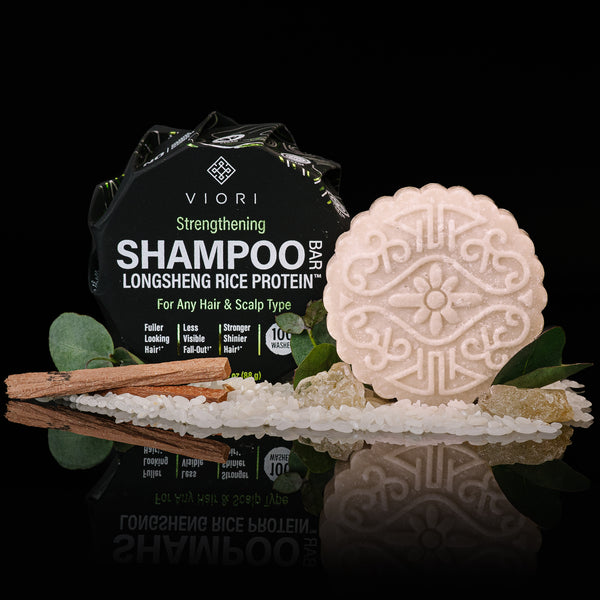
What makes Viori's approach genuinely different is their use of Sodium Cocoyl Isethionate (SCI) as the primary cleansing agent instead of saponified oils.
NOT SURE WHICH PRODUCT IS RIGHT FOR YOU?
TAKE THE QUIZTakes 30 seconds · 134,000+ customers matched
SCI is a mild surfactant derived from coconut oil, but-and this distinction matters-it's not soap in the traditional sense.
The technical advantage? SCI-based bars can genuinely achieve pH balance (5.5-6.5) because they don't rely on the alkaline saponification process. This isn't marketing fluff. It's legitimate chemistry that makes a real difference for your hair and skin.
The beauty industry rarely acknowledges this distinction clearly. When you shop for "natural soap," you're often actually purchasing a synthetic detergent bar-which isn't inherently bad! The terminology just matters for understanding what you're actually putting on your body.
Let's Talk About Those Protein Claims
One of the most common questions I get in my chair: "Do those proteins in my shampoo bar actually repair my hair?"
Short answer? It's complicated.
Hydrolyzed proteins-rice protein, wheat protein, silk protein-are everywhere in both hair and body bars. But here's what the molecular science tells us:
- Large protein molecules (over 1000 Daltons) form a film on your hair's surface, providing temporary smoothing and conditioning
- Small protein molecules (under 500 Daltons) can potentially penetrate into the hair cortex or upper skin layers
But here's the reality check nobody wants to hear: in a rinse-off product, protein deposition is minimal and temporary. Most of those protein molecules wash down the drain within minutes.
For protein treatments to genuinely strengthen hair structure, they need:
- Extended contact time (20+ minutes minimum)
- Heat application to open the hair cuticle
- Occlusive ingredients to drive penetration
- Often, a lower pH afterward to seal the cuticle
A 2-3 minute shampoo application provides primarily cosmetic surface effects rather than structural repair. This isn't unique to any brand-it's fundamental hair chemistry.
The Viori formulation includes hydrolyzed rice protein, which absolutely offers surface smoothing and temporary volume. But those dramatic before-and-after transformations customers report? They're likely coming from the removal of silicones and harsh sulfates from their previous routine, combined with consistent use of a gentler product.
Sometimes what you take out of your routine matters more than what you put in.
The Hard Water Problem Nobody Wants to Discuss
Here's a technical consideration that dramatically affects how any bar performs, yet rarely gets mentioned in reviews: your water quality.
True saponified soap reacts with hard water minerals (calcium and magnesium) to form insoluble precipitates-that's the soap scum coating your shower walls. The harder your water, the more your traditional soap will:
- Produce less lather
- Leave residue on hair and skin
- Require more product per use
- Create that "squeaky" feeling (which is actually mineral deposits, not cleanliness)
Surfactant-based bars like Viori's are less reactive with hard water because synthetic detergents don't form the same insoluble salts with minerals. This is a genuine functional advantage that affects your daily experience.
Quick Water Quality Test
Not sure about your water hardness? Fill a clear bottle halfway with water, add a few drops of dish soap, and shake vigorously. Lots of bubbles? Soft water. Few bubbles with cloudy water? Hard water.
This simple test explains why your friend raves about a product that left your hair feeling like straw. You're literally not working with the same water.
Fermented Rice Water: Separating Tradition from Science
Fermented rice water has become a major buzzword in hair care, and the tradition behind it is genuinely authentic and centuries-old. But let's examine the biochemistry beneath the beautiful marketing.
Fermenting rice water increases certain beneficial compounds:
- Inositol (vitamin B8): Research suggests potential benefits for hair elasticity
- Pitera (a mixture of vitamins, amino acids, and organic acids): Offers moisturizing properties
- Slightly acidic pH: Helps close and smooth hair cuticles
The critical question? How much fermented rice water concentration is actually needed for efficacy, and how much survives the bar manufacturing process?
Viori's documentation notes they use a specific concentration of Longsheng rice water because high concentrations can disrupt pH balance. This is honest formulation science-acknowledging that traditional ingredients must be balanced with modern understanding of skin and hair chemistry.
What many brands won't tell you: plenty of "rice water" or "fermented ingredient" products contain such minimal amounts (often less than 1%) that they serve primarily as marketing hooks rather than active ingredients. The real cleansing and conditioning work is being done by surfactants, conditioning agents, and pH adjusters.
The rice water is the story you fall in love with. The surfactant system is the workhorse doing the actual job.
The Limitations of Bar Formats (Yes, They Exist)
Let's address something most premium bar brands avoid discussing: the inherent limitations of solid formats.
Liquid formulations allow for:
- Precise ingredient dispersion: Every pump delivers an identical formulation
- Complex emulsions: Oil and water phases can create sophisticated delivery systems
- Heat-sensitive actives: Delicate ingredients can be added after manufacturing
- Preservation systems: Evenly distributed throughout the product
Bar formulations require:
- Heat processing: Most ingredients are melted together, potentially degrading heat-sensitive actives
- Limited ingredient solubility: Not all beneficial ingredients are bar-compatible
- Uneven usage: The first use and last use of a bar deliver different concentrations
- No liquid preservation system: While bars don't need preservatives (a genuine advantage), they also can't maintain the stability of certain active ingredients
The honest assessment? Bars excel at sustainability, travel-friendliness, concentrated formulation, and reducing plastic waste. But claiming they're superior to all liquid formulations from an efficacy standpoint oversimplifies the chemistry.
Viori's formulation acknowledges these constraints by focusing on stable ingredients-rice extract, proteins, cocoa butter, and oils-that survive the bar-making process and remain effective in solid form.
The Fragrance Conversation We Actually Need to Have
Here's something I genuinely respect about Viori's approach: they're transparent about using "fragrance oils" that are "a mixture of essential oils and natural equivalent fragrances."
Most premium "natural" bar brands either:
- Claim "essential oils only" (which often smell weak or fade quickly)
- Use "fragrance" without elaboration (leaving customers assuming it's synthetic)
- Use the term "parfum" (the international ingredient term that legally obscures specific ingredients)
The chemical reality about essential oils that nobody mentions:
They're often:
- Highly allergenic for many people (especially citrus and lavender)
- Unstable in soap formulations (they oxidize and fade)
- Expensive in the amounts needed for lasting scent
- Sometimes environmentally problematic (think unsustainable sandalwood or rosewood harvesting)
Meanwhile, synthetic fragrance molecules that mimic natural compounds can actually be:
- More sustainable (no rainforest harvesting required)
- Less allergenic (purified single molecules versus complex essential oil mixtures)
- More stable (won't oxidize or fade over time)
- Chemically identical (same molecular structure as the natural version)
The fragrance industry has successfully demonized the word "synthetic" while romanticizing "natural," but the science is far more nuanced. Viori's acknowledgment that they use "natural equivalent fragrances" for sustainability and stability reasons is more honest than most marketing in this space.
pH Balance: When It Actually Matters (and When It Doesn't)
You've probably heard that pH-balanced products are superior. Let me give you the nuanced professional take on when this actually matters.
For facial skin: pH balance is genuinely important. Disrupting your skin's acid mantle (pH 4.5-5.5) can:
- Compromise your skin barrier
- Increase water loss
- Alter your skin's beneficial microbiome
- Lead to increased sensitivity and breakouts
For scalp and hair: The story is different. Hair is dead protein. It doesn't have a "natural pH" to maintain. Your scalp has a pH, yes, but it's also remarkably resilient.
The nuanced truth? Alkaline products (pH 8-10) temporarily swell the hair cuticle, which creates both advantages and disadvantages:
- Advantage: Allows deeper cleaning and removes product buildup effectively
- Disadvantage: Can leave hair rougher, more porous, and prone to damage
Acidic products (pH 4-6) close the cuticle:
WHAT CUSTOMERS ARE SAYING
Real reviews for Hidden Waterfall Barra de Champú
- Advantage: Creates smoother, shinier hair with better moisture retention
- Disadvantage: May not clean as thoroughly; can cause buildup over time with certain hair types
Here's my professional opinion: there's no universally "best" pH. It depends entirely on your hair type, water quality, and styling routine.
Someone with fine, oily hair in a humid climate may actually benefit from slightly more alkaline cleansing to prevent limpness. Someone with coarse, dry, color-treated hair absolutely needs acidic formulations to prevent further damage.
Viori's pH-balanced approach (around 5.5-6.5 based on the SCI surfactant system) is optimal for most people, most of the time-but it's not a universal solution for every hair type.
What Actually Makes Bar Products Work (According to Science, Not Marketing)
After twenty years observing client results across thousands of products, here's what I've found genuinely matters in bar formulations:
1. Surfactant selection
Viori uses Sodium Cocoyl Isethionate-a gentle, effective choice that cleanses without stripping.
2. Conditioning agent quality
Viori incorporates behentrimonium methosulfate (don't let the name scare you-it's a conditioning agent, not a sulfate), plus cocoa butter and shea butter. These are all legitimate, effective conditioning ingredients.
3. Genuine pH balance
Viori achieves this through surfactant choice rather than alkaline soap chemistry-a chemically sound approach.
4. Absence of common irritants
No harsh sulfates like SLS or SLES, no parabens. Removing these common sensitizers makes a real difference for many people.
5. Proper user technique
Here's a secret: bar products require a learning curve. Most people use way too much product at first. Less is genuinely more with quality bars.
The "secret ingredient" highlighted in marketing-whether it's rice water, charcoal, or volcanic ash-is rarely the star player. It's the formulation architecture, how all ingredients work together synergistically, that determines whether a product actually works.
The "Natural" Fallacy We Need to Address
Here's what needs to be said plainly: "natural" does not automatically mean "better" or "safer."
Poison ivy is natural. Botulinum toxin is natural. Arsenic is natural.
Conversely:
- Hyaluronic acid used in skincare is typically synthetic (but chemically identical to natural)
- Many preservatives are synthetic (but they prevent dangerous bacterial growth)
- Synthetic vitamins are molecularly identical to natural versions
The sophisticated consumer question shouldn't be "Is it natural?" but rather:
- Is it effective for my specific needs?
- Is it safe based on current research?
- Is it sustainably and ethically produced?
- Is it appropriate for my hair/skin type?
Viori scores well on these questions not because everything is "natural" (it's not-SCI is synthesized, even if coconut-derived), but because the


