
I'll never forget the day a longtime client walked into my salon with hair that felt like straw. Three months earlier, she'd had gorgeous, glossy waves. Now? A brittle, tangled mess.
"I switched to a natural shampoo bar to be more sustainable," she said, nearly in tears. "But I think my hair just can't handle eco-friendly products."
Here's what I told her then, and what I'm telling you now: The problem isn't sustainability. It's chemistry.
After two decades of working with every hair type imaginable, I've watched the shampoo bar revolution unfold with equal parts excitement and concern. Yes, solid bars represent a genuine step forward for the planet. But the rush to market has created a troubling gap between what manufacturers promise and what their formulations actually deliver.
Today, I'm pulling back the curtain on the technical realities of shampoo bars-the science that separates products that truly nourish your hair from those that slowly damage it while claiming to be "gentle" and "natural."
The Engineering Challenge That Changes Everything
Let me start with a question most people never consider: How do you compress effective cleansing agents, conditioning elements, and active ingredients into a stable solid form without destroying what makes them work?
This isn't a simple puzzle. And honestly? Many manufacturers take shortcuts that ultimately compromise your hair health.
The pH Problem Nobody Talks About
Here's something that should be printed on every bar package in bold letters: traditional bar soaps have a pH between 9 and 11. Your hair's optimal pH? Between 4.5 and 5.5.
This isn't a minor mismatch. It's catastrophic for your hair structure.
NOT SURE WHICH PRODUCT IS RIGHT FOR YOU?
TAKE THE QUIZTakes 30 seconds · 134,000+ customers matched
When you expose your hair to an alkaline environment-anything above pH 7-the cuticle scales lift and swell like roof shingles in a windstorm. I've seen this cascade of damage play out hundreds of times:
- Increased friction between hair strands, leading to tangles and breakage
- Protein loss from the hair's inner cortex
- Rapid color fade for anyone with treated hair
- Moisture escape and the brittleness that follows
The pattern is always the same. A client switches to a "natural" bar soap for their hair, loves the eco-friendly packaging, but within weeks notices their hair feels increasingly dry and rough. They blame their hair type, their water quality, the weather-rarely the pH of their shampoo bar.
Surfactants: The Critical Question You Should Be Asking
When I evaluate any shampoo bar, the first thing I want to know is: What surfactant system does it use?
Many modern bars use Sodium Cocoyl Isethionate, or SCI-a coconut-derived surfactant that's genuinely gentler than traditional soap. But here's the professional secret most people don't know: SCI concentration matters enormously, and it needs the right supporting cast.
SCI alone can still strip your hair if it's not properly buffered with complementary ingredients:
- Conditioning quaternary compounds like Behentrimonium Methosulfate (and yes, despite the confusing name with "sulfate" in it, this is completely different from harsh sulfates-it's actually a conditioning agent that smooths hair)
- Fatty alcohols such as cetyl and stearyl alcohol that provide slip and prevent tangling (these aren't drying alcohols like rubbing alcohol-they're emollients that soften)
- pH adjusters like citric acid to maintain that crucial 4.5 to 5.5 range your hair needs
This is where Viori's formulation approach caught my attention as a professional. Their bars contain both SCI for effective cleansing AND Behentrimonium Methosulfate for conditioning-a dual approach that's genuinely unusual. You're getting both clean hair and conditioned hair from a single solid bar, which addresses that inherent formulation conflict I mentioned earlier.
Rice Water: Beyond the Marketing Mystique
Let's talk about rice water, because this is one of the most misunderstood ingredients in natural hair care.
Here's where most brands and beauty blogs get it completely wrong: rice water isn't effective because of tradition or ancient secrets. It's effective because of inositol.
The Fermentation Factor Everyone Ignores
When rice undergoes proper fermentation-and I'm talking about a carefully controlled 7 to 10 day process-enzymatic activity breaks down starches and dramatically increases the bioavailability of specific compounds:
Inositol (Vitamin B8): This is the star player. It's a carbocyclic sugar that actually penetrates the hair shaft and strengthens it from within. Clinical studies show that inositol remains in hair even after rinsing, providing long-term protection against damage. Think of it as internal scaffolding for your hair structure.
Panthenol (Vitamin B5): This compound increases individual hair strand diameter, improves moisture retention by up to 70%, and provides a protective coating on each strand.
Hydrolyzed Rice Protein: Here's where molecular weight becomes critical. For protein to actually penetrate your hair cuticle-not just coat the outside-it must be under 1,000 Daltons. Properly fermented rice water produces proteins in this optimal size range.
Why Most Rice Water Products Disappoint
I need to be blunt here: most rice water products use unfermented or poorly fermented rice, which contains minimal inositol. The fermentation process is what creates the transformative compounds, not the rice itself.
This is like comparing grape juice to wine. Technically the same starting ingredient, yes, but the fermentation creates entirely different chemical compounds with completely different effects.
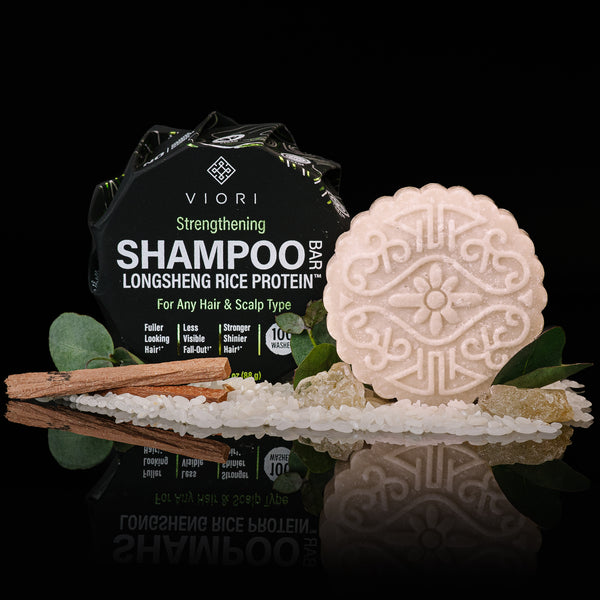
Viori sources their rice water from the Red Yao tribe, who have perfected a specific fermentation process over centuries. This isn't me romanticizing tradition-it's recognizing that they've empirically developed optimal fermentation conditions through generations of trial and observation. That matters from a chemistry standpoint.
The Fragrance Controversy: What "Parfum" Really Means
This is where I need complete honesty with you. The beauty industry's use of "fragrance" or "parfum" on ingredient lists is a regulatory loophole that can hide hundreds of undisclosed chemicals.
Understanding Your Fragrance Options
Natural fragrances are extracted directly from plants, but they come with significant challenges:
- Extremely expensive (sometimes 100 times the cost of synthetic alternatives)
- Highly unstable (they oxidize and degrade rapidly)
- Often require harvesting rare or endangered plants
- Can trigger more allergic reactions due to complex compound mixtures
Synthetic fragrances fall into two categories: nature-identical molecules (laboratory-created compounds that match natural scents atom-for-atom) and entirely synthetic molecules with no natural counterpart.
The crucial distinction is clean fragrance certification, which guarantees the absence of phthalates (endocrine disruptors linked to hormonal issues), nitro-musks (bioaccumulative toxins), and polycyclic musks (persistent environmental pollutants).
Why Nature-Identical Can Actually Be Superior
Viori uses nature-identical molecular structures in their fragrances. As a professional, I actually prefer this approach to pure essential oils for several reasons:
Consistency: Natural essential oils vary wildly batch-to-batch depending on growing conditions, harvest timing, and extraction methods. One batch of lavender oil might be twice as potent as another.
Allergen control: Specific allergenic compounds can be identified and removed from nature-identical fragrances-something impossible with whole essential oils.
Sustainability: No harvesting of rare plants, no contributing to endangered species pressure.
Stability: These molecules don't oxidize as quickly, meaning your product won't develop that rancid smell over time.
The Porosity Factor That Changes How Your Hair Responds
Here's a concept that separates professional hair knowledge from basic consumer advice: hair porosity determines how your hair will respond to ANY product, yet most recommendations completely ignore this fundamental characteristic.
Understanding Your Hair's Porosity
Low Porosity Hair (cuticles lie flat and resist moisture absorption):
- Struggles to absorb product
- Experiences buildup easily
- Takes forever to dry
- Often looks shiny naturally
High Porosity Hair (damaged cuticles with gaps and holes):
- Absorbs products rapidly
- Loses moisture just as quickly
- Dries fast but feels chronically dry
- Often looks dull or frizzy
The Bar Shampoo Friction Factor
Here's the professional insight most blogs completely miss: bar shampoos inherently create more friction during application than liquid shampoos.
This physical friction can actually be beneficial for low-porosity hair-it helps products penetrate those tightly-sealed cuticles. But for high-porosity hair, this friction can cause additional damage to already-compromised cuticles.
The professional solution for high-porosity hair:
- Never rub the bar directly on your hair
- Create a rich lather between your palms first
- Apply the lather to your hair using gentle pressing motions
- Use a wide-tooth comb to distribute while the product is still in your hair
- Rinse with cool water to encourage cuticle closure
For low-porosity hair, you can be more direct with application, as the friction actually helps the beneficial ingredients penetrate.
The Hard Water Problem No One Warns You About
This is perhaps the most overlooked variable in whether someone loves or hates bar shampoos.
The Chemistry Behind That Waxy Feeling
Hard water contains dissolved calcium and magnesium ions. When these ions encounter the surfactants in your shampoo bar, they create an insoluble precipitate-that's the "film," "wax," or "buildup" feeling many people report after switching to bars.
The chemistry in plain English: SCI and most cleansing surfactants carry a negative charge. Calcium ions are positively charged. They attract each other and form calcium salts that deposit on your hair shaft like microscopic cement.
This isn't the product's fault-it's a chemical reaction with your water. The same bar that works beautifully in soft water can create a waxy disaster in hard water.
Professional Solutions for Hard Water
Apple Cider Vinegar Rinse: The acetic acid in vinegar chelates (chemically binds and removes) the calcium deposits. Mix 1 tablespoon per cup of water and use as a final rinse once or twice a week.
WHAT CUSTOMERS ARE SAYING
Real reviews for Hidden Waterfall Barra de Champú
Citric Acid Treatment: More powerful than vinegar for stubborn buildup. Dissolve 1 teaspoon in 2 cups of water for a final rinse. Use weekly if you have very hard water.
Formulation Matters: Some bars include chelating agents to prevent this reaction in the first place. Viori bars contain sodium lactate, which provides mild chelating action, though you may need additional treatments if you have extremely hard water (above 180 ppm).
Test your water: You can buy hardness test strips for under $10. Knowing your water's mineral content explains so much about how products perform for you.
Protein Sensitivity: An Advanced Concept Most People Don't Know About
This separates professional knowledge from basic consumer information: protein sensitivity is real, and rice protein can trigger it.
How Protein Works in Hair Care
Hydrolyzed proteins work by temporarily patching damaged areas in your hair cuticle-think of them as spackling compound for your hair. This is genuinely beneficial for most people, especially those with damaged, porous hair.
However, some hair types-particularly fine, low-porosity hair-can become "protein-overloaded." The result:
- Straw-like, stiff texture
- Increased breakage (hair becomes too rigid and snaps)
- Dry, rough feeling despite using moisturizing products
- Hair that feels coated or crunchy
The Telltale Pattern
The indicator of protein sensitivity: If your hair feels amazing for 1 to 2 washes, then progressively worse with continued use, you may be protein-sensitive.
The professional solution:
- Alternate between protein-containing bars and protein-free options
- Use a clarifying treatment monthly to remove protein buildup
- Follow protein treatments with deep moisture conditioning
- Pay attention to ALL your products-protein is cumulative across everything you use
If you know you're protein-sensitive, you can still use rice water products-just less frequently, or alternate with protein-free options.
The Transition Period: Real Biology, Not Marketing Hype
When you switch from conventional shampoos to natural bars, your scalp undergoes a genuine physiological adjustment that typically takes 2 to 8 weeks. This isn't marketing speak-it's actual biology.
What's Actually Happening to Your Scalp
Sebum Regulation: Conventional shampoos often strip so much natural oil that your scalp overproduces sebum to compensate. It's like running your air conditioner constantly-your body thinks it needs to work harder. When you switch to gentler cleansing, your sebaceous glands need time to downregulate their oil production.
Silicone Removal: Most conventional conditioners coat hair with dimethicone and other silicones. These create that immediate silky feeling, but they're just masking damage, not repairing it. These silicone layers must gradually wash away (they're not water-soluble) before you'll feel the true effects of natural conditioning agents.
Cuticle Repair: If your previous products were highly alkaline or contained harsh sulfates, your cuticles have been in a chronically lifted state-imagine roof shingles permanently curled up. It takes several weeks of proper pH exposure and gentle treatment for them to lie flat and smooth again.
Who Experiences the Hardest Transition?
The transition period is often more difficult for people with:
- Very long hair (more accumulated product buildup from months or years of silicones)
- Color-treated hair (compromised cuticles that behave unpredictably during transition)
- Fine hair (less tolerance for any buildup or adjustment period)
- Very hard water (creates additional chemistry challenges)


