
After twenty years behind the chair, I've learned that the most important conversations about hair care happen in the quiet moments-when a client asks me if that beautiful shampoo bar they saw on Instagram is really worth thirty-two dollars, or whether "ancient rice water secrets" are actually better than the drugstore conditioner they've been using for years.
These aren't simple questions, and they deserve more than simple answers.
Today, I want to pull back the curtain on something the beauty industry rarely discusses openly: how traditional beauty wisdom becomes modern commerce, and what gets lost-or gained-in the translation.
This isn't about bashing any particular retailer. It's about giving you the technical knowledge to make truly informed decisions about what you're putting in your hair and what you're supporting with your dollars.
The Cultural Knowledge Question: It's More Complicated Than You Think
Let's start with something fascinating that most product marketing glosses over entirely.
When you read about "rice water traditions used for centuries" or "indigenous beauty secrets," you're touching on real, documented practices with genuine benefits. The Red Yao women of Longsheng, for instance, have maintained hair care rituals involving fermented rice water that correlate with remarkable hair length and health well into their elder years.
But here's what I need you to understand as a formulation-aware professional: traditional beauty practices aren't just about ingredients-they're entire ecosystems.
The rice water preparation used in mountain villages involves:
- Specific fermentation timing (seven to ten days) tied to seasonal temperature changes
- Water with particular mineral content from rice terraces
- Application techniques passed down through generations
- Complementary lifestyle factors-diet, environment, genetics
When these practices are translated into commercial products, something critical happens: context collapse.
The Fermentation Reality Check
Let me get technical for a moment, because this matters for your hair health.
Traditional fermented rice water has a pH that can range from 3.5 to 5.0-potentially very acidic. In its traditional context, used with specific techniques and complementary practices, this works beautifully.
But if you were to use truly traditional fermented rice water the way you use commercial shampoo, you could actually damage your hair cuticles.
NOT SURE WHICH PRODUCT IS RIGHT FOR YOU?
TAKE THE QUIZTakes 30 seconds · 134,000+ customers matched
So commercial formulations must:
- Buffer the pH to hair-safe levels (typically 4.5-5.5)
- Standardize concentrations (traditional methods vary batch to batch)
- Add preservation systems (fermented products spoil easily)
- Incorporate emulsifiers for easy application
The result? A product inspired by traditional practices, but operating through fundamentally different chemical mechanisms.
This isn't necessarily bad-it's just important to understand the difference between heritage inspiration and heritage replication.
The Price Tag Conversation Nobody's Having
Let's talk about something uncomfortable: what you're actually paying for when you buy heritage beauty products.
I've worked with hundreds of hair care formulations over my career, and I can tell you this with confidence: rice protein hydrolysate performs remarkably similarly whether it's sourced from ancient Longsheng rice or commercially grown short-grain rice.
The molecular structure? Nearly identical.
So when you see a significant price difference between a heritage-marketed product and a conventional alternative, you're paying for something other than chemical efficacy.
You're paying for:
- The story and cultural narrative
- Sustainability commitments (packaging, carbon offsets)
- Community partnership programs
- Premium positioning and brand experience
None of this is inherently wrong. Stories matter. Values matter. Community support matters.
But it's essential to know what you're buying.
The Math Behind the Marketing
Here's typical beauty industry economics. For a product retailing at thirty-two dollars:
- Raw materials: $2-5
- Manufacturing: $3-8
- Sustainable packaging: $2-4
- Marketing and distribution: $5-15
- Retail markup: Usually 2-4x manufacturer cost
Products marketed with traditional ingredients or indigenous beauty secrets typically command a 40-60% premium over chemically equivalent alternatives.
That premium is based on narrative value, not superior performance.
Again-this isn't necessarily problematic. If that narrative represents genuine cultural partnership, environmental responsibility, and formulation quality, many consumers happily pay for those values.
The question is: How do you verify you're getting what you're paying for?
Why Alternative Retailers Exist (And What It Tells Us)
You've probably noticed: heritage beauty brands are sometimes available through various retailers and marketplaces, often at different price points.
Why does this happen?
As someone who's watched the beauty industry evolve for two decades, I can tell you these alternative commerce channels emerge because of market gaps the official channels don't address:
Price accessibility: When premium pricing creates barriers, consumers seek alternatives
Geographic limitations: Many sustainable brands have limited international shipping or prohibitive shipping costs
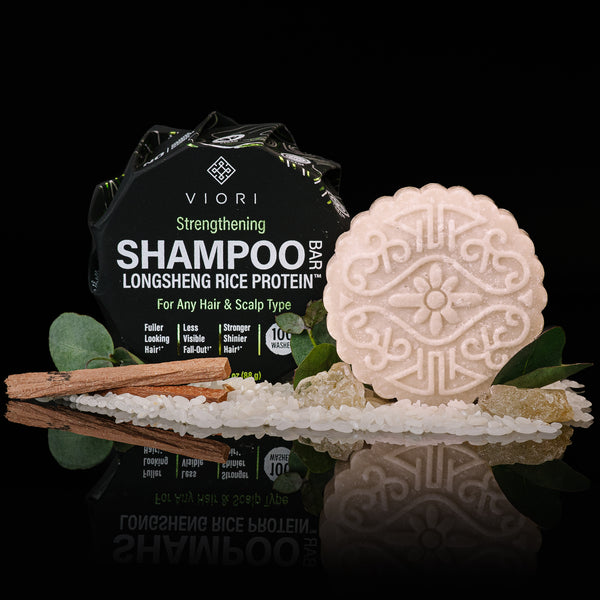
Narrative skepticism: Sophisticated consumers increasingly question whether partnership claims justify pricing
The trust problem: As formulations become complex, consumers can't independently verify ingredient quality
The Technical Problem This Creates for Your Hair
Here's where my professional concern comes in.
When beauty commerce fractures across multiple channels, we face a formulation authenticity challenge.
Products from unofficial sources might represent:
- Older formulations (brands reformulate regularly)
- Different regional versions (formulations vary by market)
- Storage-compromised inventory (heat, humidity, time affects stability)
This matters especially for natural products with minimal preservatives-a selling point that becomes a liability when supply chains elongate.
Specific technical concerns:
- pH drift: Bar formulations especially can experience pH changes with temperature and humidity exposure
- Active ingredient degradation: Vitamins B5 and B8 (frequently highlighted in rice water formulations) degrade with heat and light
- Preservation system failure: Natural preservatives have shorter effective periods
- Batch variation: Without strict quality control, natural ingredient products vary more than synthetic formulations
When a client sits in my chair and tells me they're using a specific product, the product's provenance now matters as much as its ingredient list for troubleshooting their hair concerns.
Bar Format Real Talk: The Pros, Cons, and Technical Realities
Let's discuss something I rarely see addressed honestly: why bar format products work brilliantly for some people and terribly for others.
The Solid Formulation Challenge
Creating an effective shampoo bar is technically complex. Bar formats must create solid surfactant matrices (cleansing agents) that:
- Remain solid at room temperature
- Soften with warm water
- Release the right amount of product
- Incorporate conditioning agents without separation
- Prevent rancidity in oil-based components
Here's the technical reality: This matrix is extremely sensitive to humidity and temperature.
In my professional practice, I've seen clients achieve dramatically different results with identical bar products based on:
Water hardness: Mineral content affects lather and surfactant effectiveness significantly
- Hard water (over 120 ppm hardness): Bars often underperform, leave residue
- Soft water: Bars work beautifully, create rich lather
Storage conditions: Humid bathrooms cause surface breakdown and pH drift
- Humid climates (over 60% relative humidity): Product lifespan significantly reduced
- Dry climates: Products remain stable much longer
Hair porosity: High-porosity hair can absorb too much product from bars
- Color-treated or chemically processed hair: Often experiences buildup
- Virgin, low-porosity hair: Usually great results
Application temperature: Water temperature affects product transfer
- Lukewarm water: May not release enough product
- Hot water: Can release too much, leading to waste
This is why traditional liquid formulations, while less sustainable from a packaging perspective, offer more consistent performance across variables.
My Professional Recommendation
I advise clients to consider their specific situation.
Bar formats work best when you have:
- Soft to moderate water hardness
- Low to normal porosity hair
- Dry climate or good bar storage (soap dish that drains)
- Virgin or minimally processed hair
Liquid formats typically perform better when you have:
- Hard water
- Chemically treated or high-porosity hair
- Very humid climate
- Need for precise application control
This isn't about one being "better"-it's about matching format to your specific hair chemistry and environment.
The Sustainability Question: Beyond the Surface Story
The environmental narrative around beauty bars is compelling: eliminate plastic bottles, reduce shipping weight, concentrate formulas.
But let me share the fuller picture.
What Complete Sustainability Analysis Reveals
What brands typically highlight:
- Eliminated plastic bottles
- Reduced water weight in shipping
- Concentrated formula reduces transportation emissions
What often goes unmentioned:
Accessory carbon footprint: Bamboo holders, storage containers, and other accessories often manufactured in Asia and shipped internationally can exceed the carbon footprint of a locally-produced plastic bottle when full lifecycle is calculated
Temperature-controlled logistics: Natural products often require climate-controlled shipping and storage, increasing energy consumption
Product failure waste: Bars that crumble, develop mold, or degrade prematurely create waste that offsets packaging savings
WHAT CUSTOMERS ARE SAYING
Real reviews for Hidden Waterfall Barra de Champú
Usage efficiency: In my observation, clients often use 15-25% more product per wash with bars because application amount is harder to control than with liquids
The Water Quality Factor
If you have hard water and use bar products without a water softener or chelating treatment, you might need:
- More frequent clarifying treatments
- Additional conditioning products
- Acidic rinses to remove mineral buildup
These additional products can negate the environmental benefits of the bar format itself.
The Ethical Dimension: What "Community Partnership" Really Means
This is the most important-and most uncomfortable-part of this conversation.
Many heritage beauty brands mention donating a percentage of profits back to indigenous communities that inspired their formulations. This sounds wonderful, and it's certainly better than no community support.
But let's examine this critically, because you deserve to know what your purchase actually supports.
The Five Percent Reality
Many brands contribute five percent of profits (not revenue-profits) to community partnerships.
Here's what that typically means:
Hypothetical example (based on standard beauty industry economics):
- Product retail price: $32
- Gross profit margin: approximately 60% = $19.20
- Operating expenses: approximately 40% = $12.80
- Net profit: approximately 20% = $6.40
- 5% of profit donation: $0.32 per product
Compare this to typical brand expenditures:
- Marketing cost per customer acquisition: $15-45
- Influencer partnership costs: $8-20 per sale
- Premium packaging and materials: $4-6 per unit
The uncomfortable reality: The community that developed the traditional knowledge over centuries receives less per product than Instagram influencer partnerships cost.
What Genuine Partnership Could Look Like
I'm not aware of any major beauty brand currently operating this way, but here's what more equitable models might include:
- Revenue sharing (not profit sharing): 10-15% of revenue, not profit
- Intellectual property co-ownership: Traditional knowledge holders as equity stakeholders
- Formulation collaboration: Community members involved in product development
- Transparent sourcing premiums: Published payments to ingredient suppliers
- Knowledge preservation funding: Investment in documenting traditional practices independent of commercial products
The absence of these models across the industry tells you a lot about actual priorities versus marketing priorities.
What This Means for Your Hair Care Decisions
After all this technical analysis, you might be wondering: "So what should I actually do?"
Here's my honest professional guidance.
For Choosing Products
1. Match format to your specific situation
- Test your water hardness (inexpensive kits available online)
- Assess your hair porosity (simple float test at home)
- Consider your climate and storage options
2. Calculate true cost-per-wash
- A $32 bar lasting 60 washes = $0.53/wash
- A $24 bottle lasting 40 washes = $0.60/wash
- Factor in additional products needed (clarifying treatments, conditioners)
- Include performance-if you need to wash twice or use more product, adjust accordingly
3. Verify beyond marketing
- Look for third-party certifications (not brand-created standards)
- Research community partnership specifics (dollars, not percentages)
- Check ingredient sourcing transparency
- Read reviews from people with your hair type and water hardness
4. Consider local alternatives


