
When people type something like “meori shampoo” into a search bar, they’re usually not looking for a dictionary definition-they’re looking for a solution. Most often, it’s a hunt for a simpler, more sustainable way to wash hair (often a shampoo bar), without giving up that clean, polished, salon-level finish.
What rarely gets explained online is this: with shampoo bars, how you use the product can matter just as much as what’s inside it. A liquid shampoo arrives pre-dispersed and ready to spread evenly. A bar doesn’t. That one difference changes everything-from shine and frizz to how your scalp feels a day or two later.
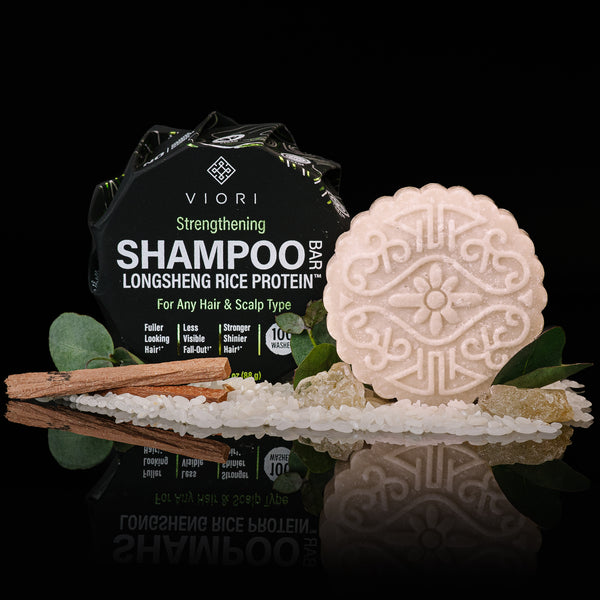
In this post, I’m going to break down the bar-shampoo experience using Viori as the reference point, because their formulas and FAQs touch on details most brands gloss over: pH balance, rice water concentration, scalp-type matching, and technique.
NOT SURE WHICH PRODUCT IS RIGHT FOR YOU?
TAKE THE QUIZTakes 30 seconds · 134,000+ customers matched
The part nobody talks about: “bar mechanics” and the friction problem
Let’s start with the real wildcard: friction. To get cleanser from a solid bar into your hair, you have to add water and mechanical action. That action can be gentle and controlled-or it can be the thing that quietly roughs up your cuticle over time.
Here’s the paradox I see constantly in professional settings: you need movement to cleanse thoroughly, but too much direct bar-to-hair rubbing can increase tangling and make hair feel rough-especially if your hair is already fragile.
Who tends to notice friction damage the fastest?
- Color-treated hair (the cuticle is already more vulnerable)
- High-porosity hair (cuticle is naturally more lifted or compromised)
- Curly/coily hair (more bends in the strand = more friction points)
- Fine hair that tangles easily
The simple technique shift that changes results
Viori recommends something I fully agree with: build lather in your hands, then apply it through your hair with your palms and fingers, instead of scrubbing the bar directly against your scalp and lengths. That reduces “hot spots” of concentrated cleanser and helps avoid unnecessary cuticle lift from friction.
It sounds minor, but it’s not. Two people can use the same bar and swear it behaves differently-when the real difference is the application method.
pH balance: the quiet reason hair can look shinier (or frizzier)
If you’ve ever had a product make your hair feel squeaky, puffy, or oddly dull, there’s a good chance pH was involved. Viori emphasizes that their products are pH balanced, and that matters because hair tends to behave best within a mildly acidic range. In their education, they note that hair products generally need to fall between about 3.5-6.5.
When a cleanser runs too alkaline, the cuticle can swell and lift. That increases friction between strands, which shows up as more tangles, more frizz, and less light reflection (a.k.a. less shine). When the pH is kept hair-friendly, the cuticle lies flatter, and the hair typically feels smoother.
Why some people need a few weeks (or months) to love a new bar
Viori notes that results vary widely-some people feel a difference after one wash, and for others it can take 2-3 months. That’s realistic. You’re not only switching cleansers; you’re changing the entire “surface behavior” of your hair and scalp-what deposits, what rinses away, how your ends retain moisture, and how your scalp regulates oil.
The cleanser in Viori shampoo bars: why it behaves differently in a solid format
Viori shampoo bars use Sodium Cocoyl Isethionate (SCI) as their cleansing agent. SCI is often described as a mild, effective cleanser, and it’s popular in bar formats because it can create a satisfying foam without relying on harsher cleansing systems.
But here’s the nuance most articles skip: in a bar, cleanser release depends on water + time + how you emulsify it. That’s why one wash can feel perfect and the next can feel “not quite right” if you rushed the lather or changed your water temperature.
Conditioner bars don’t lather like shampoo-and that’s the point
A common complaint from first-time conditioner bar users is, “It doesn’t lather, so it doesn’t feel like it’s working.” Viori explains this well: conditioner bars aren’t meant to foam. They’re designed to deposit conditioning agents and emollients that improve slip and reduce friction.
Viori’s conditioner includes Behentrimonium Methosulfate (BTMS), a cationic conditioning ingredient that helps hair feel smoother and easier to detangle. “Cationic” simply means it carries a positive charge, which is useful because hair is typically more negatively charged-especially when it’s damaged. Opposites attract, so conditioning agents can bind where they’re needed most.
What the conditioner texture should feel like
- Less foamy, more creamy or paste-like
- Slip builds as you work it through
- It often performs better if you give it a few minutes before rinsing
The rice water conversation gets real when you talk about concentration
Rice water is trendy, but the best routines treat it like a tool, not a dare. Viori explains that they use a lower concentration of Longsheng rice water because rice water at high concentrations can disrupt hair and scalp pH if used too often.
That’s a key detail. “More” isn’t automatically better in haircare-especially with protein-leaning ingredients. Viori also notes that their bars combine rice water with other nutrient-rich ingredients to create benefits in a balanced, usable format.
A surprisingly useful detail: why the scent choice can affect performance
Most people pick a scent based on mood. Viori adds an interesting performance layer: even if the base formula is similar, the scent profile can influence how a bar behaves for certain scalp types.
- Citrus Yao is typically recommended for normal-to-oily scalps and includes citric acid, which can help break down oil more effectively.
- Terrace Garden tends to be favored for normal-to-dry scalps and is often described as more moisturizing in feel.
- Hidden Waterfall sits comfortably in the middle and is commonly chosen by people who want balance.
- Native Essence is unscented (with no added fragrance), and it’s a go-to option for those who are fragrance-sensitive or prefer minimal scent.
How to choose the right Viori bar: a two-axis approach that actually works
If you only remember one thing, make it this: your scalp and your ends are often dealing with two different jobs. That’s why choosing products based on just “dry hair” or “oily hair” can miss the mark.
WHAT CUSTOMERS ARE SAYING
Real reviews for Hidden Waterfall Barra de Champú
Axis 1: How quickly your scalp gets oily
- Oily scalp: feels oily again in 1-2 days
- Normal scalp: feels oily around day 3
- Dry scalp: feels oily 4+ days later
Axis 2: Porosity (how your hair absorbs and holds moisture)
Viori shares a simple porosity check using a glass of water and a clean strand of hair. It’s not perfect science, but it’s a helpful starting point.
- Floats: low porosity (often prone to buildup, can prefer lighter routines)
- Stays in the middle: medium porosity
- Sinks: high porosity (absorbs quickly but loses moisture quickly; needs extra care)
Why some people get “residue” from bars (and how to fix it)
Viori notes many users report that the bars don’t leave residue or weigh hair down. When someone does feel heaviness or drag, it usually comes down to a few practical issues-not a “bad bar.”
- Hard water: minerals can affect rinse-off and leave hair feeling coated
- Over-applying conditioner: conditioner bars are concentrated; too much can linger
- Low-porosity hair: tends to show buildup faster if conditioning is too rich
- Not letting the bar dry: a waterlogged bar can deliver uneven amounts of product
A pro-level routine (simple, but specific)
If you’re trying to get that clean, healthy, “my hair behaves” feeling from a shampoo bar routine, this is the method I recommend most often-especially for people new to bars.
- Wet hair thoroughly. Bars need enough water to distribute evenly.
- Lather the shampoo in your hands. Then apply to scalp and roots first.
- Use your fingertips on the scalp. Think massage, not scratching.
- Rinse longer than you think. Most “buildup” complaints start with a rushed rinse.
- Apply conditioner to mid-lengths and ends. Work it through, give it a few minutes, then rinse well.
- Adjust over time. Viori recommends giving it up to 2-3 months before deciding it’s not for you.
Final takeaway: with bars, you’re not just buying a product-you’re adopting a method
The best way to interpret “meori shampoo” as a search is this: you want a simpler routine that still respects the science of hair and scalp. Viori’s approach-pH balanced formulas, a mild cleanser (SCI), thoughtful conditioning chemistry (BTMS), and a measured use of fermented Longsheng rice water-fits that goal, especially when you pair it with the right technique.
If you want a truly tailored recommendation, start with two facts: how quickly your scalp gets oily after washing, and whether your ends feel dry or behave like high-porosity hair. Once those are clear, choosing between Viori options like Citrus Yao, Terrace Garden, Hidden Waterfall, and Native Essence becomes much more straightforward.


